


















With the rapid increase in electricity demand at the AI data centers, power supply is becoming another limitation besides chip production. Musk recently stated that SpaceX is building internal casting capabilities for key components of gas turbines in Bastrop, Texas, in an attempt to shorten the equipment delivery cycle and alleviate the issue of slow data center power-up times.
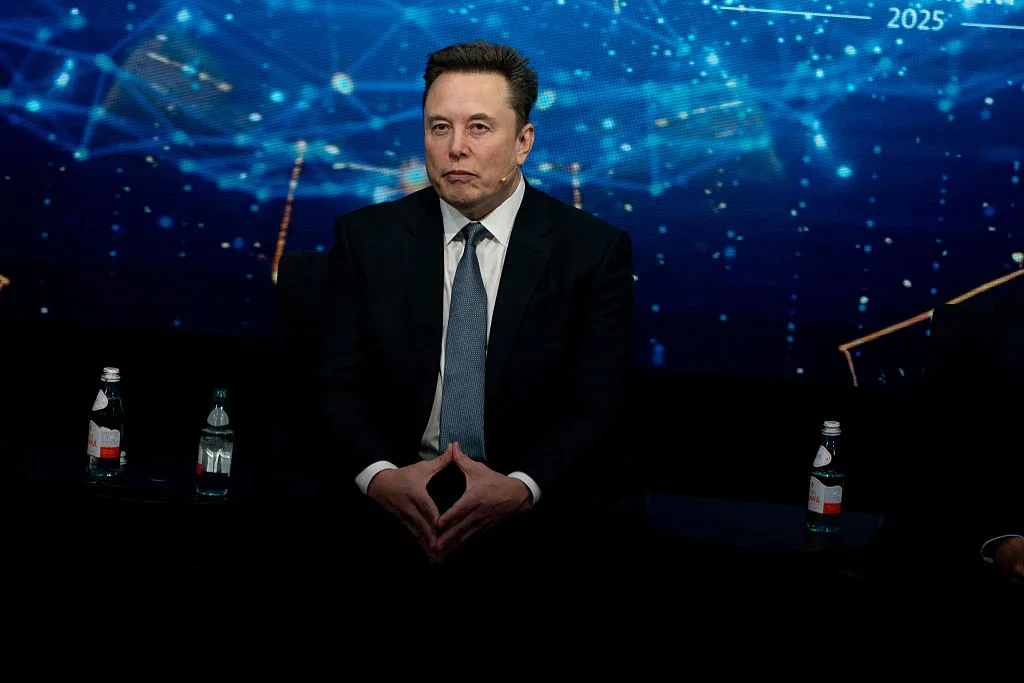
On August 30, Musk stated on the X platform that SpaceX and Tesla are working as fast as possible to build a solar power capacity of 100GW per year, but in the coming years, natural gas will still be used to supplement solar energy and support initial power supply. He mentioned that the main bottleneck in expanding the production of current natural gas turbines lies in the casting of blades and guide vanes. If SpaceX were to produce these components in-house, the commissioning time of the gas turbines could be advanced by up to 18 months.
AI Data Centers Switch to Self-Provided Power Supplies
The background for this action is that the infrastructure construction of AI is facing constraints from both chips and power grids simultaneously. The International Energy Agency predicts that by 2030, the global data center electricity consumption will nearly double. Gas turbine manufacturer GE Vernova also stated that its production capacity has been almost fully booked for until 2030, with a large portion of the demand coming from the AI infrastructure.
In this context, an increasing number of ultra-large technology companies are beginning to build gas power generation facilities directly near their data centers, rather than waiting for the expansion of the public power grid. Reports mention that Amazon, Google, Meta, OpenAI, and Microsoft are all adopting this approach to accelerate the deployment of their data centers more quickly.
Highly concentrated supply of key components
The most challenging part of scaling up gas turbines is the blades and guide vanes used in the high-temperature areas. Reports cited The Information stating that these components operate in temperatures ranging from about 3000 to 3600 degrees Fahrenheit, which is higher than the melting points of the materials themselves. Therefore, they rely on internal cooling channels, thermal barrier coatings, and extremely precise casting processes.
What's more challenging is that these blades usually need to be cast in single-crystal form, slowly shaped in a vacuum furnace, with great care taken to avoid tiny cracks. The size of the blades used in power generation equipment is larger than that of aircraft engine blades, making mass production even more difficult. Reports indicate that currently, only four companies worldwide possess sufficiently mature industrial casting capabilities, and the existing production capacity is already close to its maximum capacity.
If SpaceX can achieve this manufacturing breakthrough, it means that the system controlled by Musk will possess a scarce capability within AI's power infrastructure. This will allow for faster progress in the construction of data centers and also raise the barriers for other competitors to replicate this capability.
Faster expansion also comes with the pressure of emissions.
However, the accelerated deployment of gas turbines also brings more direct environmental controversies. Reports mention that SpaceXAI has been using gas turbines to power the data center of Colossus in Memphis since 2024. Local authorities from NAACP have repeatedly alleged that the company is operating the relevant equipment without meeting the licensing or pollution control requirements stipulated by federal laws.
Relevant organizations are concerned that gas turbines emit compounds that form smoke, as well as harmful substances such as formaldehyde, which have been linked to an increased risk of asthma, respiratory diseases, and certain types of cancer. Researchers at the University of Memphis also indicated in a limited-scale analysis that air pollution around data centers has "slightly worsened."
Similar controversies are not limited to Memphis. Reports also mention that in the centralized data center areas of Virginia, a study based on the EPA's health impact model shows that if a single facility operates 8 gas turbines for an extended period, the emissions could affect more than 2.5 million people, resulting in additional health losses and economic costs.
Overall, what Musk is attempting to address are the real-world power constraints associated with the expansion of AI. However, by introducing natural gas units more quickly, it also further links the construction of data centers to emission issues.