












On September 4th, Ethereum rebounded from around $2,370 to above $2,520, with a 24-hour increase of nearly 6%. However, the $2,550 level remains a key area that has repeatedly suppressed upward movements recently. After briefly touching this level, the price fell back again, indicating that the breakout has not been confirmed yet.
This rebound occurred in tandem with the overall strengthening of the crypto market. Bitcoin returned above $81,000, and risk appetite in the U.S. market also improved. Federal Reserve governor Jerome Powell stated that if inflation continues to slow down, he supports keeping interest rates unchanged. These statements led to a decline in U.S. Treasury yields and the dollar, and market expectations for a rate hike in mid-September have since cooled down.
U.S. employment data also reinforced this change. ADP Reports show that the private sector in the United States added 38,000 new jobs in August, which is lower than the market's expectation of around 47,000 jobs. After the data was released, interest rate-sensitive assets gained some support, and crypto assets also rebounded accordingly.
Whale transfers increase short-term supply pressure
On-chain tracking account Lookonchain indicates that a large holder, after receiving 167,855 ETH, began to transfer a portion of them to centralized exchanges. Within two days, this account transferred 70,739 ETH to multiple exchanges, valued at approximately $174 million at the time.
As of the time relevant data was disclosed, this address still held 97,115 ETH tokens, valued at nearly $237 million. Transferring tokens to an exchange is usually considered a potential sell signal, but the current on-chain data does not prove that all of these tokens have been sold.
As ETH approaches the resistance level of $2,550, such transfers are still seen by the market as a source of supply that requires vigilance. If there continues to be large amounts of recharges flowing into exchanges in the future, short-term rebounds may face greater pressure.
ETF Both capital flow and technical indicators support a rebound.
On the demand side, spot Ethereum in the United States ETF continued to see capital inflows. According to the SoSoValue data cited in the text, on September 3rd, the related products saw a net inflow of 141.39 million US dollars, providing additional buying support for the market.
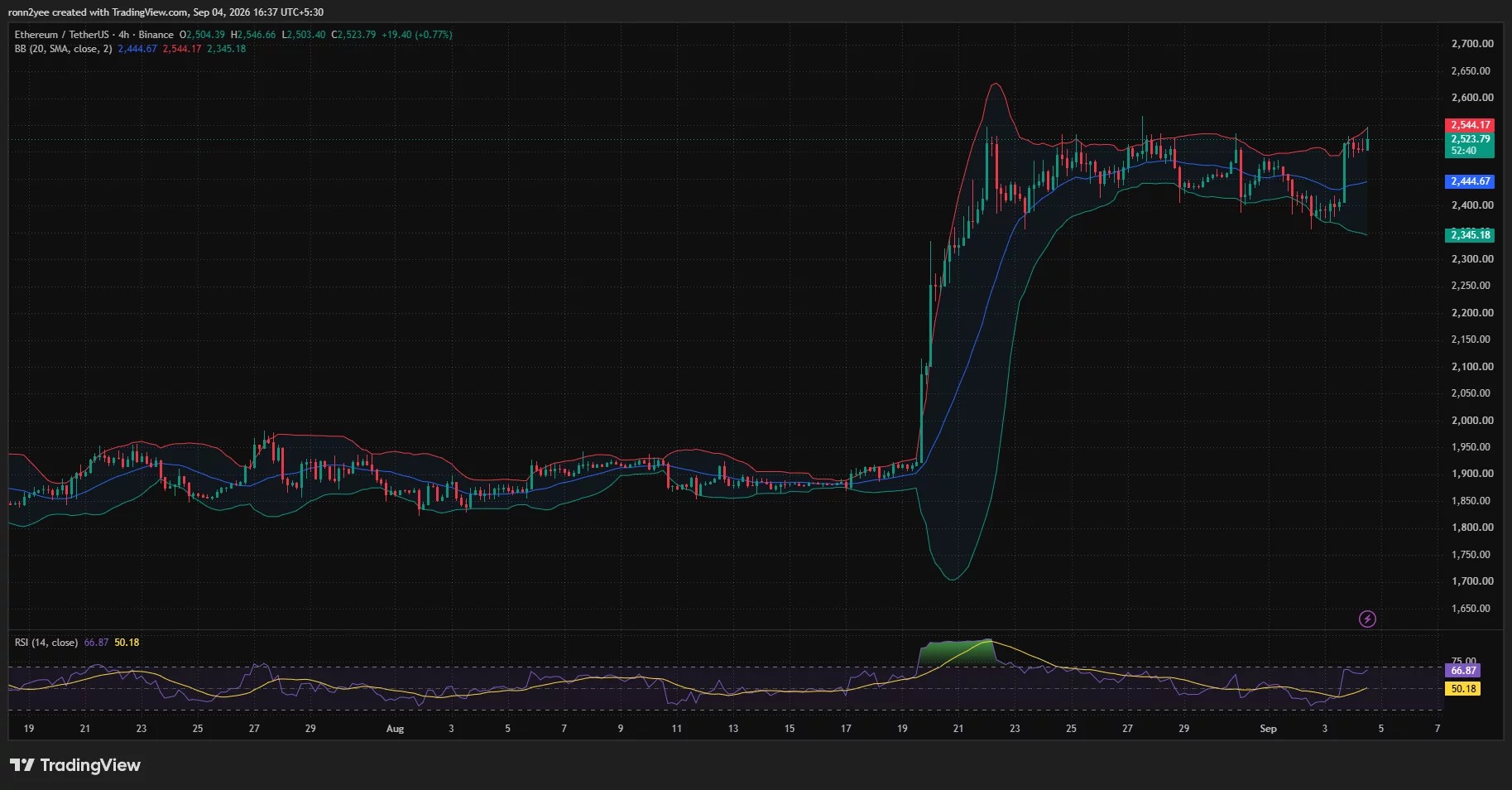
From a technical perspective, on the 4-hour chart of ETH, the price is around $2523.79, near the upper band of the Bollinger Bands, which is at $2544.17, with the middle band at approximately $2444.67. In the same time frame for RSI, the price rose to 66.87, approaching the commonly considered overbought range, yet it still indicates that short-term buying momentum is dominant.
If the price effectively reaches $2,550 and breaks through the upper band of the Bollinger Bands, the market will typically focus on the $2,600 and $2,700 regions next, with the $3,000 level being the next significant milestone. If it encounters resistance again, $2,500 will become the first observation point, followed by support around $2,445 and $2,345.
The liquidation-intensive area is concentrated around $2,550.
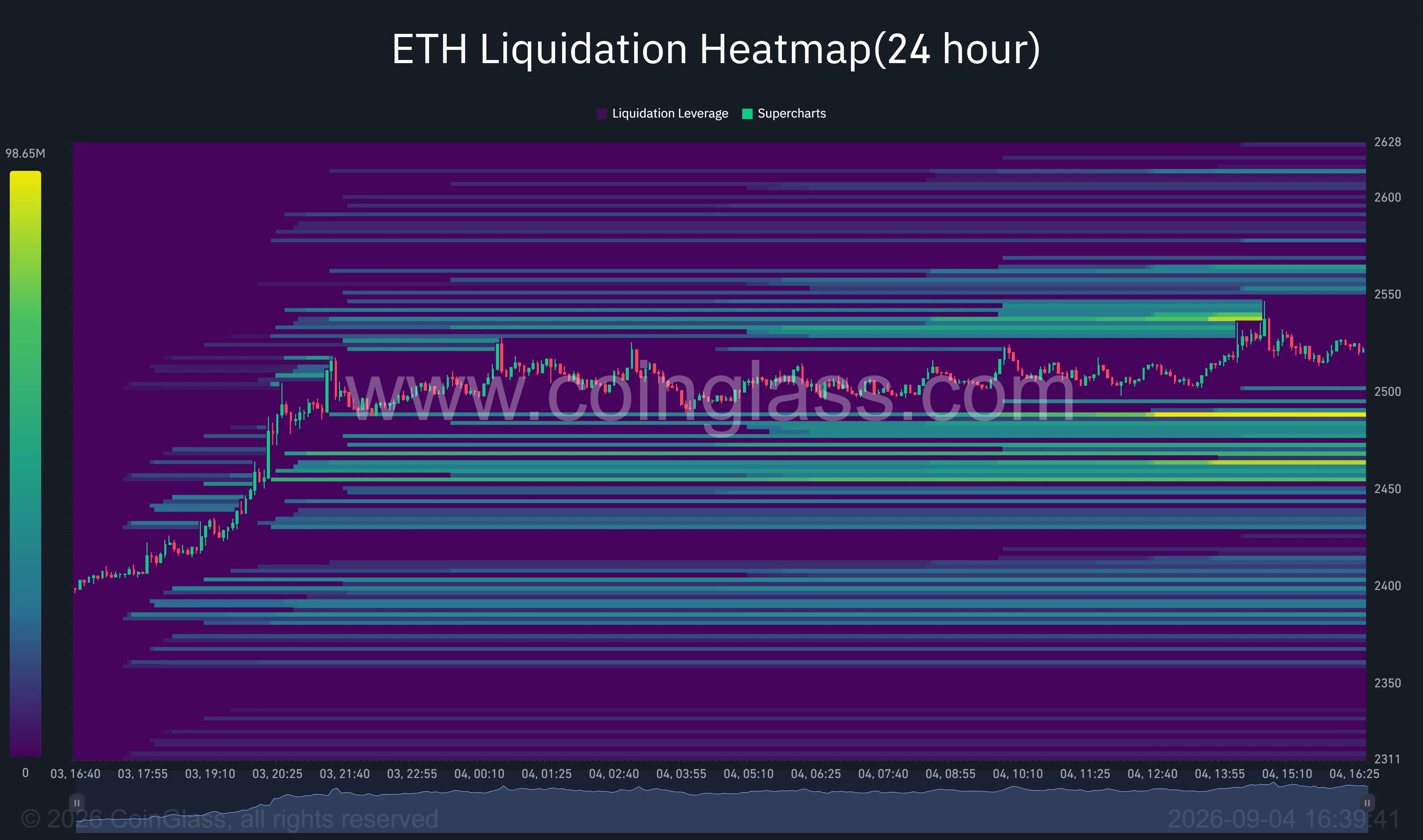
The 24-hour futures settlement heat map for CoinGlass shows that the nearest liquidity-intensive area above ETH is between $2535 and $2550. If the price breaks through this range, some short leveraged positions may be automatically closed, which could further push up the price.
The stronger clearing concentration area below is located around $2485 to $2490, in addition, there are also clearing zones around $2460 and $2400. This means that ETH is currently between the upper and lower groups of leveraged positions, and once the price moves outside this range, the volatility may increase.
CoinGlass Data also shows that in the past 24 hours, ETH the total futures settlement amount was approximately 115 million US dollars, and the size of open contracts was about 34.23 billion US dollars, indicating that the market's leveraged positions remain high after the rebound.
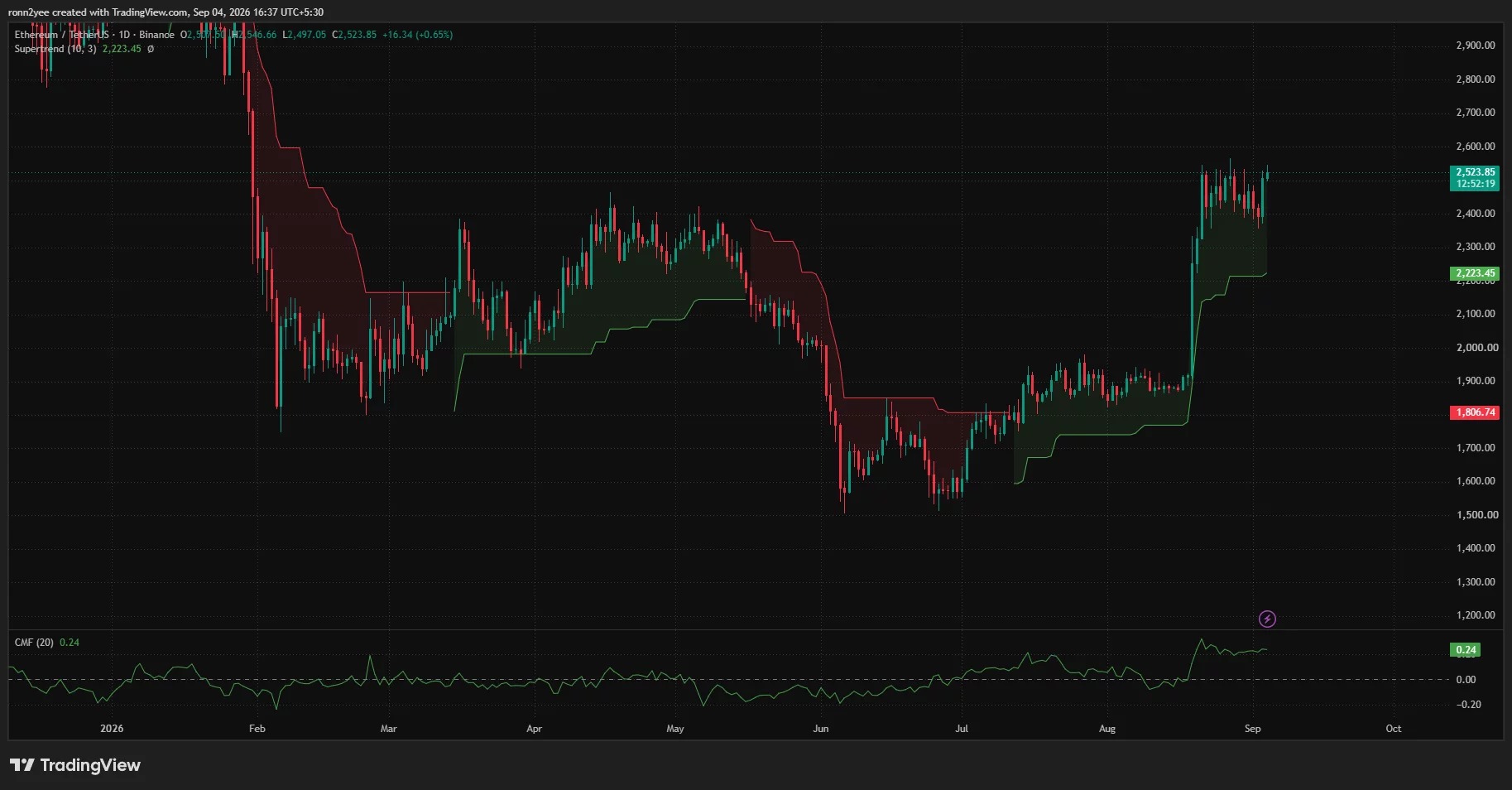
Some analysts believe that if ETH closes above $2,550 this week, there is a chance for the price to further rise to $3,000. However, before a real breakthrough occurs, $2,550 remains the most important short-term resistance level. Next, U.S. non-farm employment and inflation data will also continue to influence interest rate expectations, and indirectly affect the sustainability of the rebound in ETH.