












After an undisclosed live broadcast during an event labeled Cybercab, Tesla subsequently provided more information about this autonomous driving vehicle through product documents and the terms of service (Robotaxi) of the application. With details regarding seating restrictions, handling procedures after collisions, and the hardware design inside the vehicle, the public has begun to see more specific rules for using this car.
At the same time, Tesla also needs to prove the safety of this vehicle to the public, local governments, and the National Highway Traffic Safety Administration (NHTSA) in the United States. US regulatory authorities have previously launched investigations into the advancement of Cybercab.
Not suitable for children under 13 years of age.
Currently, Tesla does not allow minors under the age of 13 to ride Cybercab. The document indicates that this restriction is in effect "at this stage."
In contrast, minors aged 8 to 17 can ride the Model Y model available in Tesla's Robotaxi service. Tesla also provides instructions for using child seats for these two types of vehicles.
However, Cybercab does not have the common child safety seat LATCH fixed interface; the child seat can only be secured using a seatbelt. Tesla also requires that passengers under 18 years of age must be accompanied by an adult in both types of vehicles.
After a collision, it will automatically stop and contact the support team.
Tesla revealed that in the event of a collision involving Cybercab, the vehicle will initiate a series of automatic procedures: airbags will deploy, car doors will unlock, hazard warning lights and interior lighting will turn on, the high-voltage battery will be disconnected, the windows will switch to ventilation mode, the vehicle will brake and come to a stop, and at the same time, the vehicle's infotainment system will establish two-way communication with Tesla's customer support team.
The automatic unlocking of car doors after a collision is a design feature that has received considerable attention in this revelation. Previously, Tesla has been questioned for its widespread use of electronic door locks, with the main controversy focusing on whether these systems would affect the ability of passengers to escape from the vehicle in the event of an accident.
Just last month, Tesla, along with several other automakers in China, recalled approximately 3 million vehicles. One of the reasons for this recall was due to findings that the electronic door locks could potentially trap passengers after a collision.
Line control braking and door design revealed
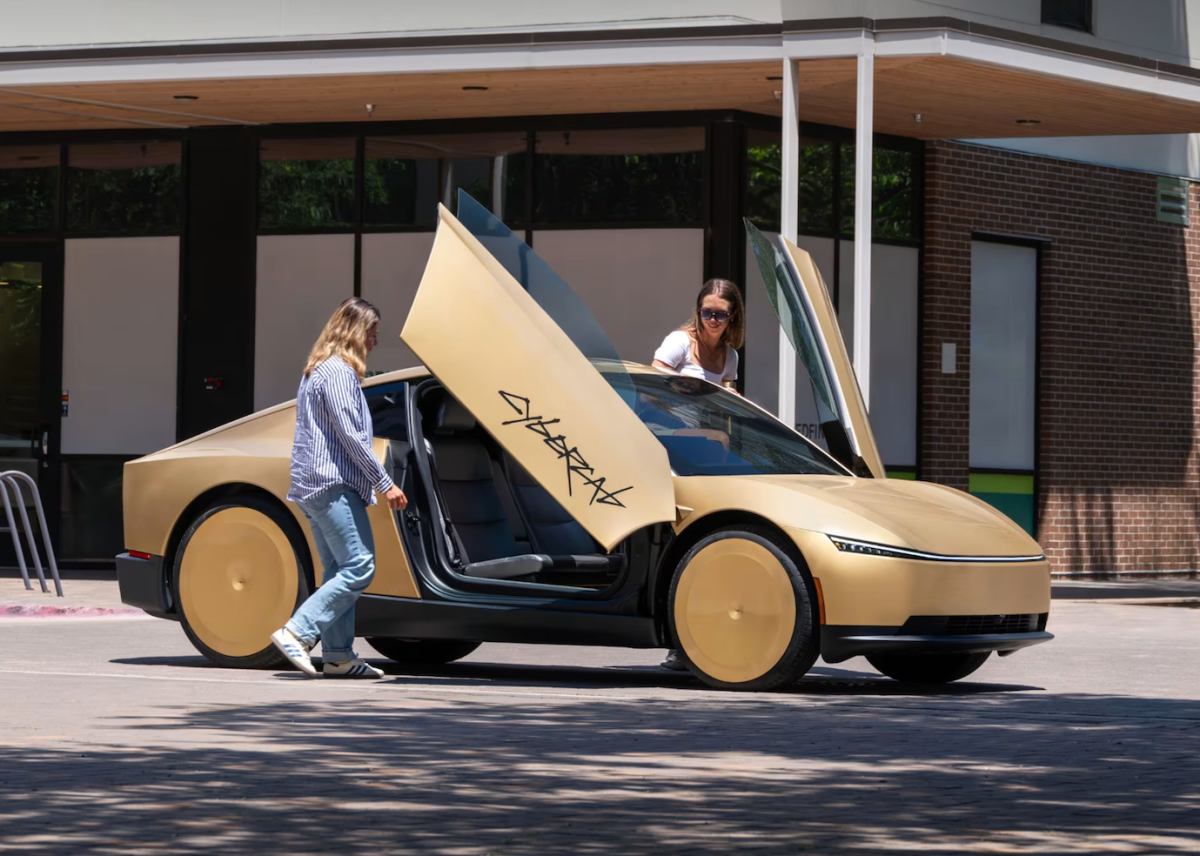
Cybercab still uses electronic door locks as the primary method for opening and closing doors. Passengers can have the doors automatically opened by the system at the start or end of their journey, and there is also a small button outside the vehicle for opening the doors.
Inside the vehicle, the manual door opening mechanism is located in a prominent position on the armrest of each side door. This is in contrast to some Tesla models in the past, which were criticized for having manual release mechanisms that were not easily accessible.
In terms of hardware, Cybercab adopts a wire-controlled braking system rather than the traditional hydraulic braking system. According to Tesla and Elon Musk, this approach can reduce components such as hydraulic pipelines, simplify the structure, and lower costs.
Tesla has previously adopted steer-by-wire technology on Cybertruck, eliminating the mechanical connection between the steering wheel and the front wheels. Cybercab takes this concept a step further by applying it to the braking system as well.
Additional information:Tesla documents also show that the Cybercab windows currently cannot be fully opened, but no reason is provided. Additionally, according to on-site testers, the USB-C interface inside the car can provide a maximum power supply of 90W.