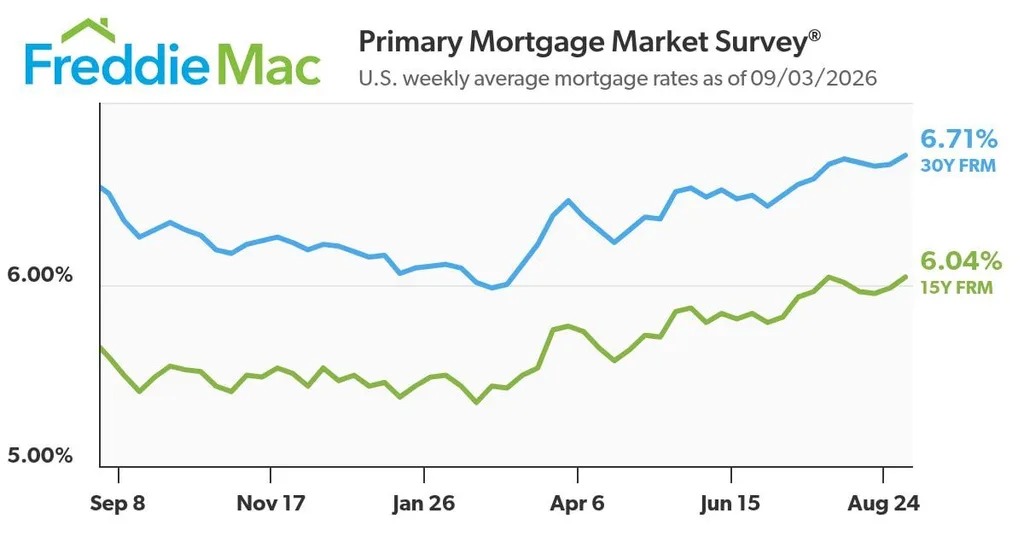













U.S. mortgage rates continued to rise this week, with the average rate for 30-year fixed-rate mortgages climbing to 6.71%, the highest level since July 2025. The high yields on long-term U.S. Treasuries continue to put pressure on housing financing costs, and the market is awaiting the release of the U.S. employment report for August.
30-year and 15-year terms rise in tandem
Fannie Mae data shows that as of the week ending September 3, the average interest rate for 30-year fixed-rate mortgages in the United States rose from 6.66% the previous week to 6.71%. The average interest rate for 15-year fixed-rate mortgages also increased from 5.98% to 6.04%.
Compared to a year ago, the average interest rates for 30-year and 15-year mortgages are 6.50% and 5.60%, respectively. This means that the costs of purchasing a home or refinancing now are higher than they were during the same period last year.
- 30-year fixed mortgage rate: 6.71%
- 15-year fixed mortgage rate: 6.04%
- Statistics cut-off date: the week of September 3rd
10-year U.S. Treasury yield remains high
The market generally regards the yield of 10-year U.S. Treasury bonds as an important reference for mortgage pricing. On Friday morning, the yield of 10-year U.S. Treasury bonds remained around 4.76%, close to the high range of the past year.
Reports indicate that mortgage rates will not move in perfect synchronization with U.S. Treasury yields, but if long-term Treasury yields remain high for an extended period, it typically puts pressure on the mortgage-backed securities market, which in turn raises the financing costs for residents.
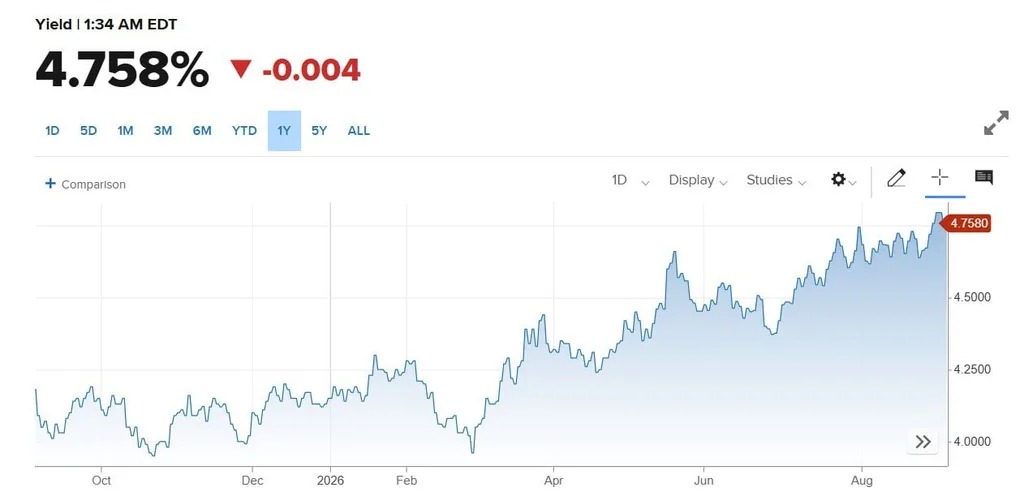
If U.S. Treasury yields decline in the future, there is room for mortgage rates to fall; if yields continue to rise, 30-year mortgage rates may remain at their current high levels or even approach 7%.
Mortgage applications show a slight rebound
Despite rising borrowing costs, there has been a limited improvement in mortgage demand in the United States. Data from the Mortgage Bankers Association of America shows that as of the week ending August 28, the total number of mortgage applications increased by 0.8% month-on-month.
Among them, applications for home purchase loans increased by 2%, while applications for refinancing decreased by 1%. This divergence indicates that some homebuyers are adapting to higher financing costs, but for families that already have loans with lower interest rates, the attractiveness of refinancing remains limited.
The market is focusing on the employment report for August.
Next, market attention will turn to the employment report for August that the U.S. Department of Labor is about to release. If the employment data is stronger than expected, it could push U.S. Treasury yields higher and continue to put pressure on mortgage rates; if the data is weaker, it might alleviate the current pressure on financing costs.
As of early September, the 30-year mortgage rate remained at 6.71%, and the yield on 10-year U.S. Treasury bonds was close to 4.76%, indicating that the affordability of housing in the United States still faces significant pressures.