















The cost concerns of British businesses are gradually being passed on to the next price tag in the supply chain. According to the 164th round of business survey released by the Office for National Statistics (ONS) on September 24, at the beginning of September, 64% of businesses expressed varying degrees of concern about energy prices, a 5 percentage point increase from late August; the proportion among the hospitality and catering services sector reached 90%, the highest level since this issue was included in the survey in March 2026. The surveyed businesses cited the conflict in the Middle East as one of the reasons for their concerns. The "concerns" mentioned here are the businesses' self-reported feelings and do not necessarily mean that each business has experienced the same extent of energy price increases, nor can they be directly translated into how much consumer prices will rise.
Another clue from the same survey: In August, 29% of businesses in operation reported an increase in the prices of goods and services purchased, which is 6 percentage points higher than a year ago; however, only 11% said that they had raised the prices of goods and services they sold. Looking ahead to October, 17% of businesses expect to raise their selling prices, which is 3 percentage points higher than their September expectations and 7 percentage points higher than the same period last year. The construction industry expects a price increase of 32%, the highest since February 2023. The time difference between procurement pressures, expected selling prices, and actual selling prices is what makes this survey particularly noteworthy.
If costs rise first, enterprises may not be able to pass them on immediately.
A restaurant, a hotel, or a construction contractor may not be able to immediately adjust all their quotes even if energy and material costs rise in the same month. Food and beverage businesses have to deal with menu prices and customer traffic, hotels may be constrained by advance booking prices, and construction contracts are often determined months in advance. Passing on the full cost to customers immediately could result in losing orders; absorbing the costs themselves would put pressure on profits. Therefore, the fact that 29% of respondents reported an increase in purchase prices and 11% reported an increase in selling prices cannot simply be interpreted as meaning that the remaining businesses were "unaffected." These two sets of figures come from different issues and represent the proportion of businesses that reported certain changes, rather than the average increase in national purchase and selling prices.
The Office for National Statistics in the UK also found that in August, 28% of businesses reported a decline in turnover, which is 6 percentage points higher than in July, but roughly the same as in August 2025. For businesses with 10 or more employees, the proportion reporting a decline in turnover was 31%, an increase of 7 percentage points from July. In other words, the monthly deterioration is noteworthy, but there has been no significant departure from the level of the same period last year on a year-on-year basis. If one only uses "increase of 6 percentage points" as a headline and ignores the year-on-year stability, it can create the illusion of a sudden collapse in economic activity. The changes in turnover reported by businesses cannot directly replace official gross domestic product (GDP) or retail sales figures.
The pressure is not uniform. For all businesses that are in operation, 29% cite economic uncertainty as the primary challenge affecting turnover; for larger companies, labor costs are the most frequently mentioned issue, accounting for 37%. Energy, labor, and procurement prices can all squeeze profits simultaneously, but different businesses face varying combinations of these factors. The hospitality industry has particular concerns regarding energy costs, which are related to their dependence on heating, cooling, kitchen equipment, and maintaining a business premises. The higher expectations of price increases in the construction sector reflect the relationship between the bidding chain and costs of materials, fuel, and transportation. The high proportion observed in one industry cannot be generalized to all businesses.
What does this survey tell us, and what doesn't it tell us?
The 164th survey was conducted from September 7 to 20, and the Office for National Statistics (ONS) classified it as an ongoing official statistic, noting both sampling and non-sampling errors. Participating companies answered the questions voluntarily, and the questions and topics were adjusted according to economic conditions; therefore, some historical comparisons require careful consideration of the methodology used. In particular, the question regarding "concerns about energy prices" measures respondents' perceptions, not the precise increases in energy bills. The report's prediction of a price increase in October is also merely what companies planned at that time; whether such an increase actually occurs will depend on orders, competition, and subsequent changes in the energy market.
The survey also shows that at the beginning of September, approximately 95% of businesses indicated they were still in operation, of which 85% were fully operational and 10% were partially operational. This context helps to avoid another misunderstanding: an increase in cost pressures does not mean that most businesses have ceased operations. Partial operation may involve adjustments to business hours or staffing arrangements, which is different from complete cessation of operations; moreover, concerns about costs can arise even when a business is still able to operate normally. The operational status of businesses, their profit situation, and their future confidence are different aspects that should not be confused just because one figure stands out.
For macroeconomic observers, this material can be seen as a precursor to price transmission. If the proportion of companies experiencing rising purchase prices continues to be higher than that of companies with rising selling prices, corporate profit margins may be compressed first; if the expectation of price increases is subsequently realized, pressure on consumers may emerge later. However, neither of these two scenarios is a definite prediction. Companies may absorb the impact by reducing energy consumption, renegotiating contracts, changing their product mix, or delaying investments. In future surveys, it is more important to consider actual selling prices, turnover, and difficulties in hiring, rather than focusing solely on one "concerning" figure.
The signals coming from British businesses at the moment are not a uniform "wave of price increases," but rather a set of interrelated choices: they dare not raise prices when demand is not strong, and at the same time, costs are making it increasingly difficult to maintain current prices. Ninety percent of accommodation and catering businesses are concerned about energy prices, a figure that is quite striking, yet it does not directly mean that 90 percent of these businesses are already incurring losses. Only by separating emotional indicators, actual price changes that have occurred, from future expectations can we see how business pressures gradually influence decision-making, and also determine when these pressures may truly affect broader inflation.
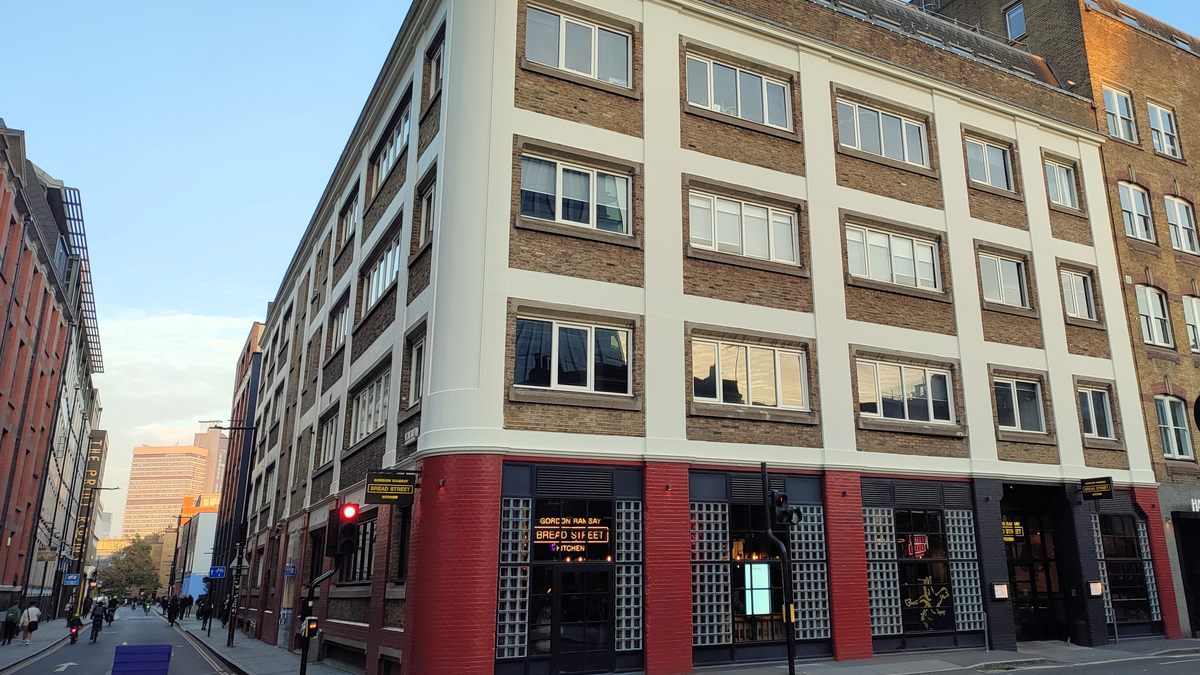
Cover photography by: Ewan-M, Wikimedia Commons, CC BY - SA 4.0; The photos have been cropped and are used solely for demonstrating the British catering industry scene.