















U.S. President Donald Trump predicted that the war with Iran will end "soon" after U.S. officials communicate with the mediators pushing for the resumption of the agreement regarding the Strait of Hormuz.
Reuters reported that Trump made this judgment on Monday (September 28) in the Oval Office, stating that the United States was on the path to victory. "We will win. In my view, things will end one way or another," he told reporters. His speech did not announce a ceasefire, nor did it announce an agreement with Tehran.
The Iranian proposal remains the starting point for indirect negotiations. Iranian Foreign Minister Abbas Araghchi stated that Tehran has submitted a plan through the mediators, and if Washington accepts its terms, the Strait of Hormuz could be reopened within 7 days. Trump rejected the initial proposal, but the mediators are still discussing possible modifications with the governments of both countries.
Hormuz negotiations shift towards modifications to Iran's seven-day plan
Alagzi proposed this plan during the United Nations General Assembly in September. According to the terms he described, hostilities would cease first, followed by Iran's reopening of the strait, after which the two countries would begin negotiations regarding Tehran's nuclear program. The plan also requires the United States to lift the maritime blockade, provide sanctions exemptions for Iranian oil, and release at least $12 billion in frozen Iranian assets.
On September 26, Trump vetoed this proposal. As previously reported by crypto.news, despite the intensified disagreements putting pressure on Bitcoin, both parties maintained open diplomatic channels after his rejection. The proposal originally intended to use the Hormuz issue as a first step in negotiations regarding remaining topics such as sanctions and Iran's nuclear activities.
According to the Financial Times, the mediator subsequently proposed a revised plan. The discussions covered when Iran would resume traffic through the Strait of Hormuz, as well as when Washington would lift its sanctions and other economic restrictions. There are still disagreements over the sequence of these steps, and the United States hopes that the relevant provisions will address Iran's nuclear program.
Trump also separately denied reports that he had proposed to relax sanctions or provide frozen Iranian funds in exchange for nuclear concessions. “I didn’t give them anything,” he wrote on Truth Social on Monday. His denial targeted the conditions previously proposed by Washington; however, this did not retract his statement that American officials had communicated with mediators.
The latest proposal draws on an agreement that was not maintained in June. crypto.news Previous reports regarding the Strait of Hormuz mentioned that Washington and Tehran had reached a memorandum allowing merchant ships to use this waterway while the two sides continued to negotiate other terms. However, due to disputes over control of shipping routes, this arrangement ultimately collapsed, and Trump later stated that the ceasefire had ended.
Iran persists with its economic demands, and its currency continues to weaken.
Iranian officials continue to link any solution to adjustments in the economic and military measures imposed by the United States. Araghzi stated that Tehran is willing to seek a diplomatic solution; however, Ebrahim Azizi, the chairman of the Parliament's Security Committee, questioned Trump's claims regarding how the war would end. Neither government has yet announced a ceasefire or established terms for traffic through the Strait of Hormuz.
During the negotiations, Tehran faced increasing economic pressure. According to reports from The Associated Press, on Tuesday, the Iranian rial fell below 2.5 million rials per US dollar, hitting a historic low. This was due to the war, sanctions, and the US naval blockade that restricted Iran's oil exports. US officials stated that these measures limited Iran's ability to continue fighting.
The Hormuz issue is also directly related to the American public, as disruptions in oil transportation will continue to draw attention to fuel costs. Trump predicted that oil prices and gasoline prices would fall after the war ended. However, for now, this prediction still depends on the outcomes that the negotiating parties have not yet reached: an agreement on the strait, the blockade, and subsequent negotiation terms.
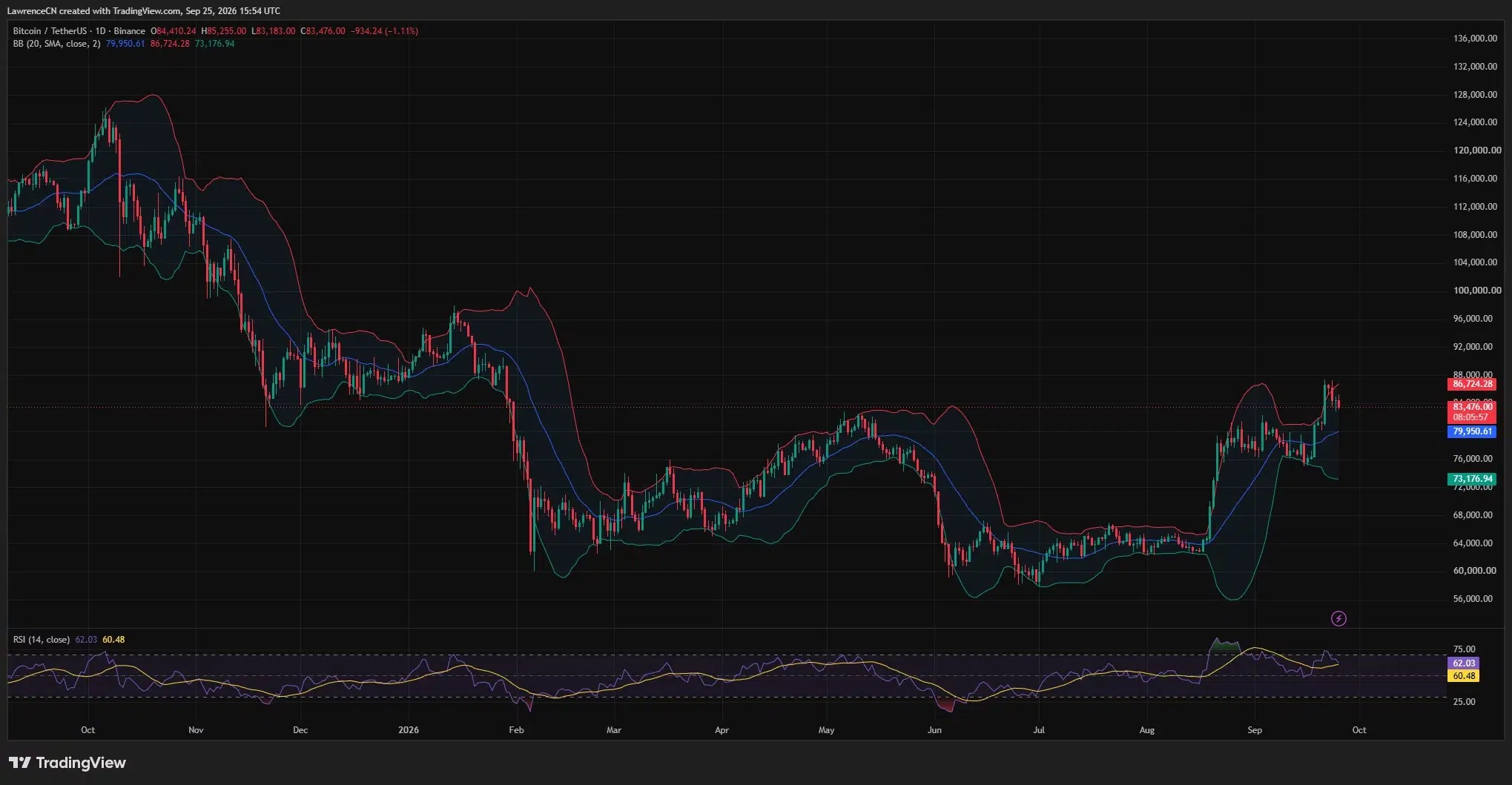
Under pressure of yields in the United States, Bitcoin remains around $83,000.
Market snapshots cited in the original text show that Trump's latest remarks did not cause significant immediate fluctuations in major cryptocurrencies. Bitcoin was trading at around $83,081, Ethereum at around $2,680, and XRP at around $1.48; all three saw declines of over 1.5%. The snapshot also indicated an increase in the yield of 30-year U.S. Treasury bonds; however, this does not prove that Trump's remarks or the changes in yields alone caused the decline in these tokens.
The interest rate environment in the United States is important for American investors who hold cryptocurrencies, whether directly or through exchange-traded funds (ETFs). On September 25th, crypto.news reported that the yield on 10-year U.S. Treasury bonds briefly rose to 5.20%, and the yield on 30-year bonds closed at 5.47%. After falling from around $87,000, Bitcoin was near $84,000 at that time, although there has still been capital inflow into U.S. spot Bitcoin ETF recently.
Earlier this week, Bitcoin fell below $84,000, following Trump's rejection of Iran's proposal. Reports on September 28 showed that in the five trading days of the previous week, up to last Friday, there was a net inflow of $2.39 billion in US spot Bitcoin ETF. Ethereum also saw a decline after breaking through $2,700, while XRP was near $1.50 at that time.
Oil prices also fluctuate with the changing prospects of the strait. Previously, on September 22, after Iran hinted that the Strait of Hormuz might reopen within a week, West Texas Intermediate (WTI) crude oil fell by more than 2.5% to around $89 per barrel, and Brent crude oil dropped below $98, as reported earlier by crypto.news. On September 29, Reuters reported that as conflicts continued to disrupt supplies, Brent crude oil was at $106.77, and U.S. crude oil was at $93.94.