











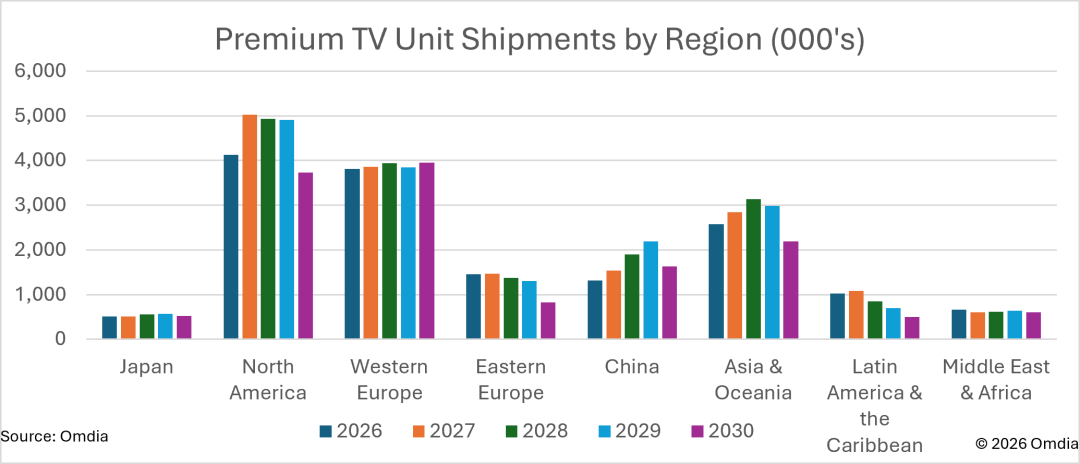
News from the IT Home on October 8th: The latest research by Omdia indicates that in 2027, global shipments of premium TVs are expected to increase by 9.3% year-on-year. Premium TVs are defined as those with an average selling price of over $1,000. This segment of the market is anticipated to grow, while overall global TV shipments are expected to decline by 1.0%.
North America is expected to become the main market for growth in high-end television shipments, with an anticipated year-on-year increase of 21.9% in 2027. Omdia Data from the "2026 Second Quarter Television Forecast Database" shows that high-end models are playing an increasingly important role in the product strategies of television manufacturers.
Rising storage costs put pressure on entry-level TVs
Rising component costs and a shortage of memory chips are putting pressure on the profit margins of television manufacturers, with entry-level models being particularly affected. For a 65-inch LCD TV with an average selling price of $300, a slight increase in storage costs of just a few dollars could further squeeze the profit margin or force manufacturers to raise prices. High-end models, due to their higher selling prices, have a smaller proportion of these costs relative to their total price, thus having a stronger ability to absorb these increases.
Against the backdrop of limited component supply, leading brands are prioritizing the allocation of resources to high-end models in order to protect the corporate lifecycle value ( ELTV ) and hardware profitability. This has prompted TV manufacturers to adjust their product portfolios, placing greater emphasis on high-value products.
Omdia, the person in charge of television research business, stated: "Component supply restrictions are affecting the product strategies of television manufacturers. Rising storage costs have further exacerbated the pressure on low-profit models, prompting brands to shift their resources towards high-end televisions." RGB LED Display technology innovations such as backlighting provide support for this strategy, offering consumers clearer reasons to upgrade their televisions.
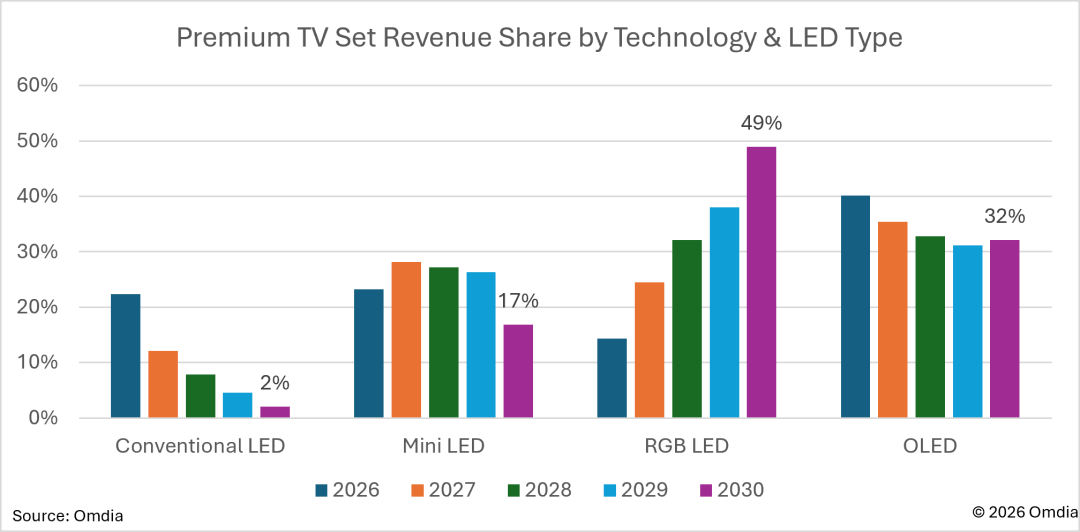
By 2030, RGB LED backlights will account for 49% of the revenue from high-end TVs.
Technological innovation is driving the market towards high-end televisions. Brands are expanding the commercial application of the RGB LED backlight architecture, achieving improvements in color gamut capacity, local dimming precision, and peak brightness, thereby supporting higher product pricing.
Omdia predicts that by 2030, RGB LED backlights will account for 49% of the global high-end TV revenue. By then, it is estimated that LCD TVs using traditional backlight technologies will only account for 2% of high-end TV revenue, reflecting the shift in technology structure within this segment.
The above prospects indicate that, against the backdrop of a slowdown in overall television demand, the importance of technological iteration and higher-value models is becoming increasingly prominent. shipments of high-end televisions in North America are expected to continue to grow, reflecting the persistent demand from consumers with high purchasing power for advanced display features. The ability of television manufacturers to manage component supply and expand their range of high-end products will be key to seizing this opportunity.
refer to
Omdia: In 2027, global shipments of high-end TVs are expected to grow by 9.3%, while overall global TV shipments are set to decline.