

Under the chain reaction of selling in South Korean tech stocks, the price of Bitcoin continued to be under pressure. On Thursday, South Korea's KOSPI index fell by 7.5%, and the crypto market saw a new downward trend as a result.
Key points:
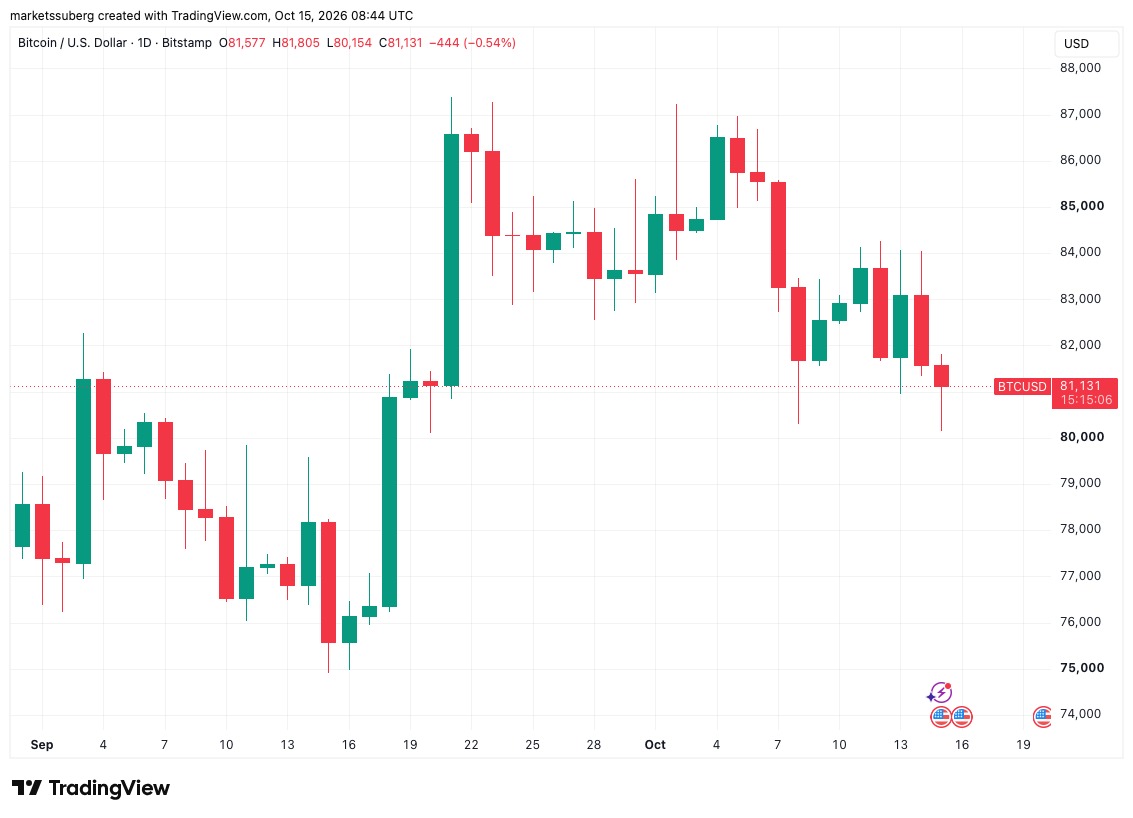
- As downward pressure on the South Korean stock market returned, Bitcoin fell to a new local low of $80,154.
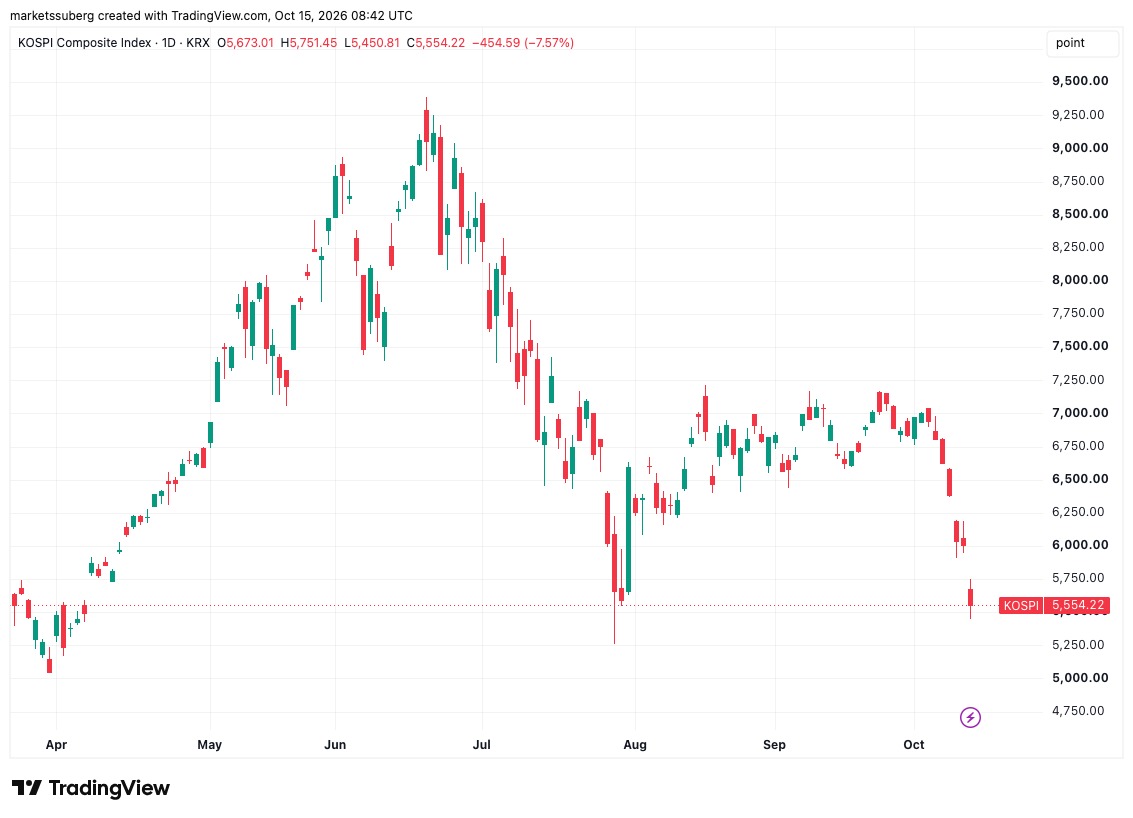
- KOSPI closed at 5,554 on Thursday, the lowest level since early April, with tech stocks suffering a heavy setback.
- Despite a Singaporean tanker being attacked and sinking in the Strait of Hormuz, Brent crude oil still fell by more than 2%, with the market describing this attack as "unjustifiable."
Bitcoin approaches $80,000, KOSPI drops by 7.5%
TradingView data shows that BTC / USD reached $80,154 on Bitstamp; the last time this level was seen was on September 20th.
On Thursday, South Korea's composite stock price index KOSPI closed down 7.5%, with the cumulative decline so far this week reaching 15.5%.
As earlier this week, tech giants once again became hard hit by selling pressure: SK Hynix fell by 11%, and Samsung Electronics closed down 9.5% for the day.
Cointelegraph reports that concerns regarding artificial intelligence-related debt obligations, capital outflows, and competition from China have collectively contributed to this downturn in the South Korean market. The 200-day moving average of KOSPI once fell to 5,450 points, reaching a level not seen since late July. The index ultimately closed at 5,554 points on Thursday, marking its lowest daily close since April 8th.
South Korean local media "Korea Herald" quoted Kim Sik-hwan ( Kim Seok - hwan ), an analyst at Future Asset Securities, as saying that global macroeconomic headwinds will further increase subsequent pressures.
"Fluctuations are expected to continue in the short term," he said. "As the domestic supply and demand situation deteriorates, the market has become more sensitive to external risks, and it does not seem likely that the global environment will improve in the short term either."
SK Hynix and Samsung will release their third-quarter financial reports on October 28th and 29th, respectively. If the results fall short of expectations, it may further exacerbate the downward volatility in investors' sentiment towards tech stocks. Samsung expects to report third-quarter sales of 195 trillion Korean won (145 billion US dollars) and operating profits of about 107 trillion Korean won (80 billion US dollars).
Despite the sinking of a Singaporean oil tanker, oil prices still fell.
After U.S. inflation data exceeded expectations on Wednesday, the downward pressure on Bitcoin further increased.
In September, the Consumer Price Index ( CPI ) rose by 3.7% year-on-year, prompting market expectations for further interest rate hikes by the Federal Reserve to shift towards a more hawkish stance.
Trading firm QCP Capital asked in its macro analysis seen by Cointelegraph on Thursday: 'Will these data that exceed expectations force further interest rate hikes – or will credit pressure prompt a recalibration of policies?'
Due to the significant impact of high oil prices on the rise in CPI, despite the intensification of tensions in the Middle East, both WTI and Brent crude oil saw declines on Thursday. On Wednesday, an oil tanker registered in Singapore sank in the Strait of Hormuz, and the Singapore Maritime and Port Authority described this incident as "unjustifiable."
ICM's business development director, Firas Bechwaty, stated in an interview with CNBC that it is almost impossible for the traffic through the Strait of Hormuz to return to the levels seen before the US-Iran war.
"At the same time, Saudi crude oil continues to be transported to international buyers through alternative routes, and the accelerated release of emergency reserves by members of the International Energy Agency has provided an additional buffer. Even though tensions remain high, this has prevented a significant rise in oil prices," he said.
As of press time, WTI crude oil is trading below $95 per barrel, down 0.5%; Brent crude oil is at $103.7 per barrel, with a decline of 2.2%.
Brent crude oil CFD one-hour chart. Source: Cointelegraph / TradingView