Overnight, U.S. inflation data rose unexpectedly, causing market bets that the Federal Reserve would maintain high interest rates for a longer period to surge. Coupled with factors such as the widening of credit gaps (indicated by AI), U.S. tech and semiconductor stocks tumbled on Wednesday. Asian-Pacific markets fell across the board on Thursday, with the South Korean stock market experiencing particularly heavy losses. The A-share market opened lower and continued to decline. AI hardware sectors were in adjustment, but in the afternoon, securities firms and banks helped stabilize the market, resulting in a narrowing of losses for the three major stock indices.
On October 15th, the A-share market opened significantly lower and then fluctuated downward. In the afternoon, the declines of the three major stock indices widened for a while, but towards the end of the session there was a slight rebound. The Shanghai Composite Index managed to hold above the 3700-point mark. The broad-based index ETF saw increased trading volume at the end of the session, with securities firms driving another upward movement during the session. Defensive sectors such as liquor and large finance performed strongly against the trend, while resource cyclical stocks that had seen significant gains earlier, such as shipping, coal, and oil and gas, experienced collective declines. sectors related to computing power hardware and chip semiconductors also fell, and areas including storage chips, optical modules, copper-clad laminates, and circuit boards underwent adjustments.
Hong Kong stocks opened and traded lower throughout the day, with both the Hang Seng Index and the Hang Seng Tech Index falling in the morning session. The Hang Seng Index dropped by 1%, and the Hang Seng Tech Index once tumbled 3%. Weighted tech stocks, including those in the internet and technology sectors, generally declined. Technology stocks such as optical modules and large model companies like AI also saw significant drops, with companies like GigaDevice Technology, Lanqi Technology, Zhongji Xuchuang, Zhipu, and MINIMAX leading the declines. In the bond market, treasury bond futures showed mixed and volatile performance. On the commodity front, domestic commodity futures fell across the board, with precious metal futures experiencing particularly substantial declines.
Regarding the market adjustments, according to Zhongxin Jingwei, Li Daxiao, former chief economist of a securities firm and member of the Shenzhen Decision-making Consultation Committee, stated that the significant market decline was mainly influenced by the sharp drops in the external markets of the United States, Japan, and South Korea. The Philadelphia Semiconductor index fell by more than 4%, the Japanese stock market tumbled by over 4% during trading, and the South Korean stock market dropped by over 7%. The Sci-Tech 50 index also fell by over 3% at the beginning of trading, erasing all of its gains this year. Some sectors with high valuations are undergoing orderly adjustments, which is also a reason for this round of market adjustments.
A-share marketAs of the close, the Shanghai Composite Index fell by 1.59%, the Shenzhen Component Index fell by 2.43%, and the GEM Index fell by 2.92%. On the market, individual stocks showed a general decline, with over 5,100 stocks in the Shanghai, Shenzhen, and Beijing markets turning red. Today's trading volume reached 1.65 trillion yuan. The trading volume of the Shanghai and Shenzhen markets was 1.63 trillion yuan, an increase of over 200 billion yuan compared to the previous trading day. In terms of sectors, securities firms and the five major banks took turns driving the market in the afternoon. SMIC, Zhongwei Company, and Beifang Huachuang made a comeback, and the declines of various indices narrowed towards the end of the session. Sectors such as fiberglass, oil and gas, maritime transportation, storage, and diamond cultivation saw significant adjustments throughout the day, while the liquor and telecommunications sectors remained strong.
Hong Kong stocksAs of the close, the Hang Seng Index fell by 1.03%, and the Hang Seng Tech Index dropped by 2.72%. On the market, semiconductors and artificial intelligence themes led the declines, with Lenovo Group, MINIMAX-W, Changfei Optical Fibre & Cable, and Lanqi Technology all falling by more than 10%. The banking sector was strong, with Industrial and Commercial Bank of China, China Construction Bank, and Agricultural Bank of China reaching new highs again.
Debt MarketTreasury bond futures showed mixed movements. As of the close, the main contract for 30-year bonds fell by 0.08%, the main contract for 10-year bonds fell by 0.01%, the main contract for 5-year bonds remained unchanged, and the main contract for 2-year bonds rose by 0.01%.
ProductsDomestic commodity futures generally fell. By the close of trading, precious metals led the decline, with silver dropping by 5.34%; most agricultural and sideline products also fell, with apples declining by 4.75%; all new energy materials were down, with polysilicon falling by 4.58%; most energy products decreased in value, with crude oil dropping by 3.68%; all chemical products fell, with asphalt losing 3.41%; all basic metals declined, with tin dropping by 3.28%; most black metal products fell, with coking coal dropping by 3.19%; most oils and fats fell, with palm oil decreasing by 3.03%; all non-metallic building materials were lower, with PVC falling by 2.30%; shipping futures saw the largest gains, with the container freight index (European line) rising by 2.37%.
Broad-based ETF sees significant volume increase near the end of trading
The broad-based index ETF saw a significant increase in trading volume towards the end of the session. Among them, the ChiNext index ETF ETFs managed by E Fund and the Sci-Tech 50 ETF managed by Huaxia both traded over 10 billion yuan, while the CSI 300 ETF managed by E Fund traded over 15 billion yuan, reaching a new high in nearly 9 months.
According to the Shanghai Securities News, recently there has been a continuous influx of funds into stock-based ETF. According to Choice's calculations, since September 28th until October 14th, stock-based ETF has seen a net inflow of 92.792 billion yuan, and broad-based ETF remains the key direction for fund accumulation.
Among them, the Huaxia Science and Technology 50 ETF saw a net inflow of 15.463 billion yuan, the GEM ETF E Fund managed by E Fund had a net inflow of 10.735 billion yuan, and both the E Fund's Science and Technology 50 ETF and the SSE Index ETF Fund managed by Fullgoal, as well as the CSI 1000 ETF managed by Southern Asset Management and the CSI 300 ETF managed by Huatai-PineBridge, had net inflows exceeding 3 billion yuan each.
At the same time, recently there has been a concentrated establishment of ETF, and in the future, multiple ETF will be listed for trading. According to statistics, since October 8th, 15 ETF have issued listing and trading prospectuses. On October 14th alone, 3 ETF issued such prospectuses. Looking at the list of the top ten holders disclosed by these newly established ETF, institutional entities are frequently seen among them.
Specifically, on October 14th, CCB GEM Financial Technology ETF issued a listing and trading prospectus. As of October 12th, the top ten holders of this ETF included several institutions such as Guotai Haitong Securities, Changjiang Securities, and Dongwu Securities.
Big Finance Defies the Trend to Support the Market: ICBC Hits a Record High, Hualin Securities Hits the Daily Limit Up
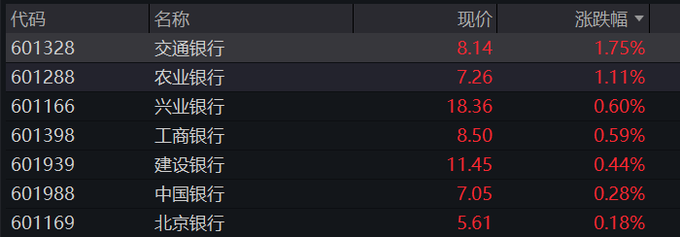
In the late trading session, the large financial sector saw a rally, becoming a stabilizing force for the index. In the banking sector, Industrial and Commercial Bank of China rose by 0.59% to reach a new historical high, with a total market value of 3.03 trillion yuan, while Bank of Communications rose by 1.75% and also set a new historical high during the session.
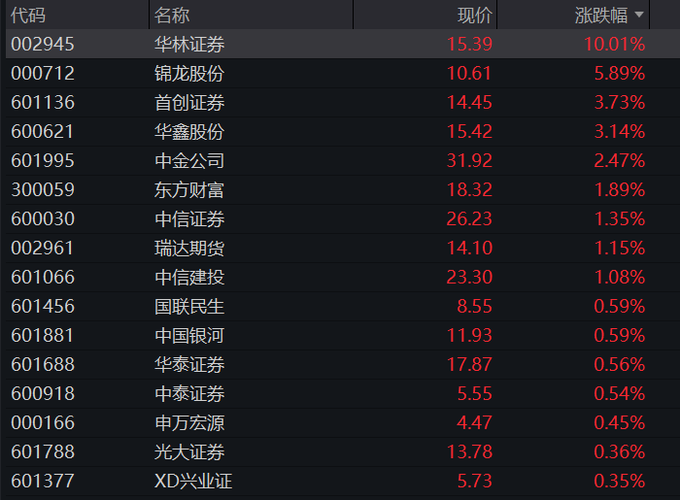
Securities sector saw unusual movements in the afternoon, with Hualin Securities rising 10.01% to hit the daily limit up, Jinlong Shares rising nearly 6%, and Huaxin Yongdao, Huijin Shares, Fortune Trend, Dazhihui, Dongfang Fortune, and others also seeing rapid increases.
On the surface, industry insiders believe that the net profits of A-share listed securities firms in the first three quarters of 2026 are still expected to grow, and the performance divergence is set to intensify further. Leading institutions, with their specialized layouts, are expected to seize structural opportunities and continue their high-growth trend.
The banking sector continues to follow the logic of high dividends as a safe-haven. Against the backdrop of low long-term interest rates and increasing cautious sentiment, it has become an important choice for funds seeking risk aversion in their investments.
PCB Concept Pulling Up Against the Market Trend: 100% of Third Quarter Reports Show Positive Results, a "Flawless" Report Card Driving Both Volume and Price Up
On the market, Aohong Electronics has reached a new historical high with 11 consecutive daily limit-ups in 19 days; Jinlu Electronics has a 20% daily limit-up, with its cumulative increase for the year already exceeding 140%; Chongda Technology has also achieved a daily limit-up; Tianjin Prin has a limit-up; Junya Technology has 2 limit-ups in 3 days; Zhengye Technology has risen by 13.46%; Yidun Electronics, Sihui Fushi, Ultrasonic Electronics, Jinbaize, Yihao New Materials, and several other stocks have all risen by more than 5%.
The core driving force behind this round of market activity is not merely speculative hype around certain themes, but rather the almost flawless third-quarter financial reports from various sectors. According to media statistics, as of noon on October 15th, 16 PCB concept stocks in the A-share market had released their performance forecasts for the third quarter of 2026, with 14 expecting an increase and 2 a slight increase, resulting in a forecast positivity rate of 100%.
The performance side features a simultaneous increase in volume and price, with a particularly prominent acceleration from quarter to quarter. Jinlu Electronics expects its net profit attributable to the parent company for the first three quarters to be between 180 million yuan and 196 million yuan, representing a year-on-year increase of 192.88% to 218.92%. Among this, the net profit for the third quarter alone is expected to be between 124 million yuan and 140 million yuan, with a quarter-on-quarter growth of 166% to 200%. The company stated that the amount of orders received in the first three quarters increased by about 112% year-on-year, and the average unit price also increased by about 55% year-on-year.
The leading company, Shanghai Electric Apparatus Co., Ltd., expects its net profit attributable to the parent company for the first three quarters to be between 5.45 billion yuan and 5.70 billion yuan, a year-on-year increase of 100.54% to 109.74%. Based on the semi-annual report, the net profit for the third quarter alone is estimated to be between 2.527 billion yuan and 2.777 billion yuan, with a quarter-on-quarter increase of 50% to 65%.
Jiayuan Technology expects its net profit attributable to the parent company for the first three quarters to be between 530 million yuan and 580 million yuan, a year-on-year increase of 1197% to 1319%, ranking first among the companies that have disclosed their forecasts; Chongda Technology expects its net profit for the same period to increase by 90% to 118% year-on-year.
Catalytic logic chain is clear: Firstly, on the demand side, there is a strong demand for high-end PCB and copper-clad plate materials from AI servers, high-speed switches, and storage systems. Omdia predicts that semiconductor revenue in the computing and data storage sectors will grow by over 150% year-on-year in 2026, with a scale approaching one trillion US dollars. Secondly, regarding price increases, Guangdong Jiantao Circuit Board Co., Ltd., a subsidiary of the copper-clad plate giant Jiantao Group, announced its eighth round of price hikes within the year on October 14th, raising the sales prices of boards using thin fabric of 2116 (inclusive) and below as raw materials, as well as PP (semi-cured sheets) by 15%. The tight supply, combined with slow capacity expansion, has contributed to ongoing price increases due to shortages. Thirdly, overseas peers confirm this trend: Taiwan Optoelectronics reported revenue of NT$60.8 billion in the third quarter, a year-on-year increase of 142%; Taiyao Electronics saw a year-on-year increase of 122%, and Golden Image Electronics experienced a year-on-year increase of 69%.
Financial Street Securities pointed out that the third-quarter reports are the most important catalyst for trends in October, and the growth sector is the area with the strongest verifiability of performance. Stocks in high-growth sectors that were reduced in holdings in September due to assessment pressures may see a rebound in capital flow at the beginning of October. Guojin Securities believes that AI copper-clad plates/ PCB had outstanding performance in the third quarter, presenting a good opportunity for positioning after the correction; strong demand for AI has driven a simultaneous increase in price and volume for PCB. Many AI-PCB companies have strong orders, are operating at full capacity, and are significantly expanding production, so high performance growth is expected to continue.
Shipping sectors hit the daily limit down; profits from coal, oil, and gas are being realized, while computing power hardware continues to face pressure.
Port shipping was among the sectors with the largest declines throughout the day. China Merchants Shipbuilding Co., Ltd. fell by 9.38% (at one point it hit the daily limit down), COSCO Shipping Energy, China Merchants Nanyou, and Haitong Development also hit the daily limit down, while COSCO Shipping Holdings and CIMC Group saw significant declines.
On the news front, the White House in the United States is considering relaxing sanctions against what are known as "shadow fleets" in order to reduce the currently high global maritime freight rates. The market is concerned that this move will increase effective shipping capacity and impact expectations for high oil transportation prices. Additionally, after the sector had already seen a significant rise driven by the situation in the Strait of Hormuz earlier on, with profit-taking activities intensifying, and followed by a weakening of oil transportation stocks in the U.S. stock market overnight (with DHT's shares falling by over 6%), there is now a concentrated release of sentiment.
However, the transportation team at Zhongtai Securities pointed out that the oil shipping sector is still in a high-growth phase. Current policies are still in the discussion stage and no formal decisions have been made yet. Moreover, ship insurance companies are still subject to regulations imposed by the European Union and the UK, so the actual effect of any relaxation measures may be limited.
Resource cyclical stocks such as coal and oil and gas also tumbled significantly. In the coal sector, Haohua Energy fell by 8.88%, Yunmei Energy hit the daily limit down, and Shaanxi Heimao saw a sharp decline; in the oil and gas sector, Lanyan Holdings fell by 7.25%, Sinopec saw a temporary drop of over 4% during trading, while Changchun Gas and Xin Tianqi Gas led the declines.
Continued adjustments in the fields of computing power hardware and storage. Ruijie Networks fell by 8.61%, Xinyisheng fell by over 7%, Cambridge Technology fell by over 6%, Zhongji Xuchuang fell by over 5%, and Changfei Optical Fiber, Tianfu Communication, etc. also fell; in the storage semiconductor sector, Guanghua Technology hit the daily limit down.
However, North China Huachuang rose by over 4%, SMIC and CMIC turned positive, and the semiconductor sector made a strong comeback in the late session.
Catalystically, overnight, US stocks in the optical modules, storage, and AI chip sectors saw a collective slump. Coupled with rumors of FCC intending to restrict Chinese optical modules, the cooling sentiment in the overseas AI computing power narrative was directly transmitted to the high-end hardware sector in the A-share market.
At 14:39, North China Huachuang rose by over 4%, while SMIC and CMIC turned positive, with the semiconductor sector making a strong comeback in the late session.
At 13:48, capital flowed into the semiconductor sector, with Huahai Qingke rising by over 5%, followed by Northern Huachuang, Changchuan Technology, and Huarun Micro rising in tandem.
In the afternoon, the broad-based index ETF saw a significant increase in trading volume. The ChiNext index ETF had trading volume of over 7.1 billion yuan through E Fund, while the CSI 500 ETF managed by Huatai-PineBridge had trading volume of over 4.8 billion yuan. The trading volumes of both the CSI 500 ETF (E Fund) and the SSE 50 ETF (Huaxia) exceeded 1.6 billion yuan, surpassing the total trading volume of yesterday.
At 13:42, the securities broker sector saw another surge, with Hualin Securities reaching the daily limit up again. CITIC Securities, CITIC Construction Investment, CICC, and Huatai Securities all contributed to this momentum.
13:27 Hang Seng Technology Index fell by over 3%, Lenovo Group dropped by 15%, MINIMAX-W fell by over 12%. MINIMAX-W, Jiangbolong, and Lixun Precision all hit new lows during the session. The GEM Index fell by over 4% in the afternoon, setting a new low for the year, and the Sci-Tech 50 Index also fell by nearly 4%.
At 13:08, the Shanghai Composite Index fell by more than 2%, the Shenzhen Component Index fell by more than 2.5%, and the GEM Index fell by more than 3%. The coal, oil and gas extraction and services, and port shipping sectors led the declines. Over 5,000 stocks in the entire market fell.
11:56 The Hang Seng Technology Index's intraday decline widened to 3%.
The trigger for this round of adjustments came from overseas. In September, the US CPI rose by 3.7% year-on-year, exceeding the market's expectation of 3.6%, marking the fastest increase in five months; CME FedWatch shows that traders' bets on the Federal Reserve raising interest rates by 25 basis points in October have heated up, with the probability of a rate hike rising to 43.7%, an increase of 22.1 percentage points from before the data was released.
U.S. stocks closed lower across the board overnight, with the Philadelphia Semiconductor Index tumbling 4.3%. The chip stock index experienced its sixth consecutive decline, setting a new record for the longest streak of losses since May 2025; AI cloud service provider CoreWeave fell more than 15%, raising doubts in the market about the sustainability of AI's infrastructure investments.
Storage chain: SK Hynix stocks fell by over 6%, SanDisk by over 5%, and Seagate Technology/Western Digital/Micron Technology by over 4%. Morgan Stanley's CEO warned that the growth momentum of AI spending will begin to slow down – currently, the annual spending on AI infrastructure construction is about $1 trillion.
The Asia-Pacific market faces further challenges: South Korea's KOSDAQ index tumbled 8%, triggering the circuit breaker mechanism and halting trading for 20 minutes. The South Korean stock market continued its downward trend for the seventh consecutive trading day, with SK Hynix' stock price retreating by 57% from its peak; Japan's Nikkei 225 index fell more than 4% during the session.
At 11:41, the market showed a general decline, with over 5,000 stocks in the Shanghai, Shenzhen, and Beijing markets turning red. The trading volume for the first half of the morning reached 989.7 billion yuan. The trading volume in the Shanghai and Shenzhen markets for that period was 981.8 billion yuan, an increase of 129 billion yuan compared to the previous trading day. In terms of sectors, the AI hardware sector continued to decline significantly, with memory, GPU, and optical modules leading the losses. Sectors such as coal, maritime transportation, oil and gas, real estate, and steel also saw declines. Baijiu stocks performed strongly, the securities sector experienced a brief fluctuation, while pharmaceutical and media stocks were somewhat active.
Specifically, liquor stocks bucked the trend and rose; Huangtai Liquor Industry achieved two consecutive daily limit-up gains in three days.
PCB Concept stocks continue to be active, Aohong Electronics hits a new record with a limit-up, while Jinlu Electronics, Tianjin Prin, Chongda Technology, and several other stocks have limit-ups as well.
The core catalyst is the realization of performance: Jinlu Electronics announced that it expects its net profit attributable to the parent company for the first three quarters of 2026 to be between 180 million yuan and 196 million yuan, a year-on-year increase of 192.88%-218.92%; among which, the net profit for the third quarter alone is expected to be between 124 million yuan and 140 million yuan, a year-on-year increase of 1266.91%-1442.76%, and a quarter-on-quarter increase of 166.18%-200.42%.
The company explained that in the first three quarters, the amount of orders received increased by approximately 112% year-on-year, and the average unit price of orders increased by about 55% year-on-year (the unit price further increased by about 51% month-on-month). The company also focused on emerging application areas such as computing power infrastructure, artificial intelligence, and satellite communications. Previously, several PCB companies had released impressive performance forecasts, and the profit surge driven by demand for AI servers and high-layer multi-layer boards is now being intensively verified in financial reports. At a time when the technology sector as a whole is experiencing a pullback, "AI companies with solid performance" have become a scarce direction that investors are willing to pursue against the trend.
Broker stocks experience sudden gains: Hualin Securities hit the daily limit up, followed by Jinlong Shares, Chuangshou Securities, Compass, CICC, and Huaxin Shares.
Industry insiders believe that the net profits of A-share listed securities firms are still expected to grow in the first three quarters of 2026, and the performance divergence is set to intensify further. Leading institutions, with their specialized layouts, are expected to seize structural opportunities and continue their trend of high performance growth. Securities firms possess the dual attributes of being "leaders in market stabilization" and "outstanding performers in the third-quarter reports," and the early morning fluctuations also carry a protective significance for the market.
Innovative drug concept stocks strengthened during trading, with Baihua Medicine and North China Pharmaceutical hitting the daily limit up.
On the downside, the shipping sector saw adjustments, with COSCO Shipping and China Merchants Shipbuilding hitting their daily limit down; the coal sector declined, with Haohua Energy and Yankuang Energy falling by more than 8%.
At 11:08, Changxin Technology, GigaDevice Technology, Jiangbolong, Baiwei Memory, and Demingli all fell by more than 5%, indicating a continued slump in the memory sector. Since October, Changxin Technology's value has declined by 20%.
At 10:51, Xinyisheng tumbled by over 7%, wiping out its gains for the year; Zhongji Xuchuang fell nearly 5%, and the GEM index saw another daily decline of over 3%.
10:20 PCB remains active throughout the day, with Aohong Electronics hitting a new historical high after 19 consecutive days of gains. Previously, Jinlu Electronics, Junya Technology, Chongda Technology, Tianjin Prin also saw increases, with Jiayuan Technology, Yidun Electronics, Sihui Fushi, and Ultrasonic Electronics among others rising by more than 5%. Hudean Co., Ltd. rose nearly 3%, and the company expects its profits to accelerate in the third quarter.
10:08 Hong Kong stock storage concept declines; Southern's double-long position in Hynix tumbles by over 22%, Southern's double-long position in Samsung Electronics falls by over 20%, Lanqi Technology drops by over 9%, and GigaDevice Technologies loses over 6%. The shipping sector experiences fluctuations and declines during the session, with China Merchants Shipbuilding approaching a limit down, while COSCO Shipping Energy, China Merchants Nanyou, Haitong Development, and Ningbo Maritime Transport all fall by over 4%. The liquor concept sees fluctuations and gains; Huangtai Liquor Industry has two consecutive daily limit-up gains in three days, followed by Jinzi Seed Liquor, Jinhui Liquor, Yingjia Gongjiu, and Jinsiyuan also rising.
In the morning session, the concept of innovative drugs saw a volatile rebound, with Berry Gene hitting the daily limit up, followed by gains from Jinshi Yayao, Sanyuan Gene, North China Pharmaceutical, Aosai Kang, and Guangshengtang.
On the news front, on October 13th, the National Healthcare Security Administration held a meeting, during which it was required to actively support medical and pharmaceutical technological innovation. The meeting called for exploring the establishment of a pre-project approval system for medical service prices to facilitate the faster entry of more new medical technologies and products into large-scale clinical applications.
09:56 Hong Kong stock optical module ( CPO ) index fell by over 7%, Zhongji Xuchuang declined by more than 6% to set a new low, and Changfei Optical Fiber & Cable fell by nearly 12%.
At 09:45, the innovative drug sectors of the A-share and Hong Kong stock markets saw simultaneous gains, with WuXi AppTec, CailaiYing, and Zhaoyan New Drugs all performing strongly. The Hang Seng Biotech Index rose by over 1%. CITIC Construction Investment believes that AI has reshaped the underlying logic of pharmaceutical development and accelerated its commercial breakthroughs.
At 09:40, the media sector saw a continuous upward trend, with companies such as Dukere Reader Culture, Dianhun Network, Ciwen Media, Reader Media, and Huanrui Century hitting the daily limit up.
09:39 Zhipu and MINIMAX-W both experience declines of over 6%. Ant Bailing announces the official open-sourcing of Ling-3.1-flash, allowing teams to test the model's capabilities and inference efficiency within their own task and computing power environments.
At 09:26, the Shanghai Composite Index opened down 1.5%, while the GEM Index fell 3.13%. There were significant adjustments on the hardware side of AI; sectors such as copper-clad boards, storage, and optical communications led the declines. Bank stocks were active.
At 09:21, the Hang Seng Index opened down 0.8%, and the Hang Seng Tech Index fell 2.21%. AI concept stocks generally declined, with Lenovo Group losing more than 7% and leading the decline among blue-chip stocks.