Morning Minute This is a daily report written by Tyler Warner. The analysis and opinions contained in the text represent solely the author's own views and do not necessarily reflect the stance of Decrypt.
Good morning!
Today's Headlines:
- Despite the bias towards PPI, mainstream cryptocurrencies rebounded; Bitcoin reached $82,700.
- MSCI Finalizes index rules, Strategy Faces the risk of being removed ( MSTR Drops by 3%)
- After Patrick Witt announced his resignation, there is currently no one in charge of crypto affairs at the White House.
- Binance US attempts to raise $100 million with a valuation of $1 billion
- Jupiter launched a perpetual product similar to Papertrade, with trading volume on the first day reaching 1 billion US dollars.
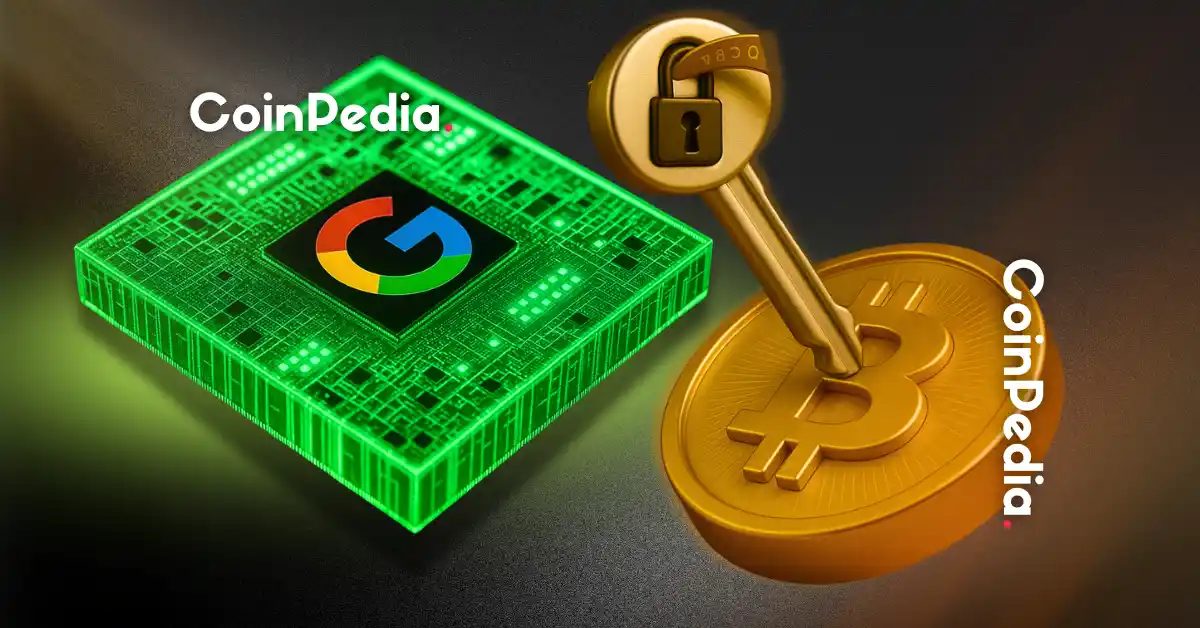
Google has crossed a major quantum threshold, but Bitcoin is still safe for now.
8 days ago, an Ethereum researcher advised large token holders to transfer their tokens. Today, a result announced by Google seems more like an early warning than an overreaction.
According to a new paper published in Science, Google Quantum AI has reduced a type of critical quantum error by approximately 40 times on its Willow chip. This technology targets what might be considered one of the most burdensome “taxes” in quantum computing: the generation of clean, one-time-use resources required for certain calculations. Some estimates suggest that this process can consume up to 95% of a machine’s computing power. Instead of building specialized factories to purify these resources, Google uses a “filtration” method: they start with a rough state and then subject it to a series of tests, discarding 92% of the unqualified parts. The remaining portion achieves a fidelity of 99.99%.
So far, no one has been able to empty their wallet using this method. To crack a RSA-2048 key, it is necessary to reduce the error rate to approximately one in a trillion—this is about 1 million times “cleaner” than the level demonstrated by Google this time.
But researchers are making rapid progress. In 2019, cracking RSA-2048 was estimated to require 20 million noisy quantum bits. By 2025, this number had dropped to less than 1 million. A white paper from Google in March 2026 stated that the number of physical quantum bits required to crack Bitcoin's elliptic curve cryptography had fallen below 500,000. Meanwhile, Willow currently has 105 quantum bits.
Ironicly this week, Justin Drake is actually not really worried about quantum computing. He believes that the mathematical breakthroughs driven by AI will first crack elliptic curves on ordinary hardware, and that this will happen “on a monthly basis, not annually.” His advice is that large investors should transfer their funds to new addresses that have never been used for any transactions, because once a transaction is signed, your public key will be exposed. As a result, the encryption industry is facing “attacks” on “two fronts” at the same time: the advancement of quantum technology, as well as the technological progress of AI.
However, key participants have already begun to take action and are making serious preparations. Coinbase has been emphasizing this week that the migration work must be initiated immediately. Sui has already been testing quantum-resistant transactions on a test network. Ethereum, Zcash, and Near have also formulated quantum-resistant plans.
Leaders in the encryption industry will be prepared. However, Google's latest achievements once again remind the market: the clock is indeed ticking.
Macro, Cryptography, and Market
- Mainstream crypto assets generally saw gains and rebounded from the selling pressure on Thursday morning; BTC rose by 1% to $82,700; ETH rose by 4% to $2,480; SOL rose by 4% to $107; HYPE rose by 2% to $82; ZEC rose by 12% to $1,240.
- The top-performing altcoins in terms of increase include TIA (+27%), INJ (+27%), ZRO (+22%), and NEAR (+15%).
- Oil prices rise by 2% to $97.5; gold prices rise by 0.8% to $4,200.
- Despite the hot data for CPI and PPI this week, stock index futures still rose slightly; Dow Jones futures gained 0.4%, while Nasdaq futures fell 0.05%.
- MSCI has finalized new index rules for non-operating companies, which puts Strategy at risk of being removed from its global indices; the final list of affected companies will be announced on November 11th.
- After advisor Patrick Witt announced his departure to move to the private sector, for the first time since Trump took office, there is no person in charge of encryption affairs at the White House.
- According to a report from Castle Labs, over the past year, Solana's market share in the RWA market has increased from 4.5% to 26%.
- According to a report from Chainalysis, the United States has for the first time since 2022 become a net importer of Bitcoin, due to institutional buying exceeding retail selling volumes.
- Bitwise, the Chief Investment Officer, believes that whether the AI transaction leads to prosperity or collapse, Bitcoin will benefit. His reasoning is as follows: AI-driven affluence will push up the prices of scarce assets; AI-induced recessions will trigger the monetary easing that Bitcoin was "created for"; and even if there is only a moderate advancement, the inflow of funds from ETF and corporate treasuries will continue.
- According to the updated guidelines from the Russian Central Bank, Russia will ban peer-to-peer cryptocurrency transactions starting from July 1, 2027, requiring all transactions to be conducted through licensed brokers or registered exchanges.
- MasterCard launches a product based on BVNK. BVNK is an encryption company that MasterCard acquired in August for approximately $1.8 billion. This platform provides banks and fintech companies with a unified account that allows them to hold both fiat currency and stablecoins, and enables conversion between the two through API.
- Ledger has released the Atom, which is an Android device with a touchscreen. The company refers to it as a "signaturer" rather than a wallet. It runs on a Ledger OS on a secure chip, which is isolated from the Android system, and is equipped with a hardware switch that can physically disconnect the camera and microphone.
- Binance US is attempting to raise funds of up to $100 million, with a valuation of $1 billion; in contrast, before reaching a settlement with US authorities in 2022 and experiencing a significant loss of market share, its valuation reached $4.5 billion, which means the current valuation is 78% lower than that time.
Enterprise Treasury and ETF
- On Thursday, Bitcoin ETF had a net inflow of 5 million US dollars; Ethereum ETF had a net outflow of 60 million US dollars.
Meme Currency Tracking
- Meme The leading coins generally rose by 2% to 5%; DOGE rose by 3%, SHIB rose by 4%, PEPE rose by 4%, PENGU rose by 4%, TRUMP rose by 4%, SPX fell by 1%, BONK rose by 4%.
- Hot projects on the Robinhood chain have generally seen increases of 10% to 20%; PONS has risen by 9%, to $226 million; AI has increased by 20%, to $107 million; Cashcat has risen by 15%, to $115 million; HOOKR has risen by 30%; Orbio has risen by 25%; MEME has risen by 30%, leading the list.
- Projects with the largest increases in the ecosystem category Solana include FTR (up 2000%), Dacity (up 1200%), and Bubble (up 1800%).
Tokens, Airdrops, and Protocol Tracking
- On Thursday, in the ranking of revenue from on-chain protocols, Papertrade topped the list with $5.98 million, followed by Hyperliquid with $3.46 million and Pump.fun with $2.08 million.
- Since the Custom Pairs function of Pump.fun was launched last month, it has quietly taken about 5.9 million PUMP out of circulation, accounting for approximately 0.33% of the total circulation.
- Jupiter launched its own Papertrade product, offering 1000x leverage for mainstream crypto assets and achieving a trading volume of $1 billion on the first day.
NFT What's happening in the market?
- NFT The leading projects are mostly flat; CryptoPunks remain flat at 31; ETH; BAYC drops by 1% to 5.4; ETH; Pudgy remain flat at 2.42; ETH.
- Yield Field Deeds (+14%), Argonauts (+12%) and OTC Desks (+75%) led the gains.