News from the IT community on October 17th. OpenAI updated on October 15th. ChatGPT, for, Chrome: An extension (version number 1.26.1005.11759) has been released. ChatGPT Now, it is possible to read multiple tabs open in the browser and use that content to answer questions, organize information, or complete tasks across pages. This feature is available to all users, regardless of whether they have subscribed to a paid service or not.
After the user invokes the browser during a chat, ChatGPT can use the currently open web page as context, for example, to compare multiple product pages, summarize multiple documents, or analyze work documents.

As cited in a blog post from IT, this update also introduces more powerful "operation" capabilities. In Work mode, ChatGPT is no longer limited to just reading web pages; it can now control tabs after authorization, helping users fill out forms, send messages, download files, organize and group tabs, and more.
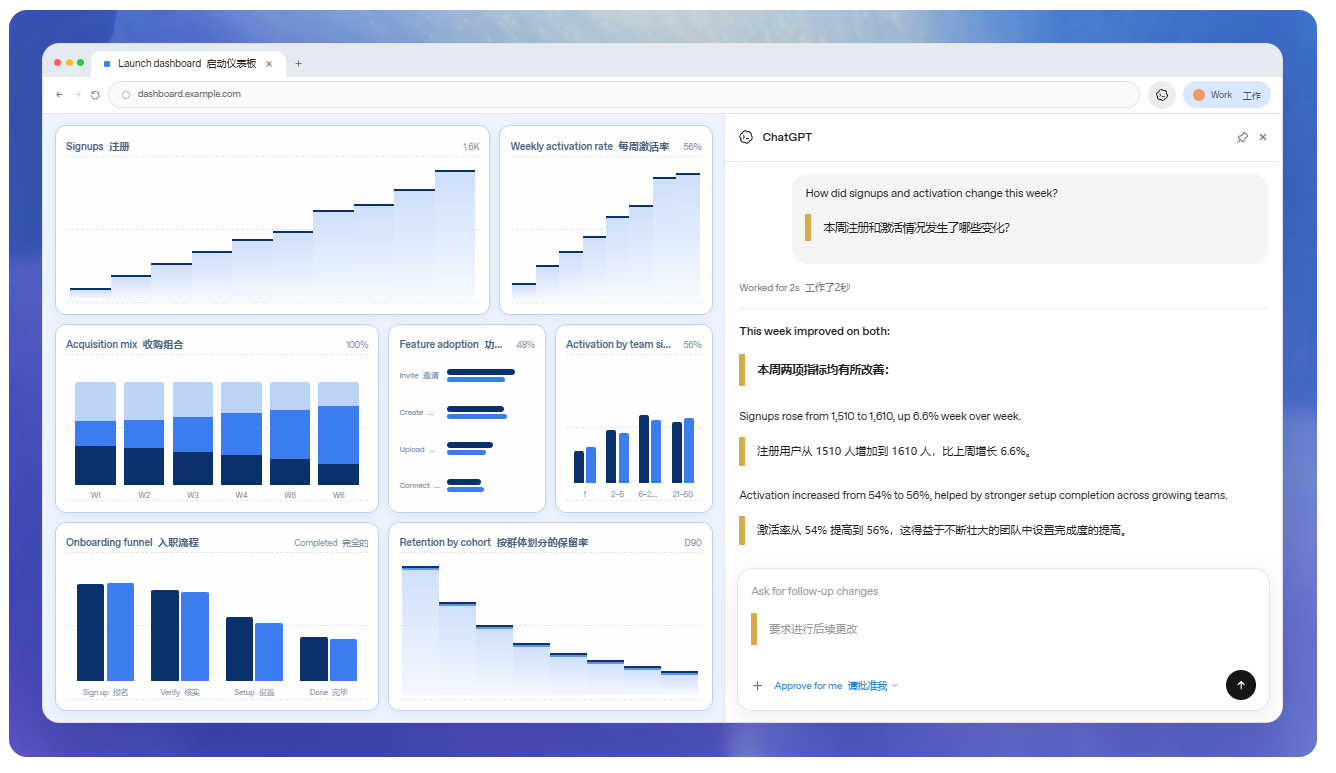
Since the extension runs in the browser settings commonly used by users, it is able to reuse the login state of the websites the users have already logged into, thereby directly assisting in processing workflows in scenarios such as Gmail, LinkedIn, Salesforce, or within corporate internal tools.
However, behind this convenience lies a greater demand for permissions. After installing or enabling the relevant features, Chrome may require the extension to read and modify website data, access page debugging tools, manage tabs and download content, and even read bookmarks, browse history, or display notifications.
OpenAI indicates that these permissions are necessary for ChatGPT to operate the browser, but users can still control their access scope through methods such as site-by-site authorization, allowlist, and blocklist.
By default, ChatGPT will request confirmation before accessing each new website. Users can choose "Allow only once", "Always allow for this website", "Always allow for all websites", or reject it. Among these options, "Always allow for all websites" is marked by OpenAI as a higher-risk option; browsing history, as well as file uploads and downloads, also require separate authorization.