IT News on October 17th: According to a report by Electrek on Thursday, an accident report submitted by Tesla to the National Highway Traffic Safety Administration (NHTSA) indicates that the vehicle's driving assistance system was in an activated state prior to a collision that occurred in August of this year.
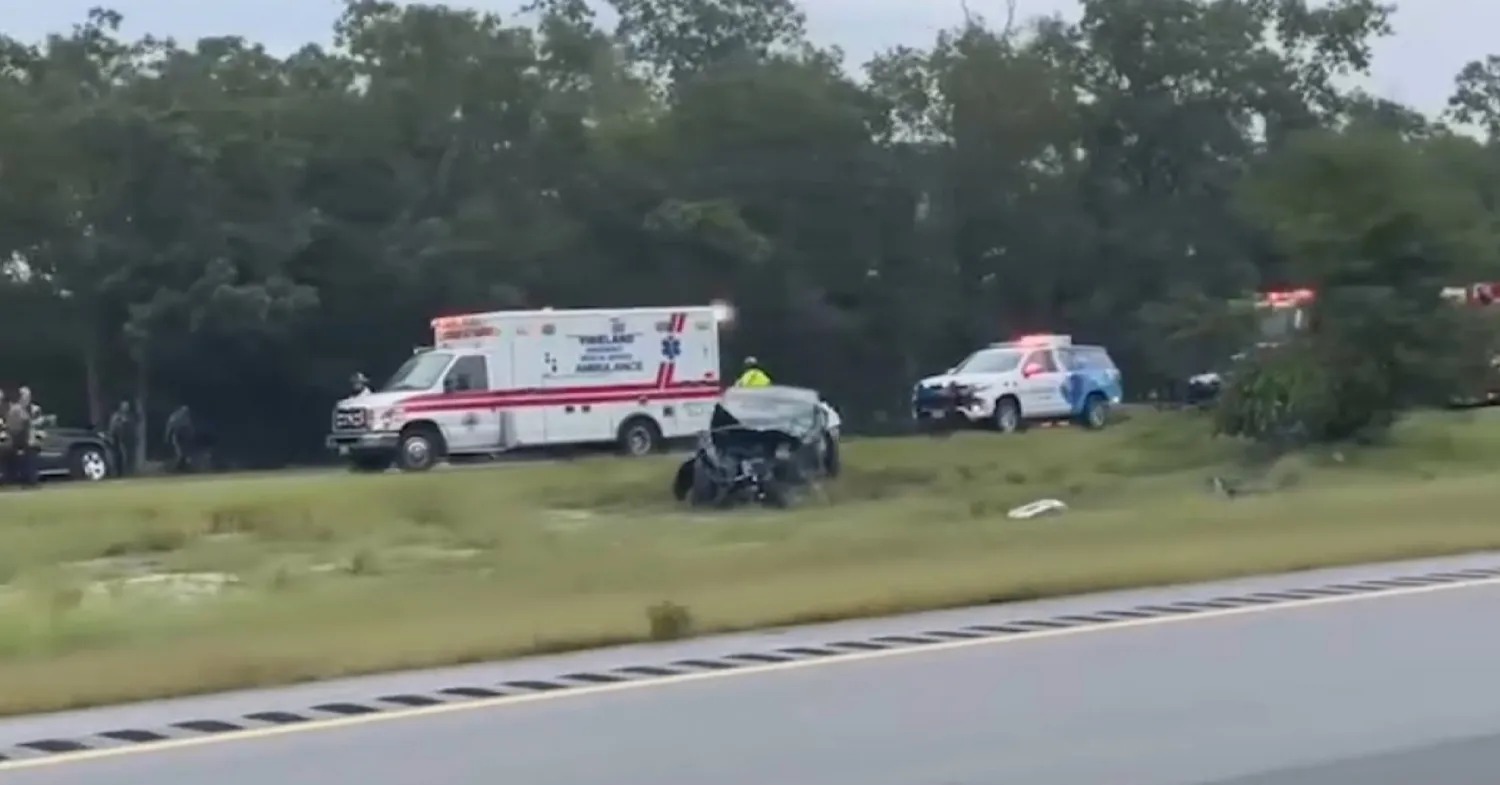
According to a report from the New Jersey State Police, at around 8:31 a.m. on August 22, 2026, local time, a Tesla Model Y lost control while traveling south on Highway 55 in Vineland, Cumberland County, New Jersey. It veered off the left side of the road at approximately 34.6 miles, crossed the central grassy median, and collided with a tree. Subsequently, it entered the oncoming lane, where it collided with a Chevrolet SUV heading in the opposite direction. This accident resulted in the death of 68-year-old Philip Eastman Phillip Eastman, the driver of the Chevrolet, and injuries to the Tesla driver and a passenger in the Chevrolet vehicle.
Public reports indicate that Eastman came from Springfield, Pennsylvania. During his lifetime, he served as a member of the local school district board and had nearly 30 years of experience coaching youth and high school ice hockey, including 17 years as the head coach of the Springfield High School team.
After the accident, local public reports mainly described the incident as the Tesla driver losing control of the vehicle, without mentioning Autopilot, Full Self - Driving ( FSD ) or other driving assistance systems.
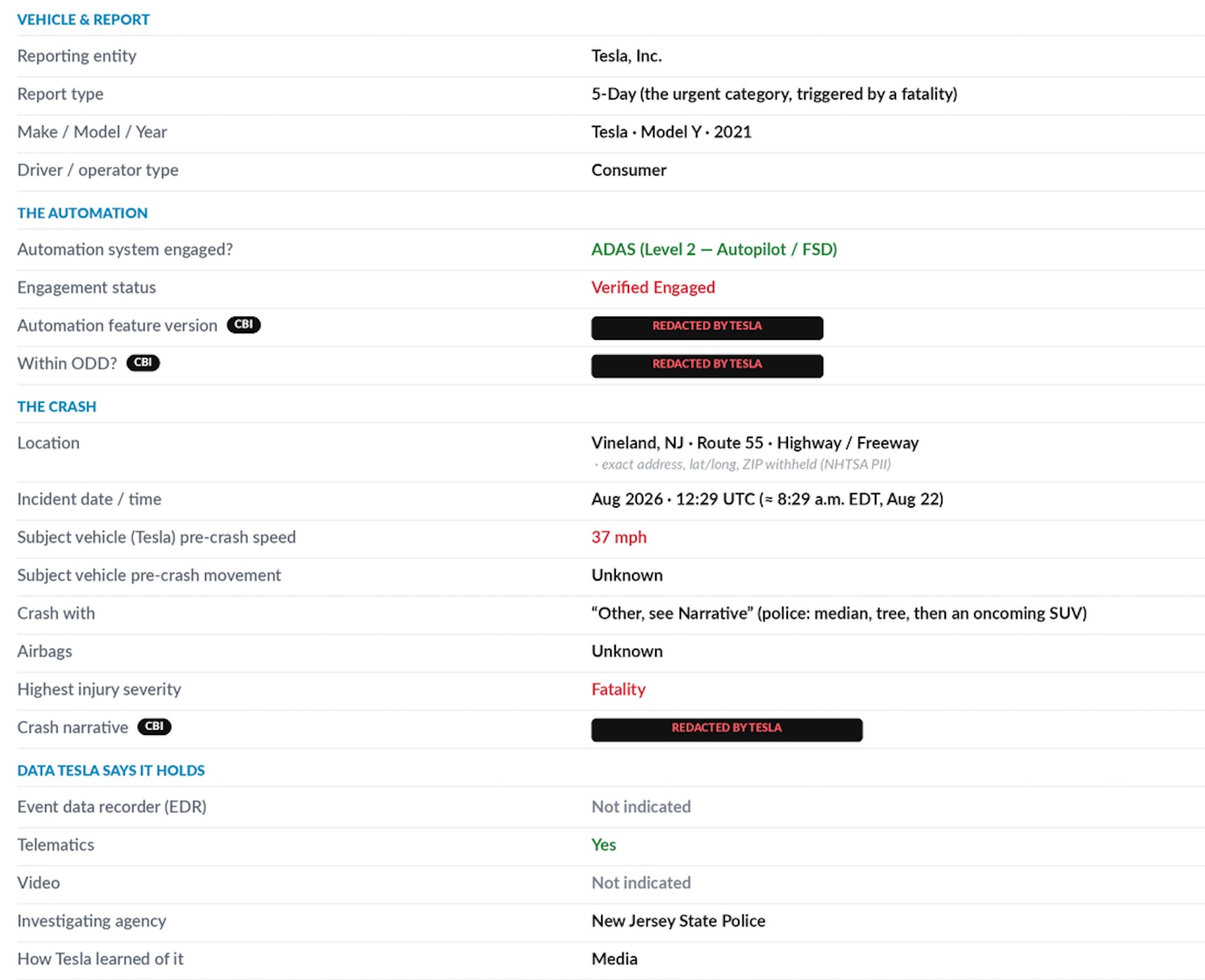
Electrek has discovered that in the accident data submitted by Tesla to NHTSA, this accident is matched with a previously unreported fatal accident record that was associated with the driving assistance system.
In its latest report, Tesla labeled the vehicle involved as the 2021 Model Y model, and filled in " Verified Engaged " in the column for "Activation Status" ( Engagement Status ) of the automated system, indicating that the Autopilot or FSD system has been confirmed to be activated.
However, Tesla's report did not disclose which specific system was used, nor did it provide sufficient information to reconstruct the course of the accident. Tesla labeled fields such as the accident description, software version, and whether the road the vehicle was traveling on was within the approved operating range of the system as "confidential business information," and as a result, this relevant content was obscured.
According to the permanent command NHTSA ( Standing General Order ), if a vehicle equipped with a secondary driving assistance system activates this system within 30 seconds before a collision occurs, and the accident results in fatalities or other specified consequences, the automobile manufacturer is required to report to the regulatory authorities.
This report also records that the vehicle's speed before the accident was 60 km/h, but this value may only represent a remote information record at a certain point in time prior to the accident and cannot be directly considered as the actual speed of the vehicle when it left the road. In addition, Tesla only confirmed in the report that it held the vehicle's remote information data and did not select the data from the event data recorder (EDR) or on-board video. Therefore, the public records cannot confirm whether there is any other on-board evidence that could be used to reconstruct the accident.