General Motors announced a series of technology-driven new initiatives at its annual GM Forward event held in New York, which included a new electric vehicle platform. This release did not discuss professional terms in the automotive industry such as suspension geometry, wheelbase ratio, or torsional stiffness, but instead focused on new battery chemistries, redesigned motors, as well as a brand-new central computing platform and electrical architecture. This architecture will connect every system within the vehicle, including acceleration and power, steering, braking, active safety features, and a great deal of software.
General Motors' Vice President of Global Product Execution and Chief Product Officer, Sterling Anderson, recently stated in an interview with TechCrunch, "We believe that if vehicles can be designed to understand situations, reduce friction, and return the time that would otherwise be taken up by road demands to people, then vehicles can become a more capable and helpful part of daily life."
This doesn't sound like the typical rhetoric of a traditional automaker. In fact, since Tesla, Rivian, and Chinese automakers entered the market, the industry has changed significantly. The riding experience and handling are still important, but they have now become just entry barriers. What truly determines the differentiation of vehicles today is mainly the software.
Anderson In the past, discussions have also been held about General Motors' vision for the future. Last year, the company announced plans to restructure the electrical and computing core of future vehicle models, with the goal of providing faster software, more advanced autonomous driving capabilities, and a customized conversational AI assistant.
This year, General Motors has provided more details and a timeline. This technological transformation plan will make its debut in 2028 with the Cadillac Escalade IQ. The company will also launch a highway autonomous driving feature in 2028, allowing drivers to take their hands off the steering wheel and their eyes off the road without having to be ready to take over at any time.
Software competitions also include hardware.
European and American automakers have been pursuing the vision of software-defined vehicles for many years, but often with little success. Volkswagen Group has encountered significant difficulties in developing its own software, including its problematic Cariad department, and ultimately reached a $5.8 billion joint venture agreement with the relatively newer Rivian team.
General Motors has also invested billions of dollars in the development of batteries and autonomous driving technology. The company's software amortization expenses capitalized in 2025 amounted to $866 million, which also demonstrates the scale of its investment to some extent, although these costs will be spread over multiple years.
Like many traditional automakers, General Motors believes that the electronic architecture of the past, which dispersed computing chips throughout the vehicle, has limited its own development.
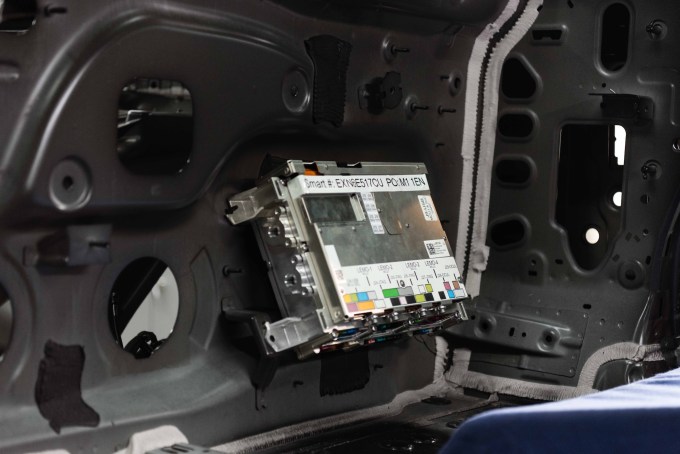
For the fourth generation of electric vehicles, General Motors will consolidate a large number of functions onto a central computing unit ( CCU ). The computing power of this unit is 40 times stronger than that of existing systems. By removing the small chips in marginal positions, the length of the wiring harness can be reduced by 30%, thereby reducing weight and simplifying assembly.
General Motors stated that this new CCU will also be used in fuel-powered vehicles, but it will first be equipped on the Cadillac Escalade IQ, which is gradually becoming General Motors' technological flagship.
CCU will be responsible for the regular power system and chassis control, as well as handling perception and active safety functions. This should help to pave the way for more advanced autonomous driving features, which General Motors also announced on Wednesday.
Such a shift may be inevitable. The pressure faced by automakers comes from all directions.
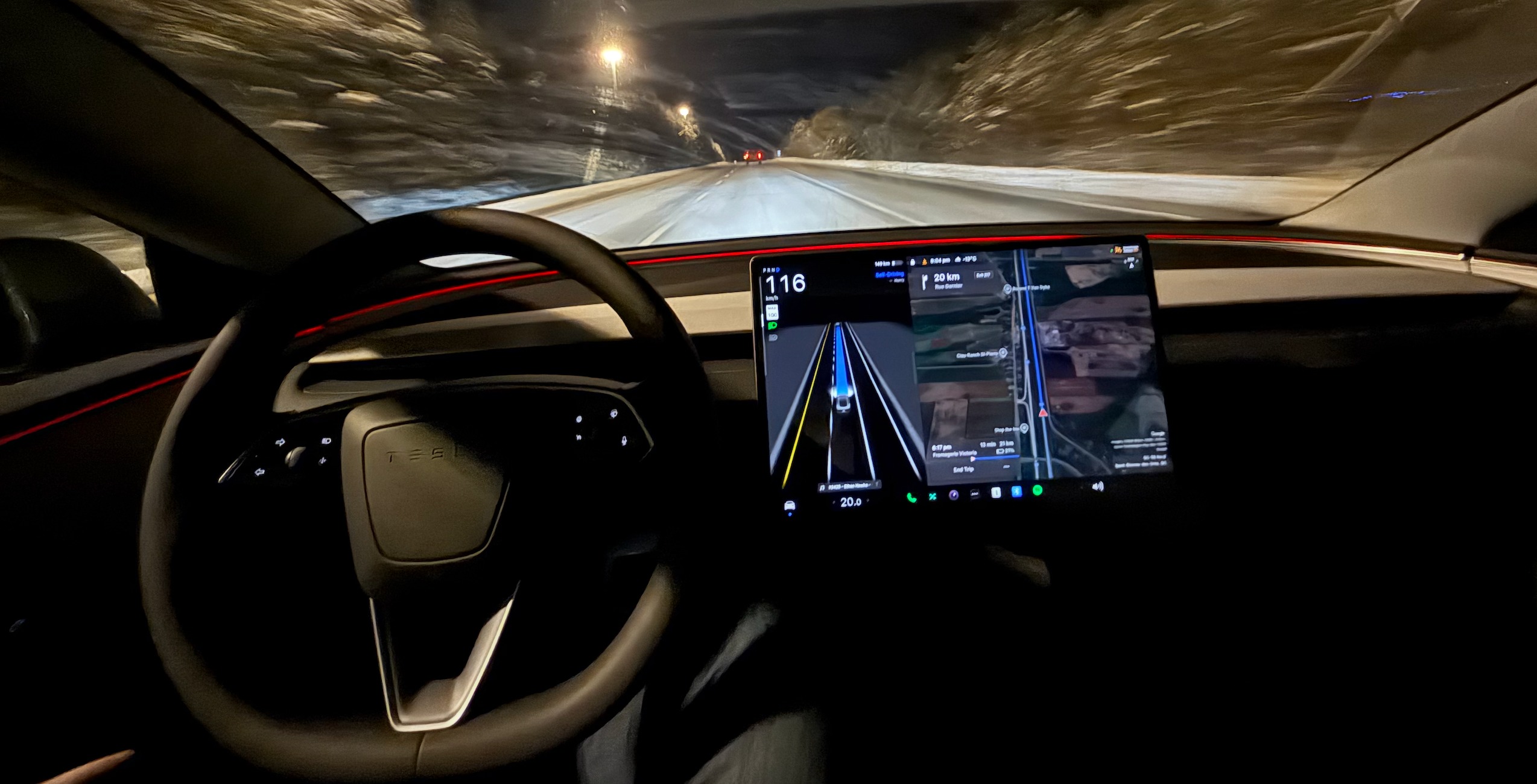
In the United States, Tesla has been pushing to expand the boundaries of autonomous driving, partly because it has developed what can truly be called software-defined cars.
Automakers such as General Motors are also feeling the pressure from Chinese manufacturers. The latter have shortened their development cycles to two to three years, whereas typically these cycles are four to five years.
General Motors hopes to keep up with this pace. In addition to announcements regarding battery chemistry systems and autonomous driving, the company also outlined how its enterprise-level AI tools can accelerate vehicle development across various departments, aiming to cut the traditional four- to five-year development cycle in half.
General Motors briefly showcased its reimagined R&D strategy. For example, before assembling the first physical prototype, engineers conducted 300,000 virtual design tests on a new lithium-rich manganese battery pack. This helped to advance the concept to an approved project within just one month.
This speed will help General Motors control costs at a time when the automotive industry is undergoing historic upheavals, and to strive to maintain its profitability. But will it be enough for it to return to its former leading position?
The rise of Chinese automakers will not make things any easier. Their factory production capacity far exceeds the absorption capacity of Chinese consumers, and coupled with government subsidies and lower labor costs, these vehicles have flooded markets in Europe, South America, and other regions at low prices.
The cost advantage of Chinese automakers is so great that without trade barriers, “they would almost be able to destroy most other companies in the world,” Elon Musk said during a financial report conference call in 2024. In response, he has been trying to transform Tesla from an automobile company into a AI and robotics company.
General Motors' entry into the field of autonomous driving also sends a similar signal of change. However, to achieve true autonomous driving, General Motors realized that it did not possess the necessary platform beforehand. With the new architecture, it should now have a chance.