Key points:
- Brian Chesky warns that traditional managers and employees who resist change may struggle to survive in the AI revolution.
- Chesky Prediction: Companies may prefer "practical" managers who possess both leadership responsibilities and practical professional skills
- Employees who are willing to embrace AI and continuously improve their skills may gain an advantage.
Airbnb The CEO Brian Chesky warned that there are two types of employees who may struggle to survive in the revolution of artificial intelligence. He believes that traditional managers and those who resist change may be left behind as the workplace undergoes AI transformations.
His remarks were initially made earlier this year during a guest appearance on the podcast “Invest Like the Best”, but they gained renewed attention when Fortune revisited his predictions on October 25th.
Chesky said, "There are two types of people who will not smoothly transition to AI. One type is pure human resource managers, and the other type is those who are rigid and unwilling to change or evolve." This co-founder, Airbnb, believes that for employees who wish to remain competitive in an automated workforce, adapting to AI will become crucial.
Airbnb CEO It is predicted that traditional managers may become obsolete.
Chesky The ones being mentioned are managers whose responsibilities revolve entirely around supervising employees, holding meetings, and conducting one-on-one communications. He believes that as artificial intelligence changes the way companies operate, such positions may become obsolete.
He said, "I think that in the future, human resources managers will have no value at all." However, he also clarified that he was referring to those who are only responsible for managing other employees.
On the contrary, Chesky believes that companies will need a type of manager who combines leadership responsibilities with personal participation in team work. Such managers should not only possess practical professional skills but also be directly involved in projects, rather than focusing solely on supervising employees.
He took Jony Ive, the former design director of Apple, as an example, stating that he successfully combined technical expertise with management responsibilities.
Employees who refuse to adapt to AI may also be eliminated.
In addition to traditional managers, Chesky also warns that employees who are unwilling to embrace artificial intelligence may face an uncertain future. He believes that as AI becomes more deeply integrated into daily business operations, employees must cultivate a growth mindset and continuously learn new skills in order to remain relevant.
However, he also stated that learning to use the AI tool does not necessarily require profound technical knowledge, which means that as long as employees are willing to adapt, the transition is feasible for them.
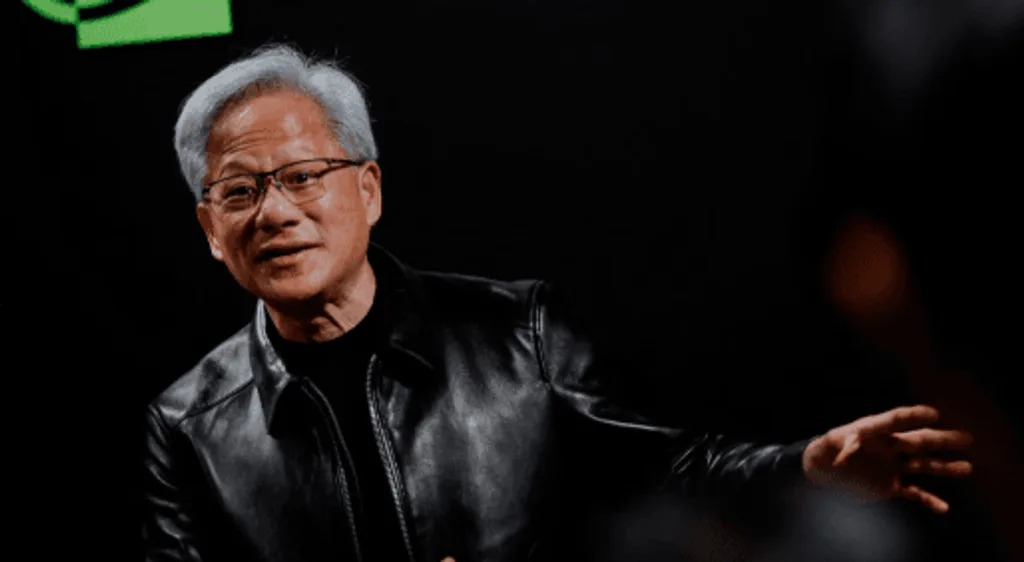
His views are very similar to the warnings of Jensen Huang, the CEO of Nvidia. Huang previously stated that when employees lose their jobs, it is not necessarily a direct loss to AI, but rather they may be losing to colleagues who know how to use this technology more effectively.
Chesky also described AI as one of the biggest opportunities in Airbnb's history, believing that companies willing to transform their operations will reap tremendous benefits from this technology.
Danielle Walgenbach
Danielle is a journalist who covers cryptocurrency and financial markets. She has over four years of reporting experience and is adept at breaking down complex financial and economic topics into clear, well-researched reports.