

It is reported that Google will launch Google Multi - Party Compute at its first digital assets seminar held in New York today. This is an encrypted hosting system that allows signature keys to be split across different systems. The product is currently being privately previewed with several financial institutions. According to reports from CoinDesk, Alphabet has already begun using this system to protect its own assets.
Google plans to achieve commercial supply by the beginning of 2027, but has not yet disclosed the pricing.
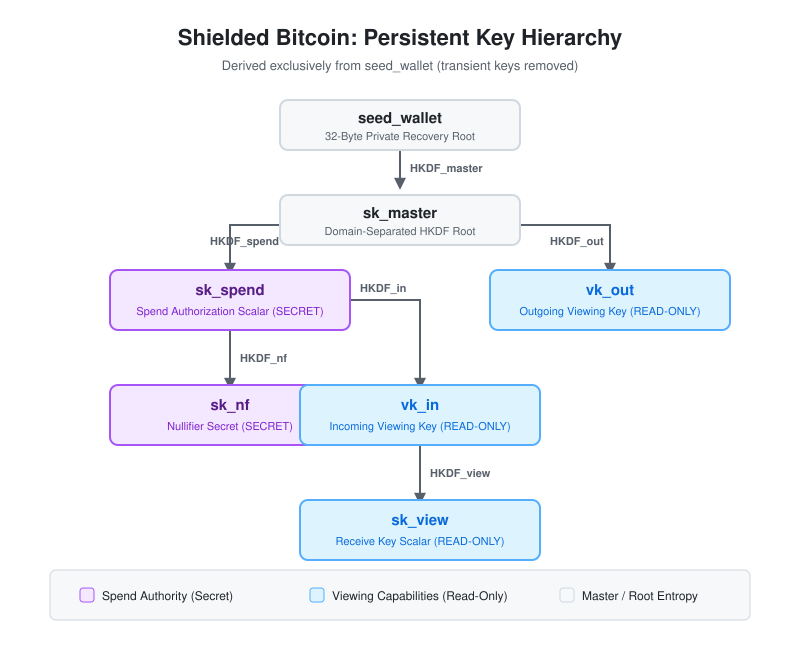
The system applies multi-party computation to the signature key. The key is split into several fragments, which are held by different parties or machines. A transaction requires a certain number of these fragments to complete the signature process.
The complete key will not be assembled in any one place. A bank can store one copy on its own hardware, another copy in Google Cloud, and a third copy with another cloud service provider. Institutions can set thresholds such as two-thirds or five-sevens. Before any signature occurs, the policy engine running in Google Confidential Space will check whether the transfer complies with the limits, destination restrictions, and approval rules.
Google stated that, according to CoinDesk, it is not able to access any key shares in an unencrypted form.
Encryption and security issues
The selling point of this product is based on a long-standing issue. Chainalysis believes that 43.8% of the cryptocurrencies stolen in 2024 were related to private key leaks. Data from DeFiLlama shows that as of June, about 40% of the $16.69 billion lost due to hacker attacks came from compromised keys. In June, an attacker stole 7 keys from the computer of a developer whose account was hacked by Humanity Protocol and emptied two wallets on the network.
Such incidents indicate that excessive concentration of signing permissions can lead to single points of failure. As a result, the industry recommends adopting a multi-supplier multiple-signature scheme, dispersing control among different hardware and software providers.
Google has also linked this product to the fraud risks associated with AI. Chainalysis found that in 2025, scams related to AI tool suppliers resulted in an average loss of $3.2 million per case, while the average loss for other scams was $719,000. The report merely connects these two figures and does not prove that AI caused this difference.
Ethereum researcher Justin Drake has warned that AI may ultimately find a mathematical shortcut, thereby weakening wallet signatures. However, so far, no AI system has demonstrated such capability. Google's MPC is designed to address stolen credentials and unauthorized transfers, rather than cracking the underlying cryptography.
Quantum computing constitutes another, more long-term risk. Google researchers estimate that a sufficiently powerful future machine could derive Bitcoin private keys from exposed public keys in about 9 minutes. Approximately 6.9 million Bitcoins have had their public keys exposed. Google stated that its architecture could adopt post-quantum signatures in the future without the need for institutions to rebuild their systems, but no timeline has been provided yet. The background information on how quantum computers threaten Bitcoin explains which addresses are at the highest risk.
Google is entering a market led by Fireblocks, Fordefi, and BitGo. Google states that its banking relationships and security expertise will give it an advantage in CoinDesk. The company also positions itself as a neutral provider, targeting those banks that do not wish to rely on their competitors.
Banks are already using specialized platforms, such as the custodial services carried out in collaboration with BNP Paribas and Metaco, as well as multi-institutional vaults built on the basis of BitGo.