Key Points
- After billionaire Nelson Peltz proposed a $1.4 billion acquisition deal, Wendy's hamburger company's stock price soared by 15%.
- At the time of this acquisition proposal, Wendy was facing financial pressures such as declining sales and rising operating costs.
- Wendy's board of directors has begun reviewing the proposal, but no agreement has yet been reached.
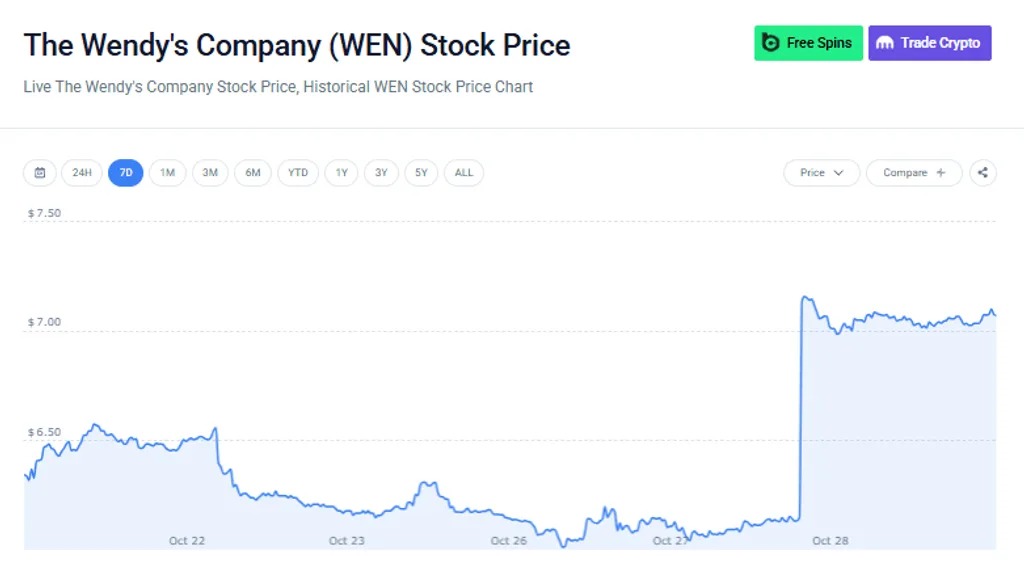
On October 28th, after billionaire investor Nelson Peltz's Trian Fund Management submitted a $1.4 billion acquisition bid to privatize the struggling fast-food chain, Wendy's stock price rose by more than 15%. Currently, Wendy's is fighting against declining sales, rising costs, and fierce competition in the food service industry.
Nelson Peltz drives the privatization of Wendy's
Trian Fund Management joined hands with Flynn Group, BlueFive Capital, and Sixth Street Partners to advance this acquisition. This investor consortium already holds a considerable portion of Wendy's shares, among which Trian and its related parties control approximately 16.3% of the tradable shares.
Peltz believes that privatizing Wendy's will provide the necessary financial flexibility to allow the company to implement a long-term turnaround strategy without the pressure of public market expectations.
This proposal was made after Wendy's stock price has been disappointing for many years, with underlying reasons including weakening consumer demand and operational challenges.
However, this acquisition is far from a sure thing. Wendy confirmed that an independent board committee will evaluate this voluntary and non-binding proposal.
Wendy is facing declining sales and the closure of its restaurants.
At the time of this acquisition proposal, Wendy's was going through a particularly tough period. The company has been dealing with declining same-store sales, high beef prices, and consumers becoming more price-sensitive. Competition from McDonald's and Burger King has also intensified.
Wendy's response measures include reorganizing operations and reducing the number of stores. The company previously announced that as part of its turnaround plan, it would close up to 358 stores by 2026.
Financial pressures are also on the rise. As of June, this chain company was carrying long-term debt of approximately $2.7 billion. Under the leadership of CEO Bob Wright, Wendy is prioritizing menu improvements, stronger marketing, enhanced operational efficiency, and digital interactions in order to rebuild customer traffic.
How will Wendy's stock price develop next?
Investors are currently awaiting further developments regarding the potential acquisition, while also paying attention to Wendy's third-quarter financial report, which will be released on November 5th. This report may provide important insights as to whether the company's turnaround strategy has begun to stabilize sales and improve profitability.
Whether Wendy ultimately accepts this deal or continues to pursue recovery as a listed company, this acquisition proposal marks a significant turning point for this struggling hamburger chain.
Danielle Walgenbach
Danielle is a journalist who covers cryptocurrency and financial markets, with over four years of reporting experience. She is adept at breaking down complex financial and economic issues into clear and solid reports.