Russian Crypto Regulation Retains Cross-Border Transfer Channels
The Cryptonomist
1h ago
Ai Focus
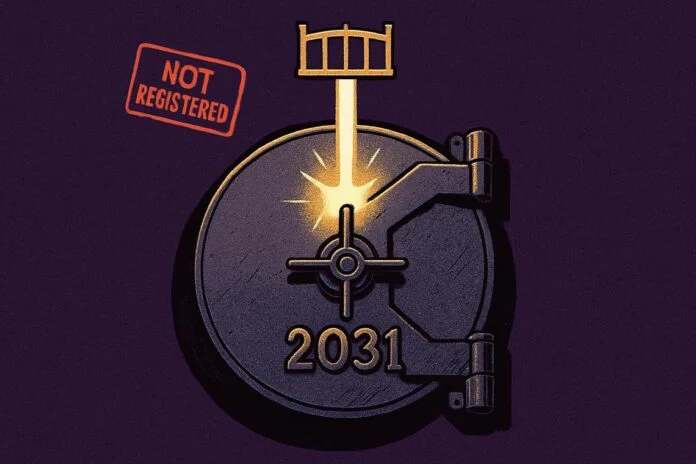
The Russian Central Bank confirmed on October 29 that unmanaged wallets can still be used for international settlements, but regulated Russian accounts are not allowed to transfer funds directly to individual wallets. The new regulations also limit the domestic retail purchase quota and set a transition period for peer-to-peer transactions until July 1, 2027.
Helpful
No.Help

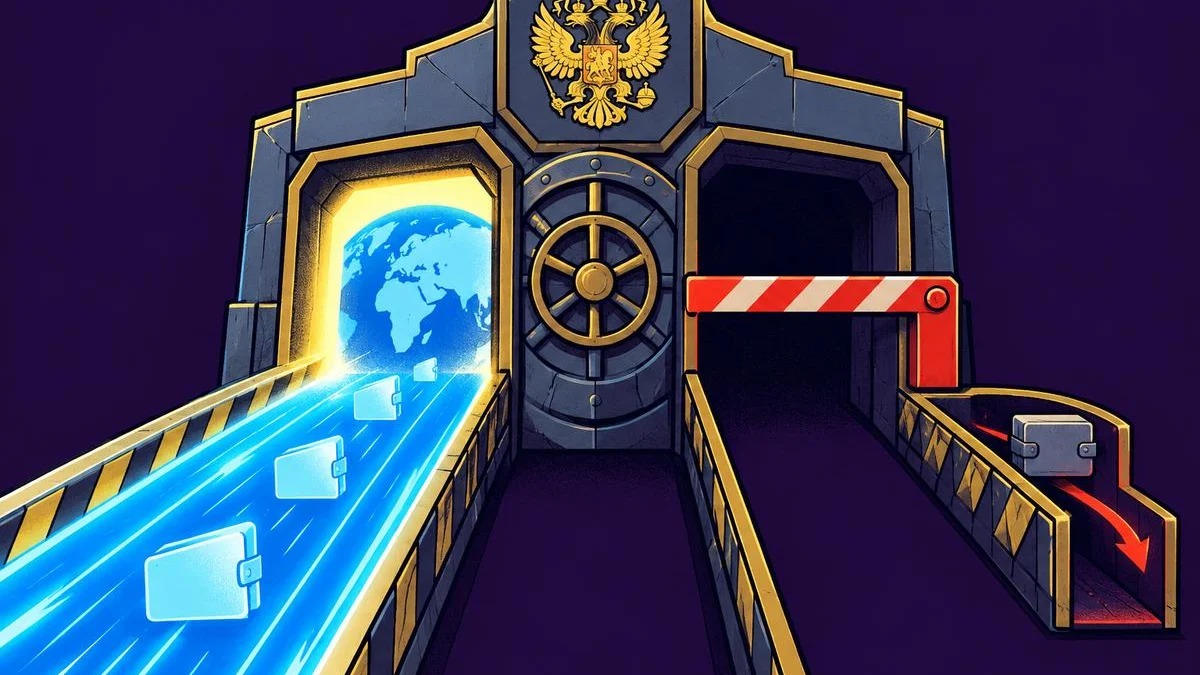
While tightening domestic transfer controls, Russia's cryptocurrency regulations still reserve a channel for overseas payments. On October 29th, the Russian Central Bank confirmed that unmanaged wallets can still be used for international settlements, but investors are not allowed to directly transfer cryptocurrencies from regulated Russian accounts to personal wallets.

Key Points

  • Self-hosted wallets can still be used for international settlements.
  • The ordinary retail purchase limit is calculated based on intermediary institutions, with an annual cap of 300,000 rubles.
  • The transition period for direct peer-to-peer transactions expires on July 1, 2027.
  • Encrypted companies registered within 90 days must join a self-regulatory organization.

Cross-border encrypted transfers still retain self-hosted pathways.

International settlement exemptions allow the use of wallets whose private keys are controlled by the holders themselves, without going through exchanges or custodian institutions. Vladimir Chisochkin, the First Deputy Governor of the Central Bank of Russia, confirmed this stance at a corporate governance forum hosted by the Moscow Exchange.

"Unmanaged wallets can be used for international settlements," Chi Siqiu Xin said to reporters on October 29th.

He also described an indirect route from regulated domestic accounts to self-hosted wallets: Investors can first transfer their assets to a regulated overseas custodian platform and then withdraw them to their personal wallets from there. However, direct transfers from regulated Russian digital accounts to these wallets are still restricted.

Russian crypto regulations tighten domestic access
Federal Law No. 282- FZ came into effect on September 1st, introducing control measures for licensed domestic cryptocurrency trading and custody services. This framework limits the annual purchase amount for ordinary retail investors to 300,000 rubles per intermediary.

Before obtaining tradable assets, retail investors must also pass a qualification review, while qualified investors are subject to a different set of requirements.

These domestic transfer restrictions do not prohibit investors from holding cryptocurrencies that are already stored in their personal wallets.

The transition period for peer-to-peer transactions is approaching.

According to the Central Bank of Russia, individuals can continue to conduct direct peer-to-peer encrypted transactions until July 1, 2027. After that date, residents will be required to process such transactions through authorized intermediaries.

This transitional arrangement allows for the continuation of direct trading within a specified time frame, while also setting a deadline for transferring related activities to authorized services.

With NAUFOR taking over supervisory responsibilities, market infrastructure expands.

On October 29th, the Russian Central Bank designated the National Association of Securities Market Participants ( NAUFOR ) as the self-regulatory organization responsible for overseeing crypto exchanges and digital custody institutions. According to the Central Bank's records, there are currently 23 exchange operators and 8 custody institutions listed.

Within 90 days after registration, enterprises must join a self-regulatory organization. NAUFOR will be responsible for setting standards, supervising compliance, and guiding enterprises in fulfilling their relevant obligations.

The Moscow Exchange has announced plans to launch regulated cryptocurrency trading, while the Russian Federal Savings Bank ( Sberbank ), which is already registered as a digital custodian institution, intends to introduce crypto services in December.

This article was generated with the assistance of artificial intelligence and has been reviewed by an editorial team.

Tip
$0
Like
0
Save
0
Views 32
HKWDB reminds readers to view blockchain rationally, stay aware of risks, and beware of virtual token issuance and speculation. All content on this site represents market information or related viewpoints only and does not constitute any form of investment advice. If you find sensitive content, please click“Report”,and we will handle it promptly。
Submit
Comment 0
Hot
Latest
No comments yet. Be the first!
Related
Binance Suspends Withdrawals, Claiming to Be Investigating a Security Incident
Binance confirmed to TechCrunch that they are dealing with a security incident, as users had previously reported that funds were being transferred from the exchange's wallets. Binance stated that users' funds are "completely safe" and mentioned that withdrawals across multiple networks have been temporarily suspended; Zhao Changpeng also indicated on X that the company "is very likely to have been hacked," but did not provide further explanations. Circle froze approximately $800 million of Tether, and Tether also froze about $1.56 billion related to this incident. The outside world estimates that the amount stolen is at least $2 billion, and may even exceed $5.7 billion, but these figures have not yet been confirmed.
TechCrunch
·2026-10-30 06:42:53
9
After the U.S. stock market closes, collateral still needs to be valued. Chainlink integrates with continuous pricing.
On Friday evenings in New York, the traditional stock markets are closed, yet lending positions on the blockchain continue to operate. If the collateral is tokenized stocks, protocols cannot stop managing risks just because the exchanges are resting. Chainlink launched 24/7 market data on October 29th, extending the pricing coverage of assets such as stocks and commodities to weekends and holidays; Aave is the official partner for this launch.
币界网
·2026-10-30 06:35:35
19
The European Central Bank's interest rate remains at 2.50%, but financing conditions have already tightened.
On October 29, the European Central Bank maintained the deposit facility rate at 2.50%, while the main refinancing rate and the marginal lending rate remained at 2.65% and 2.90% respectively. Although the numbers have not changed, the resolution states that since the last meeting, financing conditions have tightened, which may lead to lower inflation and growth. To assess the intensity of policy, one cannot simply focus on whether the interest rate button will be pressed again.
币百科
·2026-10-30 06:35:29
13
A skill file spans multiple agents, and standard governance has also changed hands.
By placing SKILL.md in a folder, along with scripts and reference materials, the methodology for a specific task can be handed over to an intelligent agent. On October 22nd, Anthropic announced that it would donate the Agent Skills standard to Agentic AI Foundation, which is under the umbrella of Linux Foundation and is referred to as AAIF. What was donated included the name, identifier, GitHub organization, and the agentskills.io domain name. The change first occurred in terms of who would maintain these rules.
CoinMeta
·2026-10-30 06:35:24
12
AWS has submitted the bug fix to the code repository, but the merge authority is still in the hands of others
In the AWS console, the status of a vulnerability fix is displayed as "delivered to GitHub", and there is also a pull request in the code repository to modify four files. However, this vulnerability cannot yet be considered fixed. The officially available versions on October 22nd are AWS Continuum, for, code, and vulnerabilities. The process of finding, verifying, and generating patches is completed, but the final review and merging are left to the team. This pause marks the entry point for understanding the security services provided by AI.
CoinMeta
·2026-10-30 06:35:21
13
View More