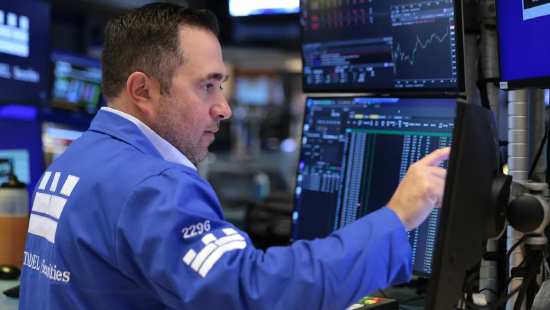
On Friday, U.S. stock index futures fell for the second consecutive trading day. As another round of disappointing financial reports from technology companies was released, investors accelerated their withdrawal from the tech sector. Market signals indicate that while U.S. tech giants continue to invest heavily in artificial intelligence, growth in their core businesses has begun to slow down. At the same time, international crude oil prices have risen.
As of press time, the Dow Jones futures rose by 0.09%, the S&P 500 index futures fell by 1.05%, and the Nasdaq futures fell by 2.53%.
The European Stoxx 600 index fell slightly by 0.2%, with both the basic resources and technology sectors experiencing declines of over 1%. In contrast, AstraZeneca and Sanofi rose due to their earnings exceeding expectations.
The latest economic data has further dampened market sentiment. The French economy unexpectedly shrank in the third quarter. Under the impact of multiple unfavorable factors such as soaring borrowing costs, violent protests, and political and budgetary uncertainties, the French economy is in a weak state. As a result, the price of French government bonds has fallen.
AI The trading logic has changed.
After Amazon and Intel released their financial reports, concerns about capital spending in the market further intensified. The NASDAQ 100 index futures, which are dominated by tech stocks, fell by more than 2.5%. Amazon tumbled 7.4% in pre-market trading on U.S. stocks, while Intel plummeted by 25%.
In pre-market trading on U.S. stocks, stocks related to infrastructure construction, such as AI, generally declined. Chip manufacturer NVIDIA fell by 2.8%, Supermicro fell by 6.9%. Server and storage equipment provider Supermicro Computer fell by 5%, power producer Bloom Energy Corp fell by 7%, and cloud computing company CoreWeave Inc fell by 6%.
Previously, Amazon announced a large-scale outflow of cash in the third quarter and hinted that it would further increase investment next year, on top of already high current capital expenditures. Direxion Capital Markets Director Jake Behan stated: "This is a typical example of a change in the AI transaction logic."
He pointed out, "Today, the market no longer just asks how fast you can grow, but begins to inquire: How much money will it actually take for you to achieve that growth?"
Despite the latest round of financial reports further deepening market concerns about whether the massive investments by tech giants can generate returns quickly enough to support their current high valuations, the impact on the stock market was still mainly concentrated in the tech sector. On Thursday, more than 400 components of the S&P 500 index rose, indicating that investors are shifting their funds towards defensive stocks. At the same time, the bond market also benefited from the demand for safety.
Meanwhile, the world's largest cryptocurrency exchange, Binance ( Binance ), has suspended all deposit and withdrawal services due to an investigation into a suspected hacker attack, causing Bitcoin to fall by 1.2%, and stocks related to cryptocurrencies have also generally declined.
Tech stock financial reports become a major obstacle
After rising for three consecutive trading days this week, tech stocks turned down on Thursday. After Google's parent company Alphabet Inc released its financial report, the stock price recorded a record decline. Samsung Electronics' performance fell short of market expectations, and the company postponed the announcement of its shareholder return plan, leading investors to sell their shares. At the same time, as companies borrow billions of dollars to build AI infrastructure, concerns about rising borrowing costs are also intensifying. Microsoft's stock price fell on Thursday after it announced the issuance of $25 billion in bonds.
Vanda Research Senior Stock Strategist Jai Malhi stated: "The financial reports of technology companies have become a major obstacle for the market. Investors have suddenly begun to scrutinize companies' investment plans as strictly as 'police' overseeing capital expenditures. As the financing costs for capital expenditures seem to be getting higher and higher, if a company's revenue growth fails to meet the high thresholds set by the market, the related tech stocks will suffer."
Market concerns about the financing environment continue to rise. According to data compiled by the London Stock Exchange Group ( LSEG ), the market currently expects that by the middle of 2027, the Federal Reserve will raise interest rates by more than 50 basis points in total.
Earlier this week, the Federal Reserve maintained its benchmark policy rate unchanged, as expected by the market. However, analysts generally believe that this decision is merely a temporary pause in interest rate hikes, rather than the end of the tightening cycle, and there is widespread expectation in the market that the Fed may raise rates again as early as December.
U.S. Treasuries regain their status as a safe-haven asset
U.S. Treasury yields fell by at least 1 basis point across all maturities, continuing the downward trend seen during New York trading hours. Bond markets in Germany and the UK also saw gains, with the yields on both countries' benchmark 10-year Treasuries dropping by about 2 basis points.
Since October, the yield on U.S. benchmark Treasury bonds has fallen by nearly 40 basis points, and there is a possibility of seeing its first monthly decline since February.
Bloomberg strategist Mark Cranfield stated: "Bonds have once again become the preferred safe-haven asset for investors, with U.S. Treasuries leading this trend. On Friday, the yield on 10-year U.S. Treasuries further declined, falling below the level seen during the Fed's interest rate hike in September."
As market risk appetite deteriorates, traders have flocked to safe-haven assets such as the Swiss franc and bonds. Among the G10 currencies, the Swiss franc has seen the largest increase against the US dollar, while US Treasury bonds have risen across all maturities. Meanwhile, as expected by economists, the Bank of Japan has maintained its monetary policy unchanged, resulting in a strengthening of the Japanese yen.
Brent crude oil prices rose by 1.9% to around $117 per barrel. The market is concerned that the United States may resume military strikes against Iran, which could trigger a new round of turmoil in the Middle East and impact energy transportation. Gold fell below $4,000, and silver declined by 2.4%, potentially hitting its lowest closing level since November last year.
The market has shifted its focus to the Ministry of Finance's quarterly financing plan for next week.
The quarterly financing plan to be announced by the U.S. Treasury Department next week is receiving significant attention from the market. Investors expect the Treasury Department to adjust the structure of treasury bond issuance in order to provide some cushion for the Federal Reserve's decision to postpone interest rate hikes in October, especially against the backdrop of still high inflation and strong U.S. economic growth.
Goldberg, the head of Deutsche Bank's U.S. interest rate strategy, and his team expect that the Treasury Department may hint next week that it will reduce the auction size of 10-year and 30-year Treasury bonds next year. At the same time, the Treasury Department may increase the issuance of 2-year to 10-year Treasury bonds to ease the pressure caused by rising long-term bond yields.
If the Treasury Department adjusts the issuance structure by reducing the supply of long-term government bonds and increasing the supply of medium- and short-term government bonds, the actual effect will be to alleviate the supply pressure in the long-term bond market, thereby lowering the yield on long-term government bonds. A decrease in long-term yields will help to reduce the cost of mortgage loans, control corporate financing expenditures, and at the same time, reduce the interest burden borne by the U.S. government to make up for its fiscal deficit.
ANZ raises oil price forecast to $105, saying a ceasefire in the Middle East is unlikely to stop rising oil prices
Bank of Australia and New Zealand ( ANZ ) raised its forecast for Brent crude oil prices on Friday, stating that the eight-month-long war in Iran has significantly weakened the global oil market's ability to cope with supply shocks. Even if the situation in the Middle East does not escalate further, transportation restrictions, refining bottlenecks, and declining inventories could still lead to continued supply tensions.
ANZ has raised its price forecast for Brent crude oil at the end of this year from $95 per barrel to $105 per barrel, on the premise that there is no new escalation in conflicts in the Middle East. ANZ noted that although the oil transportation volume through the Strait of Hormuz has largely resumed, the related transportation efficiency is only about 60% of the pre-war level.
This means that the recovery of crude oil export volumes has not yet led to a simultaneous normalization of the entire supply chain. There are still constraints on transportation capacity, shipping arrangements, and the refining process, which continue to pose difficulties for actual deliveries. Even if logistics conditions do not deteriorate further, the current tight delivery situation, especially the restrictions in the shipping sector, may make it difficult for the global oil market to rebuild its inventories.
Bank of America misjudged the Fed's interest rate decision in October and maintains hawkish expectations: Two more rate hikes expected by March next year
Bank of America believes that future inflation trends may still force the Federal Reserve to take further action, and the Fed is expected to raise interest rates twice more in the coming months, pushing the federal funds rate target range to 4.25% to 4.5% by March 2027. This forecast was made after the Fed decided to pause interest rate hikes at its October meeting, and it also continues to position the bank as one of the more hawkish institutions on Wall Street regarding the outlook for monetary policy.
Bank of America economists currently expect the Federal Reserve to raise interest rates by 25 basis points in December 2026 and March 2027, and thereafter maintain interest rates in the range of 4.25% to 4.5% until the end of 2027. Previously, the bank had anticipated a rate hike at the October meeting.
Bank of America also believes that the Fed's statement signals a desire to adjust policies at a more gradual pace, as policymakers are still unsure of the extent to which current interest rates constrain the economy. The bank warns that if Powell is unwilling to provide policy guidance or to surprise the market with concrete actions, his influence may gradually diminish.
Tech stocks have experienced a brutal October, and hedge fund short selling has become a risk amplifier! AI Trades hide even greater volatility.
In October, tech stocks retreated by 8%, but the response of hedge funds was not to completely withdraw from AI trades. Instead, they adjusted their risk hedging strategies. Strategist Simon White pointed out that funds are reducing short positions in individual stocks and are turning to index tools such as QQQ to short the NASDAQ index.
This change may seem like merely an adjustment to trading strategies, but it could potentially alter the entire market's volatility mechanism. Previously, the relatively low correlation between individual stocks helped to keep the VIX index low. Even as tech companies continuously took on debt to finance their substantial AI capital expenditures, the overall market volatility remained relatively modest.
Today, hedging at the index level is increasing, and the likelihood of stocks moving up and down in sync is also rising. Crowded trading, leverage, and correlation are all on the rise, which may expose risks that were previously masked by a low-volatility environment.
Focus on Individual Stocks
- After Intel released its financial report guidance, its stock price plummeted by 23%. The company expects earnings per share of 25 cents in the fourth quarter, with revenue ranging from $15 billion to $16 billion, which is lower than the consensus forecast of $43 cents per share and $17.1 billion in revenue by analysts from Reuters ( LSEG ).
- Revenon's third-quarter financial report exceeded expectations, with its stock price soaring by over 8%. After adjustments, Revenon reported a loss of 48 cents per share and revenue of $2.16 billion; analysts surveyed by Reuters had previously anticipated a loss of 62 cents per share and revenue of $1.99 billion. The company also released its full third-quarter financial report.
- Amazon's third-quarter performance fell short of analysts' expectations, and its stock price dropped by nearly 6% before the market opened. The company also released its full third-quarter financial report at the same time.
- Reddit announced that future users must register official accounts to access the social platform, and also released its fourth-quarter performance guidance, resulting in a 21% drop in stock prices.
- Bitcoin, Coinbase, and Robinhood (HOOD) all saw declines of over 4%. On Thursday, one of the largest cryptocurrency hacking attacks in history occurred, affecting assets worth approximately $6.3 billion, with platforms estimating that around $3 billion in crypto assets were frozen.
- Chevron's net profit soared by nearly 200% to $9.9 billion in the third quarter, while revenue exceeded market expectations, and its stock price rose by 1.4%.
- ExxonMobil's net profit increased from $7.5 billion in the same period last year to $15.4 billion, with a stock price increase of over 1.4%.
- AstraZeneca's third-quarter financial report exceeded expectations, with the stock price rising by more than 5%. The core earnings per share were $2.79, and revenue was $16.21 billion; analysts expected earnings per share of $2.60 and revenue of $16.05 billion.
Responsible Editor: Guo Mingyu