Swan Bitcoin Founder claims that AI poses a more imminent threat to Bitcoin security than quantum computing
Cointelegraph
1h ago
Ai Focus
Swan Bitcoin founder Cory Klippsten states that artificial intelligence poses a more direct threat to Bitcoin security than quantum computing, as hackers are exploiting large language models to find vulnerabilities. He believes that concerns related to quantum computing are more speculative, and encryption companies should currently pay more attention to real-world security incidents.
Helpful
No.Help

According to Swan Bitcoin, the founder of Cory Klippsten, the immediate threat that artificial intelligence poses to Bitcoin security is greater than that of quantum computing. He warns that as crypto exchanges continue to suffer from security vulnerabilities, hackers are increasingly using AI to find and exploit weaknesses.

Klippsten stated in Cointelegraph's program Chain Reaction that he believes many concerns regarding quantum computing are speculative; in contrast, the advancements in large language models present more urgent challenges, as attackers are exploiting this technology to detect security vulnerabilities.

I think what we're discovering is that the short-term threat is actually AI. It's these LLM in the hands of hackers that are testing and exploiting vulnerabilities everywhere. And this is exactly what you see over and over again.

At the time of this warning, Brazil's Mercado Bitcoin suspended deposits and withdrawals on Monday due to a security incident, with researchers estimating that over 46 million US dollars were stolen from its wallet. Just a few days prior, Binance lost 6.3 billion US dollars in a hack on October 29th, an incident that the United States Federal Bureau of Investigation (FBI) attributed to North Korean hackers.

Bitcoin still has time to address quantum risks

Klippsten It is estimated that it will take at least another ten years, or possibly even longer, before quantum computers that are capable of threatening Bitcoin's cryptography become a reality. He believes that if this threat becomes credible, networks can adopt quantum-resistant protection measures, but rushing to implement them now would only bring about unnecessary complexity.

He warned that cryptocurrency companies cannot rely on hastily developed software to protect customer assets. “From a security perspective, you must truly understand what you are doing,” he said.

Klippsten also indicates that some crypto startups and investors are exploiting concerns surrounding quantum computing to attract funding, and they describe much of this discussion as fear, uncertainty, and skepticism, namely the so-called “FUD”, rather than an imminent security issue.

Magazine: THORChain Founder Rejects Freezing Request, CZ Thanks to the Secret Service: Hodler’s Digest

Tip
$0
Like
0
Save
0
Views 24
HKWDB reminds readers to view blockchain rationally, stay aware of risks, and beware of virtual token issuance and speculation. All content on this site represents market information or related viewpoints only and does not constitute any form of investment advice. If you find sensitive content, please click“Report”,and we will handle it promptly。
Submit
Comment 0
Hot
Latest
No comments yet. Be the first!
Related
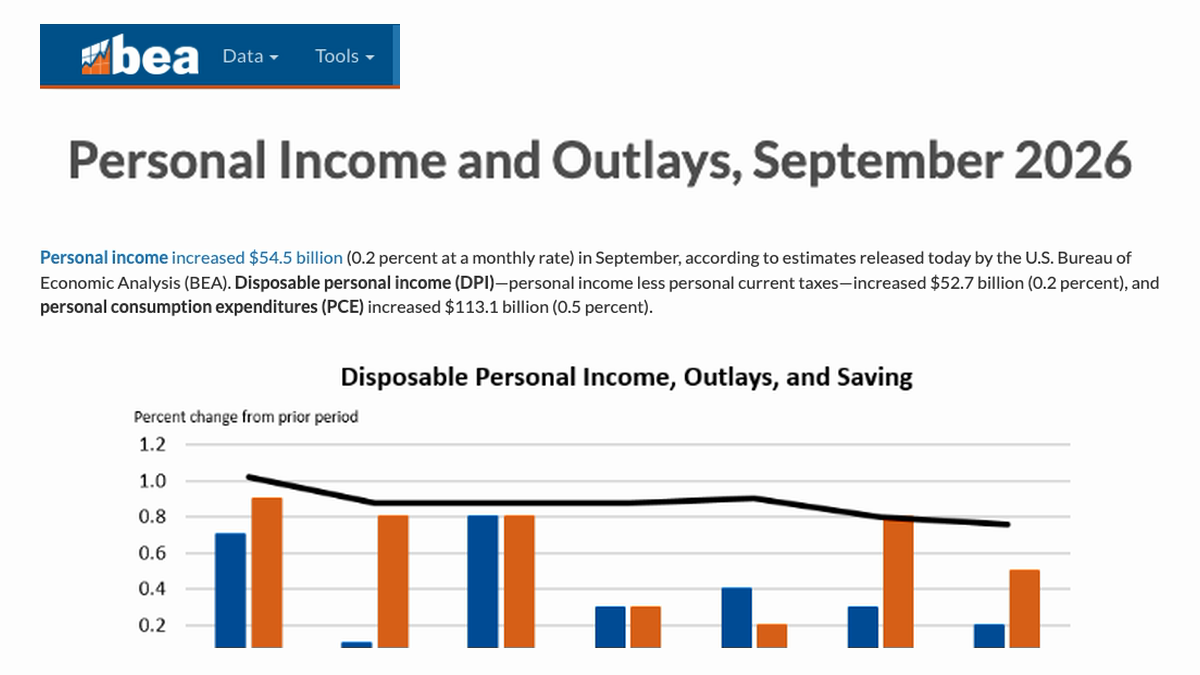
U.S. spent an additional $113.1 billion on consumption in September, yet actual consumption remained virtually unchanged.
U.S. residents continued to see an increase in the nominal amount of spending in September, but after adjusting for price changes, the actual volume of new purchases remainedほとんど変わらなかった。 The Bureau of Economic Analysis (BEA) announced on October 29th that personal consumption expenditures increased by $113.1 billion at current month prices, representing a month-on-month rise of 0.5%; however, the real (inflation-adjusted) consumption only increased by $2.6 billion, with a monthly growth rate of less than 0.1%. This gap between the increase in amount and the actual quantity indicates that a significant portion of the consumption expansion that month came from price increases.
币百科
·2026-11-03 07:39:12
1
Gemini 4 Carbon First handed over to the network defenders; the strongest capabilities are not yet available to everyone.
A model that improves performance in vulnerability discovery, exploitation verification, and patch generation. The most direct business move might not be to immediately open it up to everyone. On October 28th, Google chose a more targeted approach when releasing Gemini and Carbon: it will first be made available to a select group of trusted network defenders this week, and then gradually expanded to more trusted partners through Fairwind Program, while also participating in pre-release model testing with the U.S. government. Widespread use by developers, enterprises, and consumers is still to come.
CoinMeta
·2026-11-03 07:39:06
3
Apple's inventory surges by 154%, memory chip costs climb
Apple experienced a significant increase in inventory during the fiscal quarter ending in September, particularly in computer memory-related inventory. The company expects that the gross margin for the December quarter will be affected by higher memory costs and indicates that memory costs are expected to continue to rise in the future; at the same time, iPad sales have weakened due to limited supply.
TechCrunch
·2026-11-03 07:14:34
16
Apple's Q4 revenue and profit both exceeded expectations, while iPhone sales were strong but revenue in the Greater China region fell short of expectations.
Apple releases fourth-quarter financial report; driven by strong sales of iPhone, revenue and profits exceed Wall Street expectations; however, revenue in Greater China fell short of expectations.
The Block
·2026-11-03 06:53:47
23
Stock-type ETF continues to see net inflows; on the first trading day of November, A-share market sees a surge in volume and gains
On November 2nd, the A-share market rebounded strongly, with all major indices rising. The Shanghai Composite Index, Shenzhen Component Index, and ChiNext Index all increased by more than 1%, while the Science and Technology Innovation Composite Index rose by over 2%. In October, cumulative net inflows into stock funds exceeded 390 billion yuan, and on November 2nd, the main capital in the Shanghai and Shenzhen markets had a net inflow of over 5 billion yuan. Analysts believe that with the active involvement of medium- and long-term funds, the market may gradually stabilize.
The Block
·2026-11-03 06:53:45
26
View More