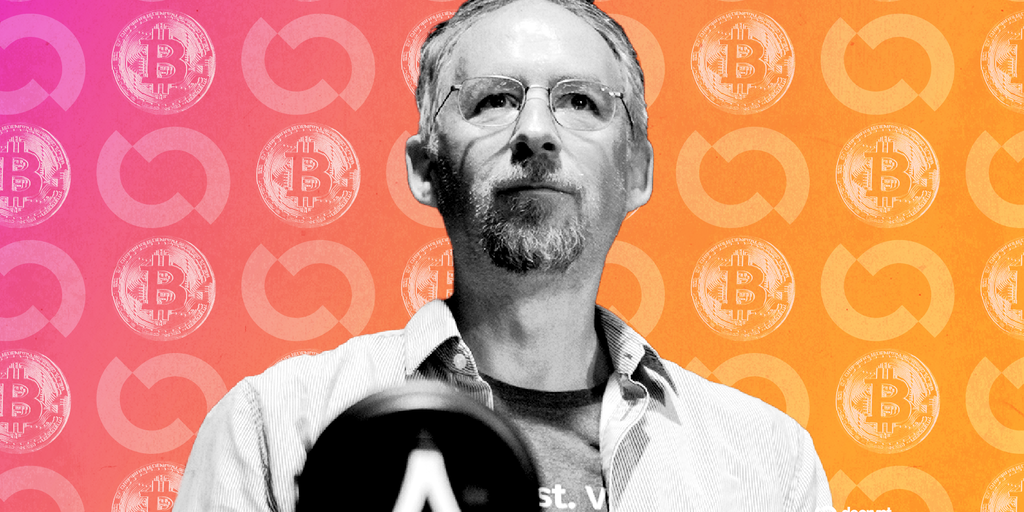
Blockstream CEO Adam Back recently criticized Bitcoin Improvement Proposal 110 ( BIP-110 ) again, stating that it attempts to impose controversial network changes and has repeatedly failed to gain market support.
In a post on X on November 3rd, Back mentioned the previous comments of Bitcoin advocate Francis Pouliot, and used this to respond to supporters of BIP-110.
“Trying to impose your views on Bitcoin will ultimately be rejected by the market,” Back wrote, referring to previous controversies surrounding Bitcoin regulations.
He referred to the comments from Pouliot as "a teaching example regarding the reality of Bitcoin," and stated that discussions surrounding the established rules of Bitcoin are aimed at helping people understand its immutability.
Adam Back Rejects Attempts to Change Bitcoin Rules
The latest remarks from Back emerged again after the discussions surrounding BIP-110 heated up. This proposal aims to restrict the use of certain non-financial data within Bitcoin.
In responding to this debate, Back believes that the controversy is not just about the data itself that is stored.
"This is not necessarily just about the payload," he wrote in another post.
He believes that even if supporters believe that the changes they propose are beneficial, the market will resist attempts to bypass consensus.
Back also said that BIP-110 "suffered a crushing defeat at the first hurdle," due to the serious technical problems he mentioned.
This criticism continues his stance from earlier this year. At that time, he warned that the proposal could potentially split the Bitcoin network.
In July this year, crypto.news reported that both Back and Strategy, who are executive chairmen under Michael Saylor, expressed their opposition.
Both questioned whether the restrictions on specific types of transactions are worth modifying Bitcoin's consensus rules.
What suggestions does BIP-110 have for Bitcoin?
The official name of BIP-110 is “Reduced Data Temporary Softfork”, which was written by the developer Dathon Ohm.
The proposal suggests imposing additional restrictions on any data stored in Bitcoin transactions over a period of about one year.
Its rules limit the standard transaction output script to within 34 bytes, but allow OP_RETURN to output up to 83 bytes.
Other terms will also limit certain data fields to 256 bytes and impose additional restrictions on Taproot transactions.
Supporters believe that inscriptions and other non-financial data impose an unnecessary storage burden on Bitcoin nodes.
Their view is that restricting such activities can reduce operating costs and maintain Bitcoin's use as a payment network.
Developer Luke Dashjr, who is related to the Bitcoin Knots and OCEAN pools, is one of the most well-known supporters of this proposal.
However, opponents argue that modifying the consensus rules to reject specific transactions could undermine the neutrality of Bitcoin.
The official status of this proposal is currently displayed as Closed.
BIP-110 failed to gain support from miners.
In August, supporters of BIP-110 attempted to activate their preferred rules, and as a result, the controversy went beyond the scope of technical discussions.
The proposal requires 55% support from miners' signals to be voluntarily activated. However, during the relevant signal period, only 2.53% of the blocks expressed support.
On August 8th, a node executing BIP-110 rejected a block accepted by the main Bitcoin network, thereby forming an independent chain.
This smaller chain produced two blocks in succession, after which it fell behind the existing network.
Reports regarding the Bitcoin chain split indicate that this new chain has difficulty attracting sufficient computing power to sustain stable block generation.
After the fork, supporters discussed changing the workproof algorithm of a minority of networks to BLAKE2b.
This alternative mining system will no longer rely on Bitcoin's existing SHA-256 mining arrangements.
How many Bitcoin nodes currently support BIP-110?
Recent online monitoring shows that the adoption rate of the BIP-110 execution software is limited.
Data released on November 3 by bitdis.org shows that among 18,870 observed nodes, only 8 were executing BIP-110, which is approximately 0.04%.
The same monitoring service also shows that among the 649 blocks mined during the current difficulty period, there is not a single block with the BIP-110 signal.
These data do not represent a complete statistics of each privately operated node, but they can reflect the participation situation that is publicly visible.
Among the monitored nodes, Bitcoin Core accounts for approximately 90%, while Bitcoin Knots accounts for about 10%.
Running Bitcoin Knots does not mean that the node automatically supports BIP-110, as this software offers different configurations.
The latest data shows a significant difference compared to previous periods. Previous reports indicated that hundreds of nodes were running software compatible with BIP-110.
Back This reiteration of criticism occurs after the proposal failed to establish a competitive chain with substantial computational power support.
In a historical post from 2023 that he re-posted in July, Back described the controversial Bitcoin fork as a repeated challenge to the network's immutability.
In this re-discussion, he also added a brief comment: "Time is a flat circle."