Newsletter
After the Democratic Party won both houses of Congress, Bitcoin rebounded from a six-week low, trading at $78,354 earlier on Wednesday; Ethereum rose to $2,323.
The " Clarity Act " in the encryption industry failed to pass a key vote in the Senate as early as September, which means that its efforts to promote the establishment of a federal market rules manual face an even more difficult path.
Despite the crypto industry spending over $300 million to support candidates during two election cycles, hacker attacks and the outflow of investment funds have still dragged down the market.
After the Democratic Party won control of both houses of Congress in the U.S. midterms, Bitcoin and Ethereum rebounded on Wednesday; however, this outcome may make it more difficult for the crypto industry to push for more favorable federal regulations.
From a technical perspective, this rebound in the crypto market seems more like a natural recovery, which is in line with expectations, rather than a reversal of trend or a sharp rise driven by fear of missing out on the opportunity ( FOMO ). The selling pressure from the previous night also reversed as U.S. stock index futures rebounded, so it is difficult to attribute this recovery entirely to political factors.
BTC November High Point
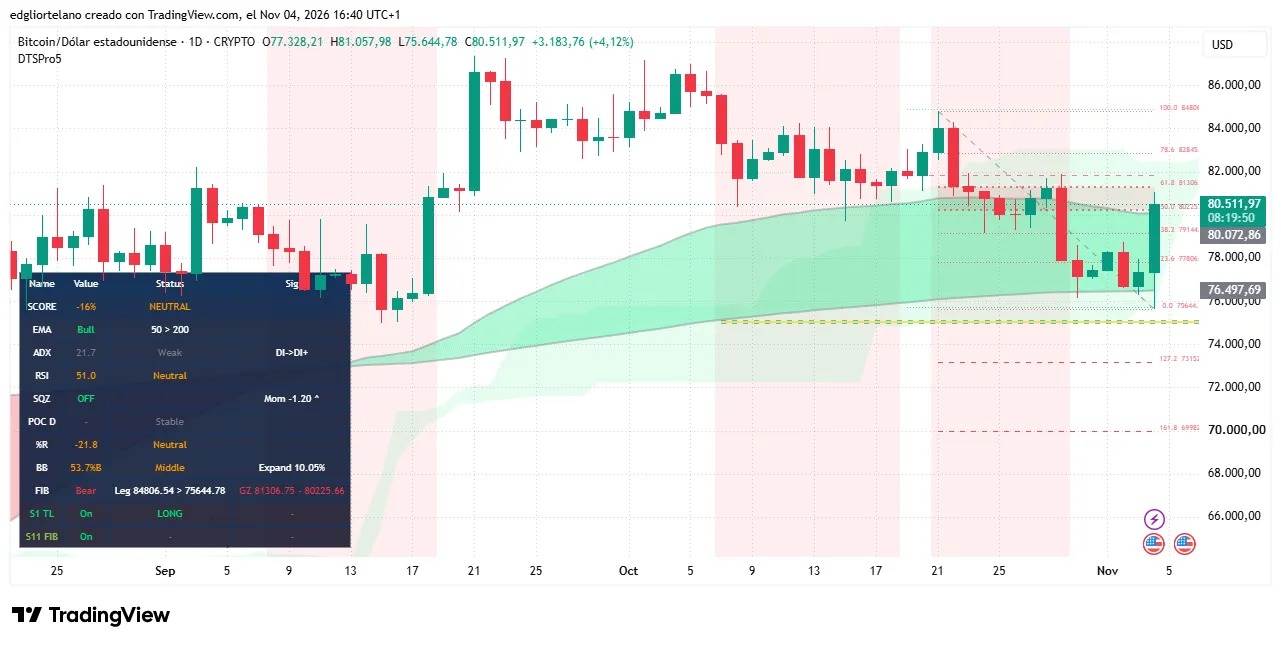
Bitcoin once fell to a six-week low, then rebounded and returned above $80,000, also surpassing the average price of the past 50 days; after several weeks of bearish correction, this is seen as a solid bullish signal.
Meanwhile, Ethereum soared by 7% to $2,434, while the U.S. stock market as a whole rose by about 1.6%, with the Dow Jones Industrial Average leading the gains with a rise of 2.5%.
An analyst interviewed by Decrypt stated that the Democratic Party's sweeping victory in both houses of Congress had already been factored into prices in the crypto market. Therefore, the rebound in Bitcoin is more a reflection of how much bad news investors had anticipated beforehand, rather than them welcoming the election results.
Unfinished Cryptography Bill in Washington
In the two election cycles of 2024 and 2026, the industry spent over $300 million in supporting crypto-friendly candidates from both parties. This year alone, approximately $176 million was invested in more than 100 campaigns.
Some of these expenditures are aimed at facilitating Congress to pass legislation that provides clearer rules for digital asset companies. The Clarity Act is an important bill in this effort; it will define how federal regulatory agencies will oversee different types of crypto assets and trading activities.
Before the elections on Tuesday, this bill was already in trouble. In September, senators voted 49 to 50 against advancing the bill, failing to reach the 60 votes required to overcome procedural hurdles. This was not a final vote on the bill, but it prevented it from entering the stage of full debate.
Will “Clarity Act” become law in 2026?
Negotiations had previously been fraught with controversy over restrictions on government officials' involvement in crypto business interests and the handling of stablecoin reward payments. Stablecoins are tokens designed to maintain a fixed value. The crypto business of U.S. President Donald Trump and his family has become a focal point of concern for Democratic lawmakers.
The Democratic Party's control of Congress reduces the likelihood of a quick return to the same legislative agreement, but this does not automatically reverse the achievements made by the industry during the Trump era. The Trump administration relaxed law enforcement, established strategic Bitcoin reserves, and promoted the passage of a federal stablecoin law.
This difference is more significant for exchanges, token issuers, and other companies that seek clear legal permission, whereas it has a less substantial impact on the daily price of Bitcoin. Analysts told Decrypt that liquidity, interest rates, and investment flows still have a stronger influence on these types of cryptocurrencies.
Elections are not the only issue in the crypto market.
The broader crypto market has seen a loss of approximately $300 billion over the past month, with the total market value dropping to around $2.67 trillion. Rising borrowing costs and concerns about the returns on investments in artificial intelligence have prompted traders to shift to lower-risk assets such as bonds or gold.
Major Bitcoin exchange-traded funds ( ETF ) provide exposure to this asset through traditional brokerage accounts, and in October, there was a net outflow of $215 million. This brings the net outflow from the beginning of the year to date to $1.84 billion.
The new session of Congress will take office in January 2027. Unless legislators re-initiate the Clarity Act before the end of this legislative session, the industry will need to embark on a new legislative effort with Democrats controlling both houses of Congress.