The Trump administration is about to face congressional oversight.
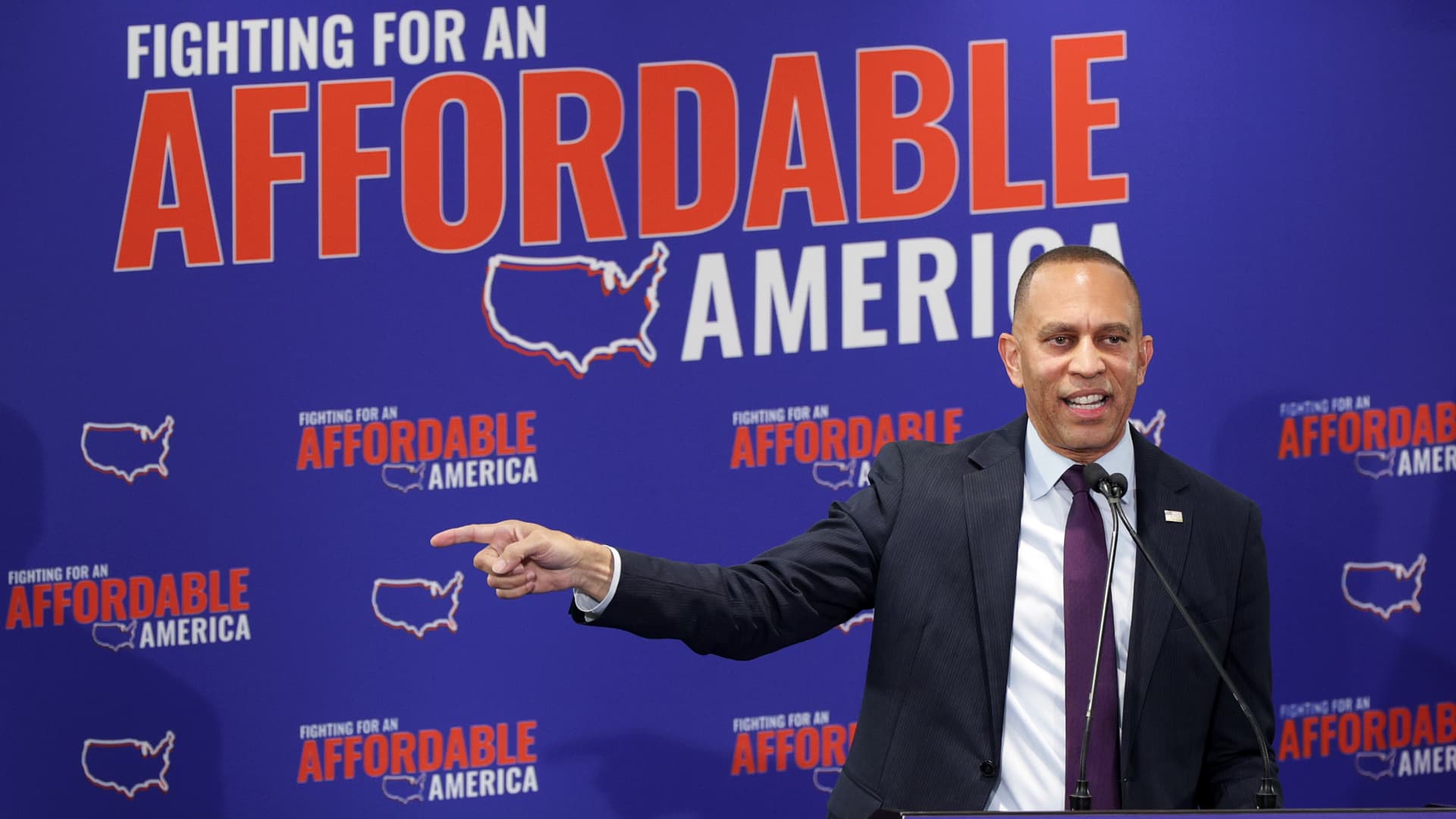
In the final stages of the 2026 midterms, Democratic lawmakers have been conveying this message. Now, as it appears that the party's candidates have won control of the House of Representatives, this campaign promise is likely to be fulfilled. Democratic Representative Jamie Raskin ( Jamie Raskin ) told The New York Times at the end of October that potential areas of oversight include pardons granted by President Trump, possible corruption in government procurement, and cryptocurrency transactions involving the Trump family.
Regular congressional oversight hearings usually don't make it to the headlines.
However, during the second Trump administration, this situation changed.
On October 7, 2025, when Attorney General Pam Bondi ( Pam Bondi ) appeared before the Senate Judiciary Committee hearing, the scene turned into a confrontational exchange with strong partisan overtones, seemingly tailor-made for television and social media.
Bundy refused to answer many questions posed by Democrats and instead launched personal attacks against these U.S. senators.
This scene reflects a fundamental tension in congressional oversight: Congress can request responses, but whether a response is obtained often depends on the cooperation of the department being supervised.
When the Democrats take control of the oversight process, this tension will further intensify. Their hearings are likely to be anything but routine proceedings.
From the perspective of political scientists who study the U.S. Congress, congressional oversight has always played an important role in American democracy. Here is a brief history of it.
Investigative authority
In simple terms, oversight is the ability of Congress to ensure that the laws it passes are faithfully executed. This typically involves asking questions, requesting information, holding hearings, and holding the executive branch accountable for its actions.
The Constitution does not explicitly mention supervision. Article I, Section 8, which lists the powers of Congress, states that Congress has the power to “make all laws necessary and appropriate to carry out the powers vested in the Government of the United States, or in any department or officer thereof, by this Constitution,” but it does not explicitly include a supervisory role. Once a law is passed, Article II, Section 3 stipulates that the President “shall see that laws are faithfully executed.”
However, the framers of the constitution believed that congressional oversight was an important part of legislative power. They hoped that the president would take Congress seriously and ensure that the executive branch was accountable to the legislative body through the constitutional structure.
As James Madison argued in Article 51 of The Federalist Papers, different branches of government should have the ability to check and balance each other's powers. Madison wrote, "Ambition must be counteracted by ambition."
The framers of the constitution also drew on the experience of the British Parliament and colonial legislative bodies. In 1621, Sir Francis Bacon ( Sir Francis Bacon ) was accused of corruption after an investigation by a British parliamentary committee and was impeached as Lord Chancellor. In 1768, the Massachusetts Legislature launched an investigation into Governor Francis Bernard ( Francis Bernard ), and subsequently formally requested the King of England to remove him from his position.
At the Constitutional Convention in 1787 where the Constitution was drafted, George Mason's representative pointed out that members of Congress possessed the "power of investigation" and that they "must frequently convene to oversee the conduct of public officials." Although this concept was never written into a formal statute, it became a practice of self-governance in the early Congress.
Early Supervisory Hearing
Congressional oversight began almost shortly after the first Congress was convened. In 1790, Robert Morris ( Robert Morris ), who had served as the financial manager during the Continental Congress and was also a financier of the American Revolution, requested that Congress investigate his handling of the national finances. He was ultimately found to have committed no improper actions.
During this period, congressional investigations were often handled by special committees—entities established to perform specific functions. These groups had the authority to issue subpoenas and could hold individuals accountable for contempt of Congress. Since there were no formal debates or procedural records at the time, the public could only rely on newspaper reports to understand what was happening.
In March 1792, congressional oversight exposed the actions of merchant William Dooley ( William Duer ). He signed a contract with the War Department but failed to provide the necessary military supplies. This shortage contributed to a shocking defeat for the American army in the Northwest Territories.
The Congress ultimately removed a Chief Quartermaster from his position due to poor contract management.
Throughout the 19th century, Congress continued to exercise this power in a low-profile manner.
Hearings held from December 1861 to May 1865 regarding the American Civil War resulted in detailed records of the conflict, exposing military misconduct and condemning slavery. In 1871, the Senate established a special committee to investigate the violence perpetrated by the Ku Klux Klan during the Reconstruction period.
Investigating corruption and criminal activities
In the 1920s, Congress began to use its oversight powers more actively, and the Senate Committee on Public Lands and Surveying launched a highly publicized investigation surrounding the "Teapot Dome" scandal.
The hearing revealed that Interior Minister Albert Bacon Ford ( Albert Bacon Fall ) secretly leased federal oil reserves in Wyoming to two private companies and received personal loans and gifts in return from these companies.
An investigation uncovered clear evidence of corruption. Foul was subsequently prosecuted and became the first member of the cabinet in the United States to be convicted of a felony.
The U.S. Supreme Court has also helped to shape the legal foundation for congressional oversight. In the case of McGrain v. Daugherty decided in 1927, the court ruled that congressional committees could issue subpoenas, compel witnesses to testify, and hold them in contempt of Congress if they failed to appear. Two years later, in the case of Sinclair v. United States, the court ruled that witnesses who gave false testimony to Congress could be prosecuted for perjury.
These cases have provided judicial recognition for the long-standing implied legislative power and have also consolidated the constitutionality of congressional oversight.
The highs and lows of supervision
The era of modern congressional oversight has brought about some very important reforms, but it has also seen some truly regrettable spectacles.
The two most significant cases of bipartisan oversight stemmed from reports by Washington Post journalists Carl Bernstein ( Carl Bernstein ) and Bob Woodward ( Bob Woodward ). They revealed that in 1972, the office of the Democratic National Committee at the Watergate Hotel in Washington, D.C. was broken into, and that the Nixon administration – including President Richard Nixon himself – subsequently attempted to cover up the incident.
On February 7, 1973, the U.S. Senate passed a resolution with 77 votes in favor and 0 against to establish a special committee to investigate presidential campaign activities. Both the Democratic and Republican parties participated in this investigation, which later came to be known as the "Watergate affair." The work of this committee led to Congress's impeachment of Nixon, ultimately resulting in Nixon's resignation in 1974, and it also facilitated a series of legal reforms to create institutional checks on presidential power.
Another high point of congressional oversight occurred after the September 11 terrorist attacks in 2001. In order to understand why the deadliest terrorist attacks on U.S. soil occurred, Democratic Senator Bob Graham ( Bob Graham ) and Republican Representative Porter Gosse ( Porter Goss ) – who served as chairmen of the intelligence committees in both the Senate and House of Representatives – formed a joint committee to investigate intelligence failures before and after the attacks.
This investigation put forward several important recommendations, which were ultimately adopted, including the establishment of a National Intelligence Director and a Department of Homeland Security, as well as improvements to information sharing among law enforcement agencies.
When private actions raise questions about existing laws or necessitate the enactment of new legislation, congressional oversight can extend beyond the scope of the executive branch. The investigations into medical device safety and the collapse of Enron in 2001 examined improper conduct in the private sector, issues that were not prevented by existing regulations.
However, the power to expose corruption can also be used for partisan spectacles and to incite anger, rather than holding the executive branch accountable for genuine misconduct. It is worth noting that in the 1950s, Wisconsin Senator Joseph McCarthy (Joseph McCarthy) turned supervision into interrogations and used the power of the media to amplify his accusations of communist influence within the federal government.
Democracy requires supervision.
In our view, the problem with allowing oversight to degenerate into a political drama is that it distracts Congress from more quiet and meaningful oversight tasks. Slow, procedural work is unlikely to make headlines on social media, but it helps to hold the government accountable. The task of a prudent legislative body is to balance these two distinctly different impulses.
Congressional oversight strengthens the democratic system in many instances. However, it can also be obstructed if the executive branch does not cooperate.
After the Democratic Party took control of the House of Representatives in the mid-term elections of 2018, they attempted on multiple occasions to exercise their oversight powers, but were rejected by the first Trump administration: the administration refused to send officials to hearings, failed to produce documents, and ignored subpoenas.
Will the same situation be repeated in the next two years with a divided government?
This is an updated version of the article originally published on November 6, 2025.
Drew Kulovski ( Drew Kurlowski ), Associate Professor of Political Science at Coastal Carolina University; Gibbs Notts ( Gibbs Knotts ), Professor of Political Science at Coastal Carolina University
This article is reprinted from The Conversation under the license agreement of Creative Commons. For the original text, please refer to The Conversation.