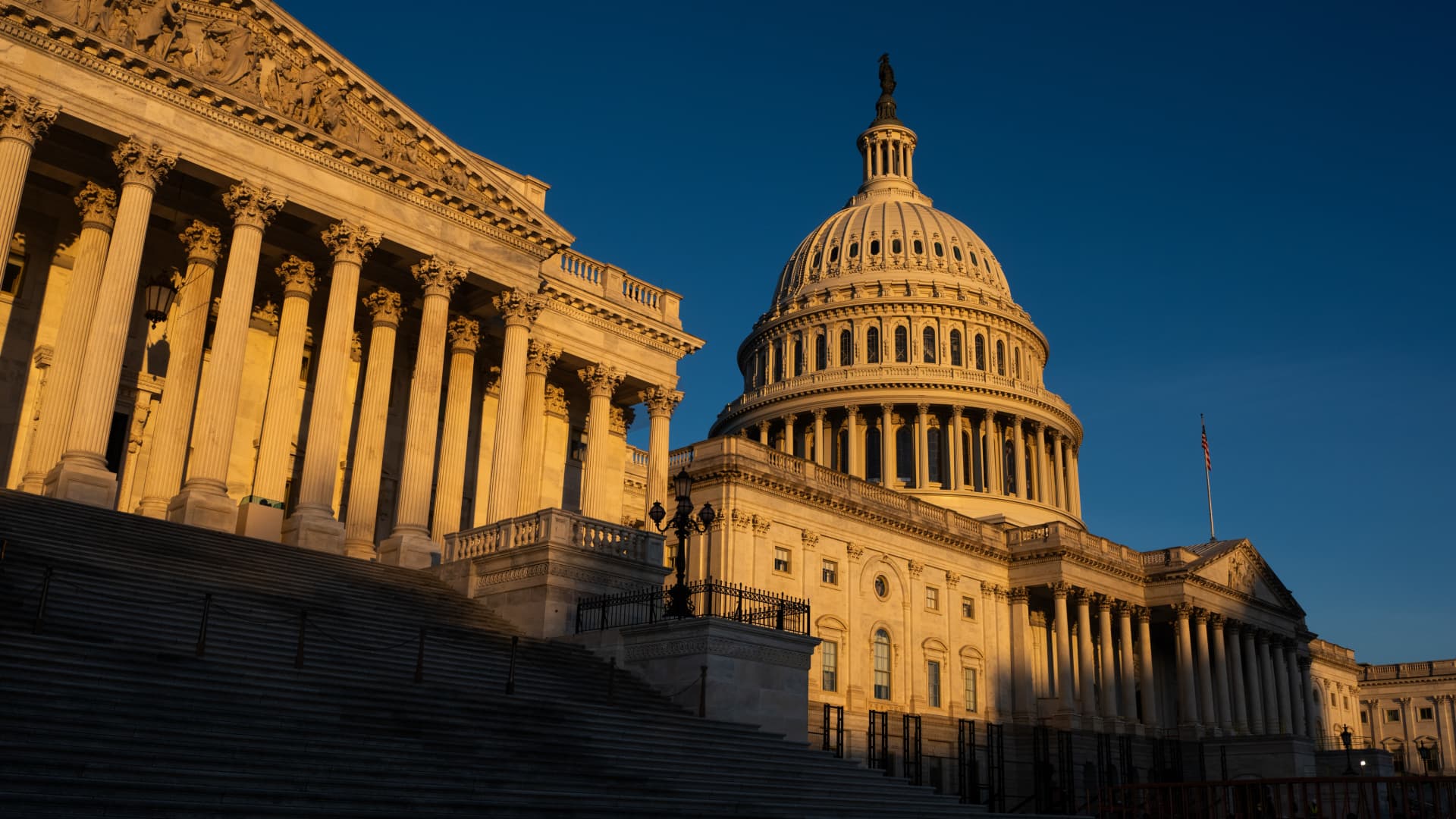
U.S. stocks rose significantly on Wednesday as the Democratic Party achieved a decisive victory in the midterms, and Trump accepted the election results, eliminating the political uncertainty that loomed over Wall Street.
The Democratic Party won a majority of seats in both the House of Representatives and the Senate, and also emerged victorious in key gubernatorial races in states such as Texas. The Democratic Party will now become a balancing force against Trump's policies – Trump has previously implemented tax cuts that favored businesses, while also pursuing tariff policies and engaging in the Iran war, the latter of which has contributed to rising inflation.
The Dow Jones Industrial Average rose by 1,569.40 points, an increase of 3.03%, to close at 53,356.12 points, returning above the 53,000 mark for the first time since September 8th and posting its best single-day performance since April 9, 2025; the S&P 500 Index gained 119.70 points, up 1.58%, to 7,688.62 points; the Nasdaq Composite Index added 364.50 points, rising 1.44%, to 25,736.51 points.
Large tech stocks generally rose, with Microsoft and Amazon increasing by more than 6%, Apple by more than 5%, and Google by more than 3%. Meta rose by more than 1%. AI concept stocks declined against the trend, with NVIDIA falling by more than 3%. In the storage sector, Seagate Technologies fell by more than 8%, Micron Technology and Sandisk fell by 7%, and Western Digital fell by more than 6%; among cloud service companies, CoreWeave fell by more than 9%, and NEBIUS fell by more than 7%; in the optical communications sector, Marvell Technologies and Lumentum fell by more than 7%, and Corning fell by more than 5%.
The results of the mid-term elections also raised hopes for an end to the Middle East wars, leading to a plunge in oil prices. As of the close of trading on that day, the price of light crude oil futures for December delivery on the New York Mercantile Exchange fell by $7.97 to close at $88.12 per barrel, a decrease of 8.29%; the price of London Brent crude oil futures for January delivery fell by $8.98 to close at $94.62 per barrel, a decrease of 8.67%.
"The pressure to end the war will only increase," said Peter Boockvar, the Chief Investment Officer of One Point BFG Wealth Partners. "The American public has clearly expressed dissatisfaction with inflation, gasoline prices, etc., and perhaps this could lead to an end of the war. We'll have to wait and see."
Trump told the media that he is "absolutely willing" to accept the election results and stated that he and Republicans will cooperate with Democrats.
Before the election, investors were concerned that a Democratic victory could drag down certain sectors of the market, especially stocks related to artificial intelligence development. They feared that a Democratic win could lead to more restrictions on data centers nationwide. The victory of Texas Governor candidate Gina Hinojosa , who promised to immediately suspend construction at key data center hubs, exacerbated these concerns on Wednesday.
Investors will also be watching for policy actions in the areas of housing and pharmaceuticals in the coming weeks following the elections. Midterm elections have a history of shaping market performance in the short term, but in the long run, they tend not to have a significant impact on the markets.
Economically, data from ISM and Standard & Poor's indicates that the expansion of services activities in the United States slowed down in October as companies continued to deal with high costs. At the same time, private sector hiring continued to be strong in October, with a report from ADP showing that "employment growth was quite robust."
Responsible Editor: Ding Wenwu