Asian AI stocks plummet, losing $550 billion; Bitcoin rises 4%
Coinpedia
1h ago
Ai Focus
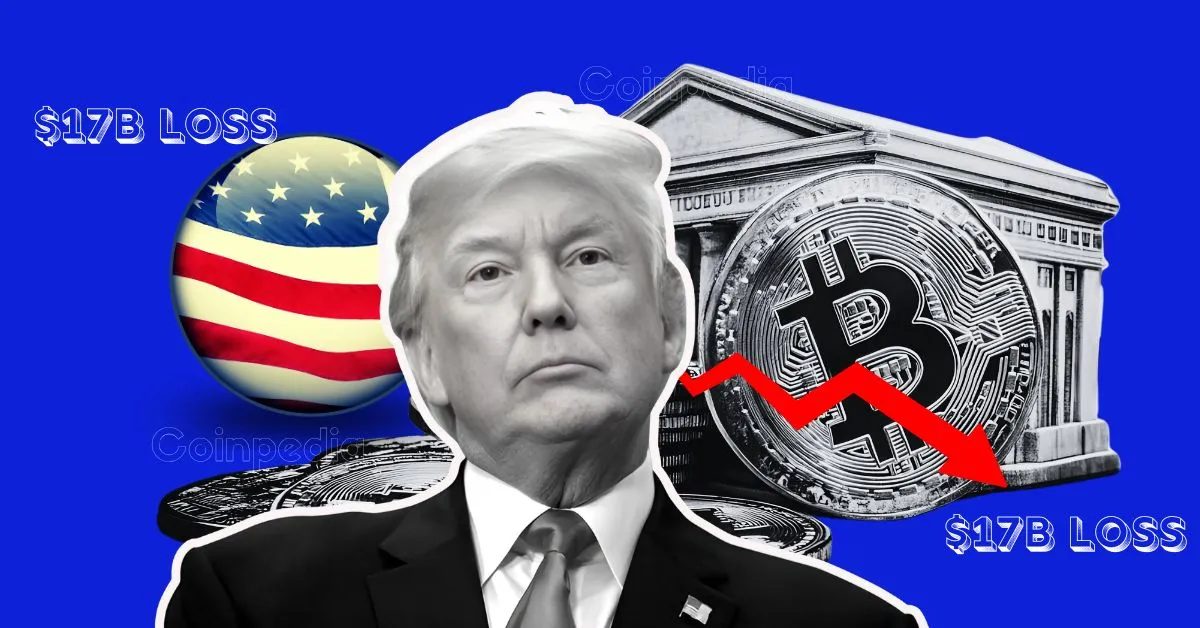
Asian stock markets faced large-scale selling on Thursday, with South Korea, Taiwan, and Japan collectively losing nearly $550 billion in market value, with semiconductor stocks leading the decline. Investors are concerned that after the Democratic Party in the United States wins the mid-term elections, it may tighten regulations on AI companies and data centers, thereby slowing down AI spending. Meanwhile, Bitcoin rose by more than 4%, reaching around $81,000 at one point.
Helpful
No.Help

Asian stock markets faced large-scale selling on Thursday, with the combined market value of South Korea, Taiwan, and Japan evaporating by nearly $550 billion. Stock prices of chip manufacturers tumbled significantly. The decline stemmed from investors' concerns that stricter data center regulations could slow down AI spending after the Democratic Party won the mid-term elections.

Amid the sharp decline in AI stock prices, the leading cryptocurrency Bitcoin rose by 4%, with a trading price of around $80,242.

South Korea has been hit the hardest.

South Korea experiences its largest decline, with the stock market's market value evaporating by about $203 billion. The KOSPI index tumbles 5.28% to around 5,383 points. Due to the KOSPI 200 futures falling by more than 5%, the South Korean exchange activated a 5-minute programmed trading halt mechanism.

In the past month, KOSPI has fallen by nearly 24%. However, semiconductor giants led this round of selling off. SK Hynix fell by 9.46%, and Samsung Electronics fell by 7.57%.

The Philadelphia Semiconductor Index also fell by 3.1%, hitting a six-month low, further increasing the pressure on Asian chip stocks.

Chip stock selling also occurred in Taiwan and Japan.
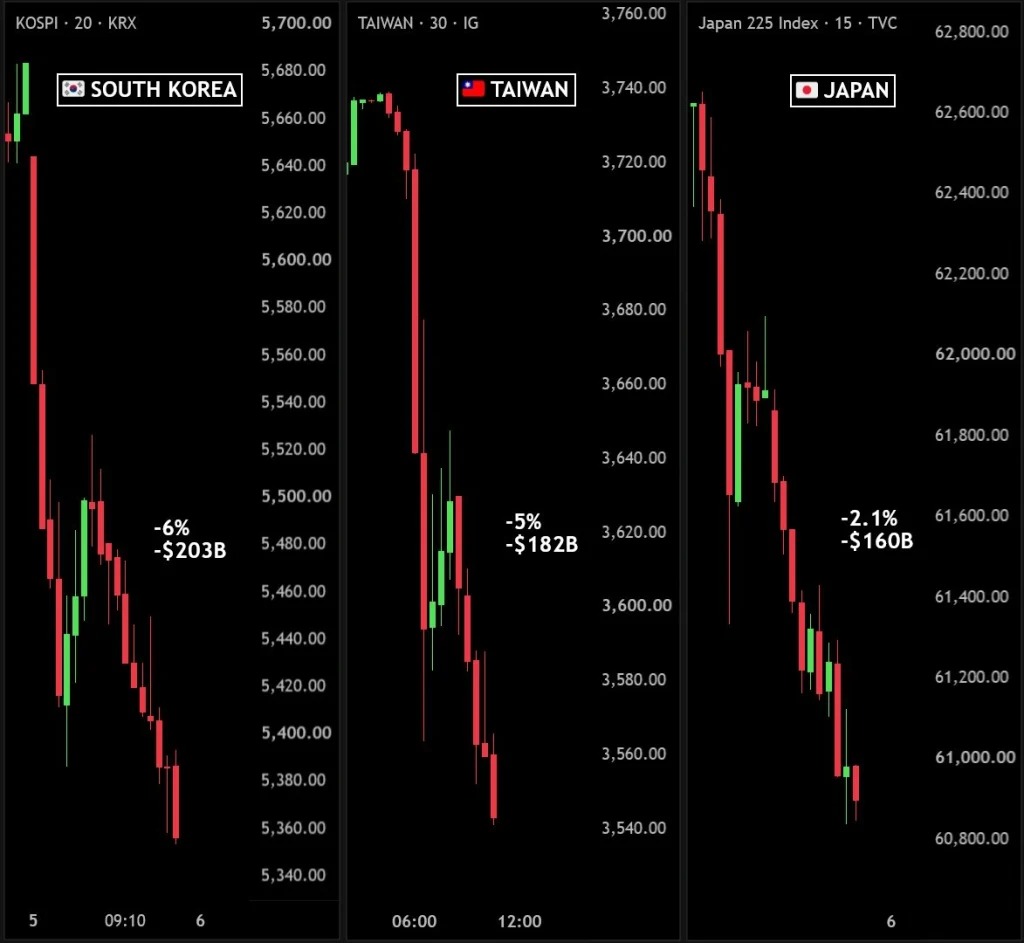
Taiwan's stock market lost approximately $182 billion on that day, with the benchmark TAIEX index falling by 3.28% to 42,314 points, hitting a three-month low.

Leading tech stocks led the decline. MediaTek fell by 6.86%, Delta Electronics dropped by 7.38%, and UMC Holdings lost 9%. As investors reduced their exposure to semiconductor stocks, TSMC also fell by 2.5%.

The Japanese stock market lost another $160 billion, with the Nikkei 225 index falling by 3% to around 61,077 points. SoftBank Group declined by 7%, while Tokyo Electron, Kyocera Holdings, and Advantest fell by 9.42%, 13.14%, and 14.71% respectively.

However, some non-technology stocks rose against the trend. Uniqlo rose by 4.72%, and Toyota Motor and Mitsubishi UFJ also recorded increases.

AI Regulatory Concerns Suppress Chip Stocks, Chinese Stocks Rise

The main concern is that after the Democrats take control of both the Senate and the House of Representatives in Congress, they may push for stricter regulations on AI companies and data centers. Investors are worried that new restrictions could lead to delays in data center projects, increased costs for power infrastructure, and slow down AI expenditures.

These concerns have sparked fears of a decline in chip demand in the market, putting pressure on Asian markets that rely on semiconductor exports and American technology companies.

According to the original text, due to the lower dependence on US AI infrastructure spending, Chinese stocks performed relatively well during this round of selling.

Gold, silver, and Bitcoin rise; oil prices fall.

As the stock AI faced heavy selling, gold and silver rebounded, rising by 1.7% and 1% respectively. Meanwhile, Brent crude oil fell by 8.7% to $94.68 per barrel.

Bitcoin also rose by more than 4%, reaching $81,000.

Tip
$0
Like
0
Save
0
Views 38
HKWDB reminds readers to view blockchain rationally, stay aware of risks, and beware of virtual token issuance and speculation. All content on this site represents market information or related viewpoints only and does not constitute any form of investment advice. If you find sensitive content, please click“Report”,and we will handle it promptly。
Submit
Comment 0
Hot
Latest
No comments yet. Be the first!
Related
Safe Driving: Paris drivers are more impatient than their European counterparts
Geotab releases new data on European city freight efficiency indices, stating that among the seven European capitals studied, Paris experiences 1,191 dangerous driving actions per 1,000 trips, which is higher than Madrid's 1,088 and far exceeds Berlin's 225. The report also shows that there are significant differences in the types of dangerous actions and their distribution across different cities. Geotab claims that these results can help fleet managers develop more appropriate training programs and route planning based on local road conditions.
PR Newswire
·2026-11-05 17:18:12
13
From tanks to drones: South Korean defense companies face new battlefield challenges
South Korean defense stocks have seen a sharp rise over the past two years driven by global arms expansion, but there has been a clear correction this year. The article states that investors are concerned about earnings falling short of expectations, the strengthening of the Korean won, and delays in orders. However, analysts remain optimistic about long-term demand, especially for air defense, anti-drone systems, and traditional weapon platforms.
CNBC
·2026-11-05 17:09:31
14
Moelis Analysis: Midterm Elections Won't Change the Investment Cycle of AI; U.S. Stocks Still Have a Long-Term Positive Trend; Uncertainty Around Trump's Policies Will Continue
Morgan Stanley believes that a major victory for the Democrats in the U.S. midterms could reshape fiscal policy and increase scrutiny of AI infrastructure projects, but it will not change the long cycle of AI investment. The firm maintains its bullish view on global stocks, arguing that the U.S. economy still has resilience, and the policy uncertainties during Trump's second term will also continue to exist.
The Block
·2026-11-05 17:09:29
14
Add security capabilities to AI, HPC and the data center network
AI and HPC are reshaping the data center network architecture. The article discusses the different trade-offs in implementing security mechanisms such as MACsec, IPsec, and Ultra Ethernet in exchange chips, external PHY, optical modules, SmartNIC, as well as in future chiplet architectures. It also mentions that Rambus offers network security silicon with a maximum support of 1.6T, which can reach 3.2T in the future.
The Block
·2026-11-05 17:09:27
16
After the U.S. midterms, Trump-related crypto tokens declined; Trump's media transferred 4,259 bitcoins, attracting attention
After the Democratic Party won the mid-term elections, tokens related to Trump, such as TRUMP, WLFI, and MELANIA, came under pressure and declined in value. Meanwhile, it is reported that Trump's media and technology group transferred 4,259 bitcoins to Crypto.com on the eve of its November 30 deadline for cash repayment of convertible bonds. However, there is currently no confirmation that any bitcoins have been sold yet.
Coinpedia
·2026-11-05 17:09:25
16
View More