Brief
Bitcoin fell to $76,000, erasing the breakout gains from Wednesday, with approximately $428 million in long positions in cryptocurrencies being liquidated within an hour.
As chip manufacturers and data center companies decline due to market concerns over AI spending and Democratic oversight, NASDAQ is approaching its correction range.
The rebound on Wednesday involved a large-scale squeeze of short positions. Futures data indicates that this is more akin to a reorganization of positions than an influx of new buyers.
On Thursday, the sell-off in tech stocks spread to the cryptocurrency market, erasing the rebound seen on Wednesday following the U.S. elections and triggering forced liquidations worth hundreds of millions of dollars.
Bitcoin once fell to around $76,500, a decline of nearly 5%, returning to levels near those before it broke through $80,000 on Wednesday. Ethereum saw a decline of over 5%, and other major tokens also experienced similar declines. During the selling period, about 90% of the top 100 cryptocurrencies were in a downward trend, and approximately $428 million in long positions in cryptocurrencies were liquidated within an hour.
Wall Street also failed to provide a safe haven. The S&P 500 index fell by about 2.6% during midday trading, while NASDAQ dropped nearly 4%, approaching its correction range, which is a 10% decline from its peak.
November Bitcoin Low Point
Elections were one of the reasons, but concerns regarding the expenditures and interest rates of AI further exacerbated the losses.
The selected player's situation encounters AI selling pressure.
The Democratic Party's takeover of control of Congress initially caused concern among investors who expected that industries favored by President Trump would face stricter regulation. On Wednesday, traders bet that a political deadlock would limit major policy changes, and the decline in oil prices would ease inflation, leading to a rebound in the stock market. Analyst Andr also told Decrypt that the Democrats' sweeping victory in Congress "has been largely digested by the market."
However, on Thursday, the market offered a different interpretation. Investors began to weigh what it might mean for the data center boom if Democrats take control of Congress, especially in states where voters are opposed to rising electricity prices and new infrastructure projects.
And the new political landscape has already begun to have an impact. Voters in at least 29 U.S. judicial jurisdictions support restrictions on data center development, although not all of these measures are binding. Reuters, citing UBS, estimates that potential suspension measures could threaten 30% of the additional data center capacity that the United States plans to add by 2028.
A senior analyst from Switzerland quote told Reuters, Ipek Ozkardeskaya: "We suspect that this radical AI construction will come under some scrutiny."
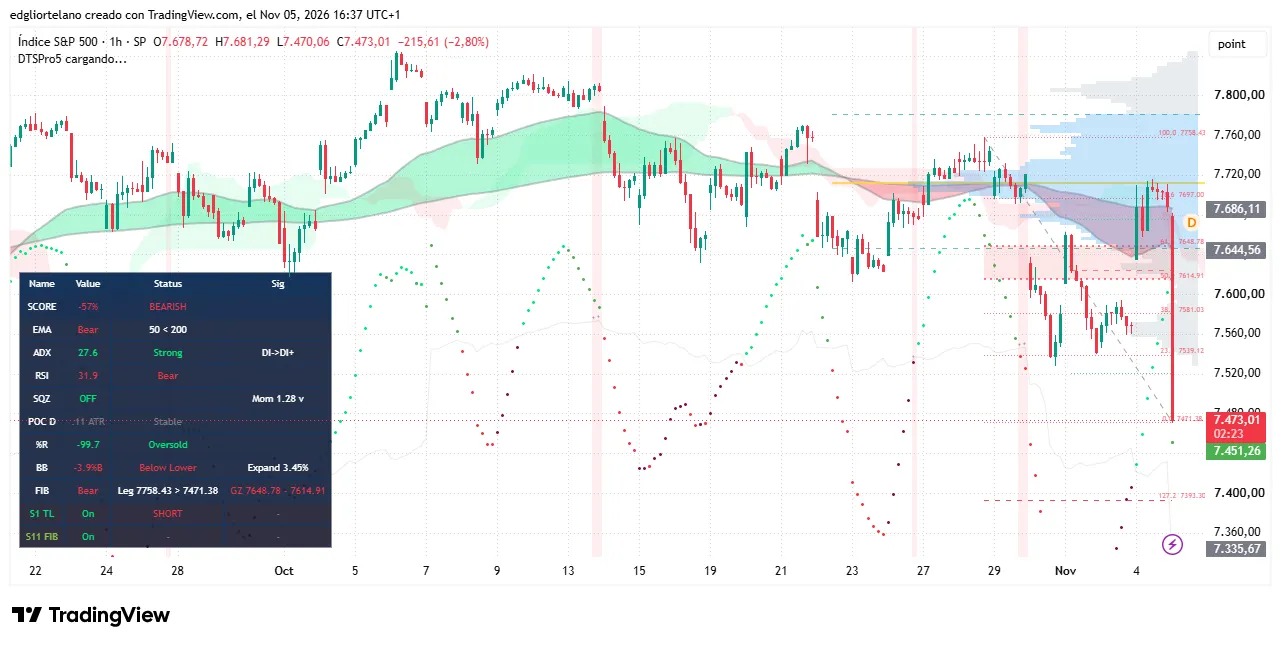
Chip manufacturers and AI infrastructure companies were among the first to feel the pressure. The Philadelphia Semiconductor Index fell by about 8%, with CoreWeave and Nebius both experiencing declines of more than double digits. Tesla also tumbled by about 9.5%, continuing the downward trend that began after Elon Musk's substantial support for Republican candidates. Investors have also begun to question the returns on massive AI investments.
The S&P 500 index experienced one of the most severe bearish fluctuations in months, falling by nearly 4% in just a few minutes.
Incline Investment Management CEO Ted Parkhill told Reuters: "The market is shifting from the commitments of AI to the prices of AI."
Political changes also threaten the crypto industry's ambitions in Washington. With Democrats controlling Congress, restarting the stalled Clarity Act – a proposed federal framework for digital asset regulations – has become even more complicated; the new Congress will not take office until January. Political factors alone cannot explain why Bitcoin's value evaporated by thousands of dollars in just one hour.
Why Did the Bitcoin Rebound Fail?
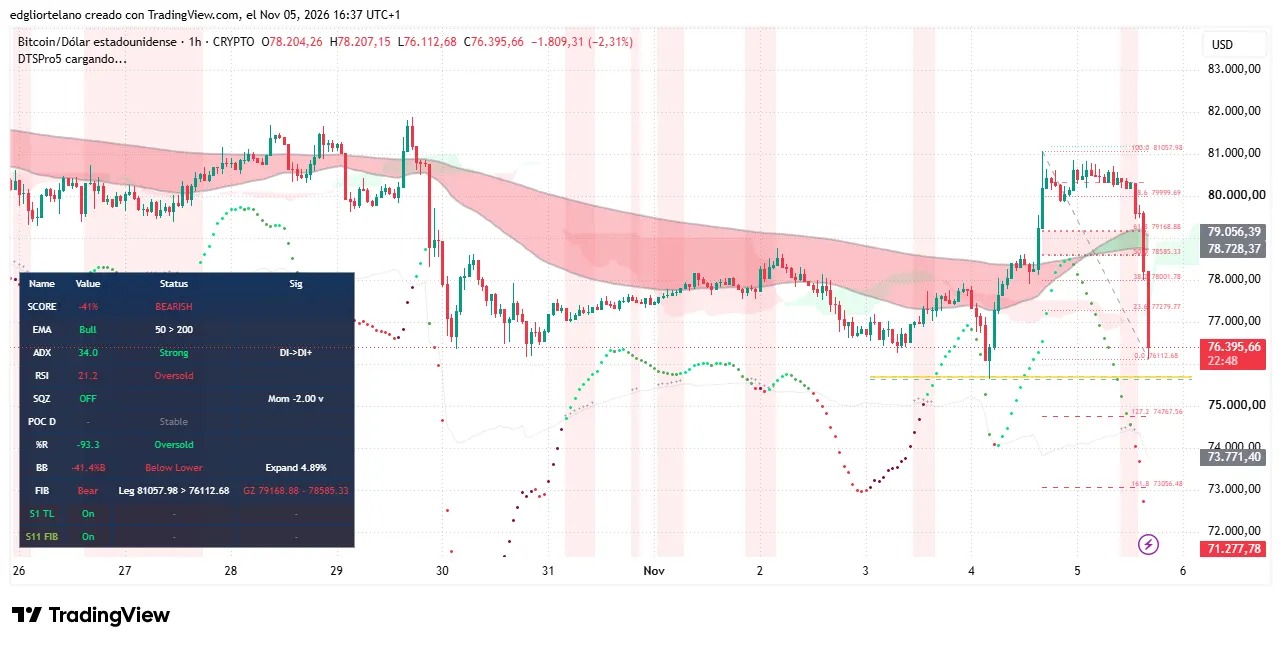
The rebound on Wednesday seemed quite sharp, but a large portion of the buying pressure came from traders closing their losing short positions on Bitcoin. According to CoinGlass data, when Bitcoin broke through $80,000, approximately $378 million worth of short positions were liquidated within an hour.
Today's reversal has triggered the liquidation mechanism in reverse. As prices fall, exchanges will automatically close out long positions with insufficient margins, which in turn leads to more selling orders and results in a huge red K-line on the Bitcoin hourly chart.
Before the elections, the crypto market was already fragile. Over the past month, affected by AI expenditures, rising borrowing costs, and the aftermath of the billions of dollars in hacks at Binance last week, the market's market value has evaporated by about $300 billion.
Traders also expect that due to ongoing inflation, the Federal Reserve may raise interest rates again in December. The employment report for October, released on Friday, could change these bets; generally speaking, higher interest rates tend to dampen speculative investment demand.
From a technical perspective, Bitcoin's still-forming daily candlestick chart is facing the threat of a bearish engulfing pattern, which could engulf the positive candle from Wednesday within a single trading day and erase this breakout.
The hourly chart shows that the price has fallen below $79,000 and is approaching $76,100. The next test will be at $75,000; if it can manage to rebound above $80,000 again, the pressure might ease somewhat – but since the candlestick for Thursday has not yet closed, this pattern is not yet confirmed.