

It is reported that the People's Bank of China and the Shanghai police jointly cracked down on the four-day Solana Accelerate China 2026 tour event. Relevant authorities halted the project's activities in Shanghai, and financial regulatory agencies also launched investigations into local individuals who provided logistics and public relations support for this blockchain platform.
The reason why Chinese authorities reacted so harshly is that this promotional campaign was too aggressive in terms of "offline marketing." On the evening of October 14th, a team associated with Solana worked together with a contractor from Shanghai to place large, prominent SOL token logos on the exterior of the Citibank building in Lujiazui, Shanghai. Lujiazui is located in the heart of Shanghai's financial district. This was not just an advertisement; executives, including the president of Solana Foundation Lily Lu, also publicly announced that Solana had opened a new office in Shanghai within a high-end building.
This large-scale promotional campaign inevitably attracted attention within the crypto community. Even Zhao Changpeng, the founder of Binance...
It seems that the organizers are attempting to circumvent regulatory obstacles through a strategic positioning technique. This four-day tour covers Shanghai, Hangzhou, Shenzhen, and Beijing, with the focus of promotion strictly centered around technologies such as AI agents, robots, and IT development, rather than cryptocurrencies themselves.
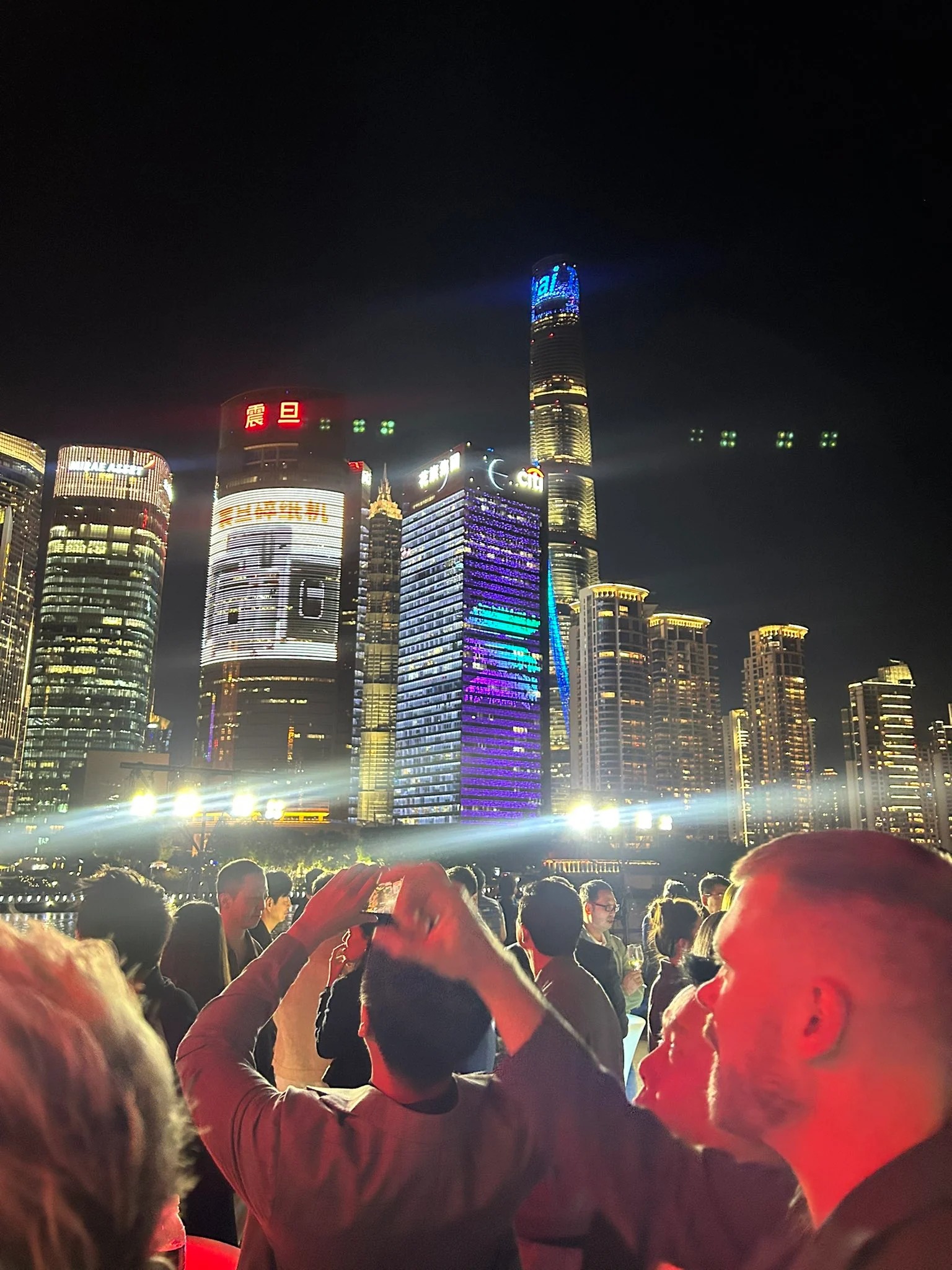
This approach did not gain recognition in China, and a quick backlash followed. On the morning of October 16th, an event held at the Shangri-La Hotel was directly canceled, and the participants were detained on the street for over an hour before the police suddenly arrived. Lily Lu attempted to downplay the situation, claiming that the event was cancelled because the number of applicants had quadrupled and the venue was not prepared to accommodate all the participants.
On November 6th, a representative from the People's Bank of China, in an exclusive interview with the official media "Financial News," finally put an end to the outside world's speculation about the events. The representative directly referred to this building advertisement and all related activities as illegal marketing of virtual currencies. The stance of the central bank is very clear: SOL is a type of cryptocurrency, and the infrastructure of Solana not only facilitates token issuance but also helps to stabilize the circulation of tokens, especially USDT, which is prohibited in China.
The organizer Solana Foundation violated the encryption risk protocol jointly issued by eight Chinese departments in February 2026. This document explicitly prohibits the promotion of overseas encryption projects and imposes personal responsibility on Chinese citizens and companies that assist in such promotion.
As of now, Solana Foundation has not issued any official comments on this matter.
However, the signal sent by the People's Bank of China is very clear: to completely eliminate foreign blockchain networks and related activities from the Chinese mainland market.