Atlanta, November 5th / PRNewswire / -- According to Bark Technologies, a technology company that provides customizable security tools for families, disability projects, and community organizations, the digital access of people with disabilities has for a long time been framed as a "choice between security and independence." Bark states that this framing presents challenges for caregivers and state-level programs. Caregivers often have to make a choice between "making the devices unusable" and "leaving users completely at the mercy of the internet, which carries real risks."
Bark shared this view after Wisconsin approved its Bark Phone and Bark Watch programs under the state's IRIS ( Include, Respect, I Self - Direct) for adults with disabilities. This approval was based on the fact that the Bark product had already been deemed eligible for the state's long-term support ( CLTS ) exemption program for children.
Bark is encouraging state-level projects and care institutions to adopt what they call "dynamic barriers." Dynamic barriers are security settings that adjust according to an individual's abilities and life goals. They do not simply prevent access; instead, they allow caregivers to gradually increase a person's autonomy once it is shown that the person is ready.
"Independence does not begin or end at a specific age," said Christian Brucculeri, Chief Community Officer of Bark. "When we announced earlier this year that Bark was now available through Wisconsin's CLTS program, it was an important step towards making it easier for children with disabilities in Wisconsin to access safer technologies. Expanding accessibility through IRIS means that support does not have to stop once someone reaches adulthood. Technology should continue to safely support independence, connectivity, and community participation at every age and stage of life."
Go beyond the binary thinking of either/or choices.
When there is a imbalance between safety and accessibility, people with disabilities may miss out on opportunities to develop social skills and independence. Technology can help them stay in touch with family and friends, participate in school and work, and manage their daily routines. However, caregivers and state-level programs have previously lacked effective ways to manage this balance, resulting in many people not having access to tools that could aid in the development of these skills.
There are two common assumptions that can create obstacles. The first is that everyone should have equal access. The second is that digital security means keeping people offline. Bark believes that neither of these views aligns with the way people grow and develop. Viewing security and independence as opposing goals may prevent people with disabilities from having the tools needed to participate in their communities.
Early results from Wisconsin
Early results showed a promising approach. In a ongoing customer satisfaction survey conducted with families in Wisconsin at Bark, these families used Medicaid exemption funds to purchase Bark devices, and 91% of the respondents reported positive changes within three to six months, including greater independence, fewer behavioral challenges, stronger social connections, and a better understanding of online social signals. CLTS support and service coordinators Kate Schmitz also observed this in a young participant who began using Bark Phone.
She said, "Since receiving Bark Phone, he has been using it every day, and our family has noticed some meaningful and positive changes. Before that, he showed little interest in suggested services or activities. After we mentioned taekwondo, he took the initiative to use his own Bark Phone to search for nearby martial arts schools, and he will officially start classes this week. Our family also reports that his overall mental health has improved because he now has more time for himself and autonomy, while we can still monitor his location and safety."
Bark provides services through the CLTS and IRIS projects in Wisconsin, reflecting an increasing recognition that adaptive assistive technologies can play a role in supporting people with disabilities as they navigate through different stages of life.
What needs to be changed?
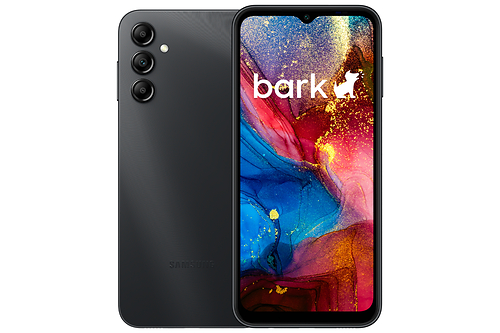
Bark Calls on technology companies to create customizable security measures that can be adjusted to meet the needs and goals of each individual. Bark Their own devices provide two examples:
- Bark Phone: A customizable smartphone featuring contact and app management, content monitoring, screen time scheduling, and location tracking tools.
- Bark Watch: A customizable smartwatch with similar security and management features.
If the device meets the needs and objectives of the participants after assessment, and also complies with the requirements and authorization of the applicable project, such devices can be included in the personalized support and service plan. Taking CLTS as an example, when a certain device is capable of supporting the results determined in the plan, the service coordinator may recommend its inclusion. For IRIS, participants collaborate with IRIS consultants to develop a plan and select service providers and support that align with their objectives.
As people transition from childhood to adulthood, their abilities and skills should also be able to develop accordingly. Expanding the accessibility of assistive technologies across different projects and age groups can help to reduce gaps in support during this transition period from childhood to adulthood. This continuous care can, over time, support a higher level of independence and community participation.
The impact is not limited to Wisconsin alone. As Medicaid projects, state agencies, treatment service providers, and community organizations across the country consider how technology can be integrated into long-term care support, Bark believes that adaptive technology should be regarded as a fundamental right and an important tool for achieving life goals, as it is still often seen in too many cases as a risk that needs to be managed. Through Bark Community Programs, Bark is working with these organizations to enable people with disabilities to access safer technology, while decisions regarding eligibility and coverage remain the responsibility of each project and individual care teams.
Now available in Wisconsin.
Bark Phone and Bark Watch are available as assistive technology options through Wisconsin's CLTS and IRIS programs, depending on individual qualifications, assessment needs, and the requirements of the applicable programs. Under these two programs, assistive technologies can be considered as part of a personalized service planning process. For more information about Bark participation in Wisconsin's Medicaid exemption program and its assistive technology products, please visit www.bark.us / learn / medicaid.
About Bark Technologies
Bark Technologies is a trusted leader in the field of online safety for children and families, helping to protect over 7.5 million children within the United States, covering families as well as more than 3,600 schools and school districts. Its artificial intelligence tools identify potential issues such as cyberbullying, online predators, and threats of violence, providing caregivers with greater visibility while supporting greater autonomy. Bark's products include Bark, app, Bark Phone, Bark Watch, Bark Home, and Bark Sync.
Through Bark Community Programs, Bark and Medicaid, projects, state agencies, treatment service providers, and community organizations collaborate to make safer and more customizable technologies part of the support available for people with disabilities. Bark Phone and Bark Watch can be used as assistive technology options and are available through certain Medicaid exemption programs in Wisconsin, but compliance with applicable qualifications and authorization requirements is necessary.
For more information, please visit www.bark.us / learn / solutions.