In October, Amazon released an updated Kindle product line, which marked the first major redesign in many years for this product. Highlights include the abandonment of the traditional raised border design in favor of a fully seamless design, as well as thinner, lighter models of Paperwhite and Colorsoft, which also offer better display performance. Additionally, there are accessories available for page turning, such as Bluetooth remotes and magnetic protective cases with page-turning buttons.
However, affected by the global shortage of storage chips driven by the AI craze, the prices of the entire new Kindle series have also increased by $40 to $50. This makes it more difficult for ordinary consumers to consider purchasing the more high-end models among them.
Therefore, the model I'm most eager to try out is the 6-inch entry-level version, which starts at a price of $169.99 in the ad version. Even with the price increase, this Kindle will still be the cheapest option for new e-reader buyers.
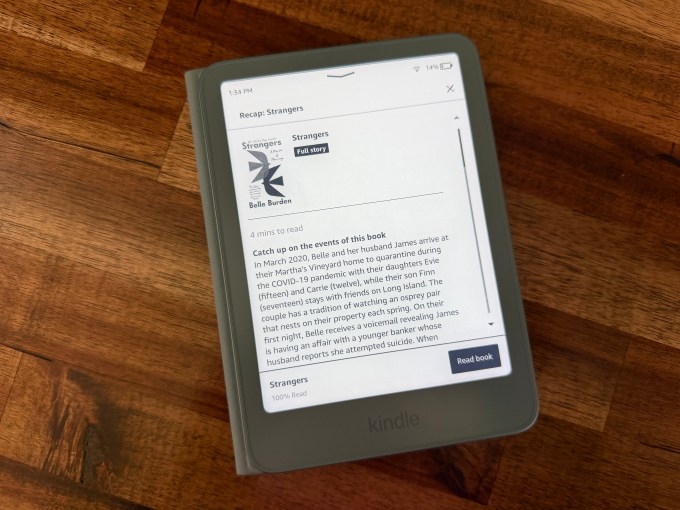
The question I was considering at that time was: when there are obviously better Kindle models available on the market, is it still worth buying this basic version Kindle at such a price? After several weeks of testing, the answer is: it’s worth it – provided that you can accept fewer fancy features and prefer a smaller, lighter device.
This 6-inch Kindle model does not come with warm light to reduce eye fatigue, lacks color display, does not have automatic brightness adjustment, and cannot use a flip-page protective case; moreover, it is not waterproof. Obviously, due to its smaller size, it has a smaller screen and a smaller battery as well. The battery life is 6 weeks, whereas the Paperwhite has a battery life of 12 weeks, and the Colorsoft has 8 weeks.
However, even this basic Kindle has some improvements of its own, which are mainly reflected in the design.
The 2026 model in plastic version, Kindle, is 11% lighter and 14% thinner than the 2024 model, weighing 140 grams compared to the previous generation's 158 grams; it also has a thickness of 6.85 millimeters, whereas the previous generation was 8 millimeters. Although the changes may not seem significant, the 18-gram difference is quite noticeable, making it particularly suitable for carrying in handbags or backpacks. For those who spend long periods engrossed in reading, it is also more comfortable to hold.
At the same time, the aluminum alloy version is slightly heavier, weighing 162 grams, which is 4 grams heavier than the 2024 model Kindle. However, it still benefits from a more slender design.
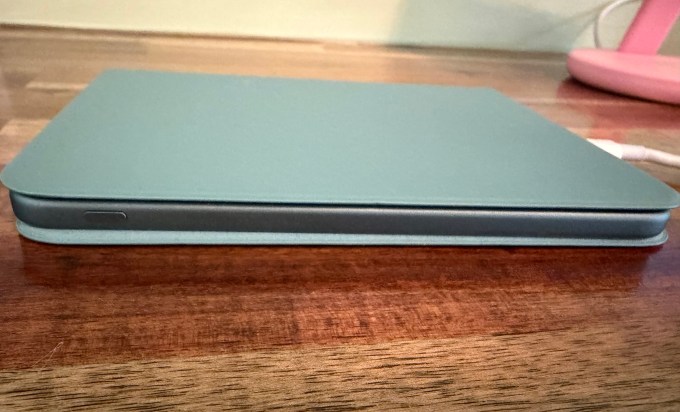
Moreover, despite being an "entry-level" model Kindle, this 6-inch basic model still features a new full-screen design that provides a more comfortable grip, making it particularly suitable for extended reading sessions. Amazon explains that there's no need to worry about not having a place for the thumb after the border is removed, as the new model Kindle has been updated to recognize "dead zones" in capacitive touch and will adjust accordingly based on where the finger is placed.
In practical use, this does not mean that you can place your thumb anywhere on the Kindle screen at will – such an action would be recognized as a highlight or dictionary lookup operation. What it means is that you can place your thumb or finger on the outer edge of the Kindle screen, which is the colored border, without triggering accidental touches, even if some of your fingers are still in contact with the capacitive screen of Kindle.
In terms of software, the new basic Kindle model is also more seamless than its predecessor from 2024. The most noticeable improvement is in the speed of opening books, with Amazon claiming a 30% increase in speed.
If you upgraded from the Kindle Basic version in 2019, the 2026 model represents a significant upgrade. It includes the addition of the USB-C interface, more storage space (from 4GB to 8GB, and now up to 16GB or 32GB), a new full-screen design, and an improved screen resolution from 167 ppi to 300 ppi. It is also faster, thinner, lighter, and has a battery life that lasts several weeks longer.
In addition to its compact size, the basic model Kindle has another advantage: it can even be stuffed into the back pocket of jeans! Now you can spend a little more money to get an upgraded version with an aluminum alloy backplate instead of plastic, offering more storage space. The new aluminum alloy version, which costs $189.99, is available in two colors: Seagrass and Alpine Sky, and comes with 32GB of storage space. Meanwhile, the plastic version, which costs $169.99, provides 16GB of storage space.
However, even if you choose the cheaper version, at least for now, you don't have to limit your choices to just black (which is Graphite), because Amazon has added a new color called Ube which is purple. To be honest, I almost chose this version just because it looks more interesting, even though I prefer the feel of the aluminum alloy body.
I must point out that the new Bluetooth page-turning remote control Kindle Click can also be used in conjunction with the basic model Kindle, but unless there is a need for accessibility, I don't quite understand why one would need it. The 6-inch Kindle is already the smallest version, and now it's even lighter and more comfortable to hold. (Perhaps it's just that I don't see the appeal of remote controls? I hardly ever use a remote control with the Kobo either!)
What really needs to be considered here is: are you willing to pay such a price for a Kindle that does not have warm light? Although this is to some extent a matter of personal preference, for some readers, the absence of warm light is unacceptable. Warm light can adjust the color of the Kindle screen from a cool blue-white tone to a softer amber glow, with the aim of reducing eye fatigue and improving reading conditions in low light or at night.
Whether you need this feature depends on where you prefer to read and how long each reading session usually lasts. If you are accustomed to reading in bed at night in a dim environment, then you might be more willing to spend a bit more money on a 16GB Kindle Paperwhite which costs $199.99. That version is only available in the Graphite color option. (There is also a 32GB Paperwhite available in the Seaglass color, but it costs $249.99.)
If you often read by the pool or during vacations, you might also want to upgrade to the waterproof version Kindle.
But if you can accept the lack of these additional features and are looking for a device that is best suited to fit into a handbag or pocket, then this 6-inch Kindle is still a viable option.