

This "oral record" is compiled based on an interview with Aurora McKenzie, a 47-year-old woman who resides in Illinois. McKenzie took care of her mother, who spent the last two years of her life in a memory care facility. She stated that planning ahead helped to reduce many of the long-term care costs for her family. The content of the interview has been edited to shorten the length and improve clarity.
During my mother's period of care, I was in charge of all her financial management. I have also worked in the long-term care industry myself in the past.
Most of my professional experience has been in the accounting field. I have held various positions, from a regular accountant to the Chief Financial Officer of a long-term care company. Currently, I am the Director of Human Resources at a law firm.
Now, only my husband and I live at home. I have two children and one sister, as well as many nephews and nieces. However, before my father passed away in 2024, we took care of him at his home. We also took care of our mother for two months before she moved into a memory care facility in 2024.
My parents were able to take care of themselves until 2024.
My parents met while they were serving in the Navy. My mother used to do meteorological observations for the Navy, while my father was a mechanic for naval aircraft and helicopters. My mother later worked as a medical assistant for a period of time before returning to her job as a meteorological observer at the airport. My father held the position of Chief Inspection Supervisor at American Airlines before becoming an aviation mechanic. Both of them retired early due to various disabilities.
My father was diagnosed with cancer, and before the burden of treatment became too heavy, he continued to work part-time. My mother suffers from multiple sclerosis, but she is still able to live a normal life. Until 2024, both of my parents were still able to take care of themselves, although their driving skills had declined significantly. The support we provided was limited, mainly to checking their payment arrangements to ensure that they were doing well.
In 2024, my mother suddenly suffered a severe stroke. My father had no idea how to deal with the situation at all. The nurses said that my mother should not be allowed to go home and be taken care of by my father. My sisters also did not have the conditions to take care of her, so she was temporarily placed in a neurology nursing ward, and later transferred to a nursing home.
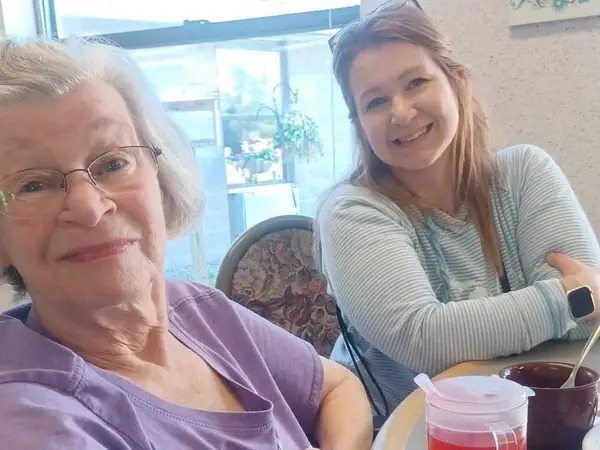
My mother's memory has never truly recovered.
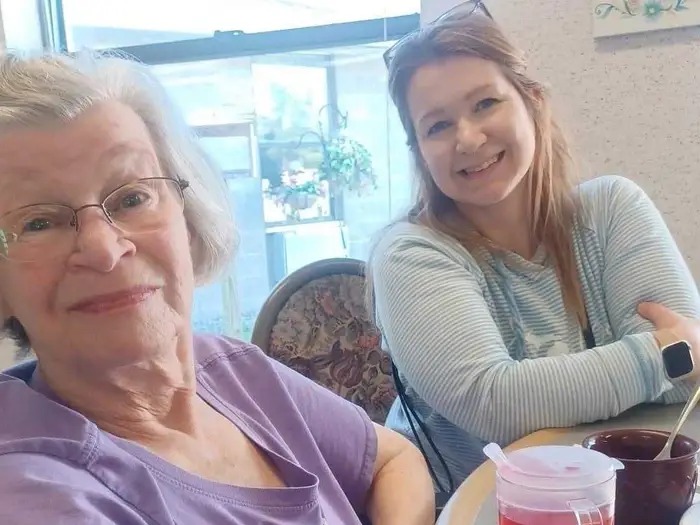
Medicare once briefly paid for the services of a professional nursing institution. During that period, she recovered from being completely unable to speak to being able to utter a few words. The function of her arms and hands also improved, and she was able to stand with assistance. However, her memory has never truly recovered since then, with her short-term memory being greatly affected. She often thinks that it is still the 1980s.
My sister brought her here because she thought I could take care of my mother at home while I was at work, and that I could hire someone to look after her when I went to the office. But once my mother came to live with me, that turned out not to be the case.
She isn't aware that she's not in Michigan, nor is she aware that the place where we live is very busy, so she can't just open the door and let the dog out casually. She can't remember that she can no longer walk down the stairs on her own. She becomes very resistant to things like taking a bath and other tasks that she can no longer complete independently. As long as we're not there to help her, she will fall.
I can't let this situation continue. When she came to live with me, my father was still alive, and we were in the process of applying for long-term care for her at that time. States like Illinois make the reimbursement standards for long-term care services public.
At that time, we were collecting their bank accounts, assets, and all related information. In Illinois, if the spouse is still alive and continues to reside in the community, as long as that spouse continues to live in the house and retains a car, it is possible to be approved for Medicaid. Illinois also allows the transfer of money from my mother's account to my father's account to cover expenses such as housing and groceries.
The mother received $80,000 from her father's life insurance policy.
Throughout the entire process, the father became increasingly exhausted. In November 2024, he passed away suddenly from a severe heart attack. The mother received approximately $80,000 from her father's life insurance policy, as the father had previously withdrawn a portion of the funds through a policy loan to pay for her other medical bills.
My mother was temporarily approved for long-term care Medicaid and was placed in a memory care facility near my home. She only enjoyed the coverage of Medicaid for 4 months; for the rest of the time, she had to pay out of pocket. It’s possible to spend up to $100,000 in less than a year, yet most people are not aware of this fact.
We must assess the value of the house and sell it at a fair market price. I sold their car and also consolidated their bank accounts. I am also responsible for coordinating the payments between the Department of Veterans Affairs, Medicare, Medicaid, and the self-funded portion. They no longer have any other retirement savings or remaining assets.
That account is used to pay for the fees of the care institution she is in, as well as other bills that are not covered by insurance. I visit her at the institution almost every day to check on her condition. Since I have worked in the long-term care industry before, I am somewhat familiar with many of the terms and treatment methods.
I once worked as a business office manager at an organization that provided support for sexual life. We accepted payments via Medicaid, so I was able to understand most of the financial information. I had also done tax preparation work before, which was of great help to me in handling my parents' taxes. It was my pastor who told me that taking care of my mother at home was not sustainable and recommended some organizations to me.
I haven't fully come to terms with their passing yet.
I don't exercise very often, but I do a lot of meditation, which helps to protect my mental health. My dog also helps me relieve stress. Along the way, my husband has been by my side all the time.
A few days before she passed away, I went to see her. At that time, she still seemed to be in fairly good condition, though she spent most of the day sleeping, which was a bit unusual. By the next day when I visited again, her condition had worsened. Her face looked as if she had had another stroke; she was unable to move her arms and couldn't speak either.
She developed sepsis due to the infection. The next day when I went to see her again, she was in so much pain from the infection that she screamed loudly, and I could hear her from across the corridor. Later, they transferred her to a hospice for pain management, and she passed away in August a few days after that.
To this day, I still don't know if I have truly come to terms with the passing of my father and mother. Recently, we also found out that my husband has been diagnosed with esophageal cancer. The arrangements for my mother's funeral were delayed for a long time because we held two memorial services: one near where I live, and the other in Michigan. The flag-handover ceremony among veterans was particularly difficult to bear.
It feels really strange now that I don’t have to go to the place where she used to live to see her anymore. I miss her as “that person,” but the state of her in the last two years of her life was no longer the same as before she had the stroke.
I advocate for joining a supportive community, whether it's offline or online. Although she has not been diagnosed with Alzheimer's disease, I still joined some online support groups for people with Alzheimer's. Having a strong community is very important because when someone is in long-term care, having more people stop by to check on them usually leads to better outcomes.
Setting small goals and tracking progress is equally important. During those difficult times, you must be more forgiving of yourself and understand that even the smallest amount of progress is still progress.