

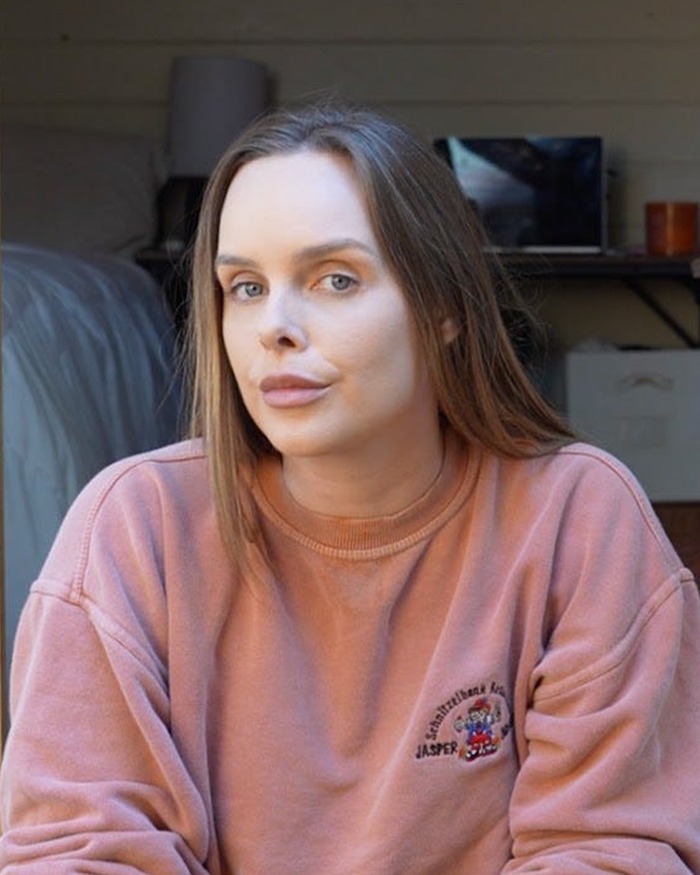
This first-person article is based on an interview with 36-year-old Lauren Patton. She built a small cabin in her backyard in Texas; the following content has been edited and polished.
After living in Chicago for a few years, I decided to return to Texas to start over. That was in 2022, when the real estate market was booming, and houses in central Texas were quickly sold out.
I found a real estate agent on Instagram, and she helped me buy a small house – with two bedrooms and an area of about 1,000 square feet – for around $400,000. I bought it alone; it was just me and my dog.
I paid a small down payment for this house and took out a 30-year mortgage. My monthly payment is about $4,000, which was not a small amount at first, but I felt that with my decent income from my job, I could afford it.
At that time, I was working in the tech industry and was doing quite well. I progressed all the way to a position in data science management, thinking that it was a very lucrative field. However, I was a bit wrong in my judgment about that.
At the beginning of 2023, there was a wave of layoffs in the tech industry. Just two days after returning from a trip to South Africa, I found out that I had been fired. The company only gave me two months' severance pay before letting me go.
I can no longer afford my mortgage payments.
In the first few months after being laid off, I managed to get by fairly well. I spent time relaxing, spending time with my family, and doing things that I didn’t have time for when I was working. After that, I started looking for a new job.
At first, I wasn’t particularly worried. I thought to myself, “Hey, I used to be a data science manager, so I’m sure I can find a new job.” But after interviewing with many places, nothing seemed to progress.
At that time, my finances were already very tight. I had very little savings and was also carrying a significant amount of credit card debt. I applied for unemployment benefits and received some money, and at the same time, I started renting out my house through Airbnb to help pay my mortgage.
In order to maintain this situation, I rented a room on the other side of the city and lived there for about six months. But once my unemployment benefits ran out, I had no choice but to start staying on others' sofas and take on Lyft orders—basically, I did whatever work was available.
In 2024, I contacted a former boss and asked if I could go back to do my previous accounting job. I indeed did so, and although the salary was much lower than what I used to earn, I managed to get by for a while.
However, I still don't have any savings, and I also withdrew my 401(k) funds in advance. I'm very scared. My mortgage is simply too high; I worry that my house might be foreclosed on. At that time, I was already in a state of negative equity of about 30%, and the value of my house was also declining, so I still don't want to sell it.
I was 35 years old at that time, and I thought to myself, “I can’t go on like this any longer.” I knew I had to do something. So I came up with the idea of building a small structure in the backyard to live in myself.
I moved out of the main house and moved into the backyard.
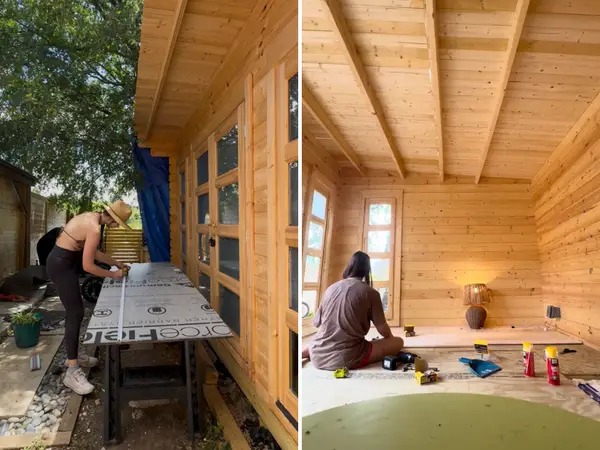
I don't have enough confidence in my woodworking or wood processing skills, so I decided to buy a log cabin shelter kit that I saw on Instagram. I purchased it on loan and it cost me about $8,500.
During the period of building the shed, I moved back into the main house and found a roommate to help me share the mortgage costs. I charge $1200 per month from that room. Although it doesn't cover a large portion of my monthly mortgage payment, it does help a bit. Looking back, I regret buying a two-bedroom house, as there are just too few bedrooms available for rent.
This shed is about 100 square feet in size. The kit includes stackable wooden planks, crossbeams, and large windows, but it doesn’t include a roof or floor. I still have to build the foundation myself. I also added an outdoor toilet, an outdoor shower, a fence, and other facilities around the property.
During construction, I mainly relied on YouTube and ChatGPT; however, ChatGPT indeed led me astray in some aspects, especially regarding the roof part.
I was officially completed in March 2025, but since then, I have been continuously being adjusted—this is a task that will never be finished.
After moving into the shed, I have been renting out the main house full-time on Airbnb, and I have already welcomed hundreds of guests.
I asked Airbnb to handle the pricing. Usually on weekend nights, I charge around $200; during workdays during the academic year, the price is closer to $125.
October was particularly profitable because of the Austin City Limits Music Festival. This October, my property had an occupancy rate of about 96%, with a total income of around $6,516.70. That’s not typical, as both the occupancy rate and the nightly rates are usually higher; however, Airbnb deducted $619 in service fees. I also hired cleaning services 7 times, costing about $100 each time.
I used a part of the money I earned to pay for my mortgage and the bills for the shack. The total electricity bill for my home and the shack is $550, which also includes other utility costs.
But overall, Airbnb cannot cover all of my mortgage payments, and this year, due to an increase in home insurance, my monthly payment has gone up by another $400.
Living in a shack is not easy at all.
At first, it was really difficult to adapt to such a small living space. Emotionally, I felt like I was regressing; physically, it was also very oppressive. But now I don’t mind it so much. My mental state is much better now.
I have most of the things I need in an ordinary house here – a TV, a desk, and a bed. But I have a very small fridge, and there’s no ice maker, nor is there tap water, so I have to stock up on a lot of bottled water.
I had to learn a lot about how to live in this environment. When I first moved in, I had a portable air conditioner, and the humidity would rise to 80%. I would wake up drenched in sweat, wondering, “What is going on?” I had never thought about such a problem before. Now, I keep the dehumidifier on 24 hours a day.
The hardest part is to remember to bring all the necessary items, because there’s always something that’s missing. It’s only when I go to roast chicken that I realize salt is gone, or that it’s actually still in the main house. I’m constantly running back and forth outside to buy small things, and sometimes I wonder if it’s really worth it financially.
Some days I think to myself, "Oh my God, this is much harder than I thought it would be."
This is a difficult lesson to learn.
So far, I've really done everything I could to keep my house – I mean, I've tried absolutely everything. If the situation doesn't improve in the next few years, I'll accept losing it calmly, because I know I've done my best.
In retrospect, I wish I had done more research when I was first buying a home. In addition to the high mortgage payments, my house is also about 100 years old, so it requires frequent repairs. I thought I was quite capable and could handle everything myself, but it really takes a lot of energy.
I also wish I could have considered the worst-case financial scenarios more seriously back then. You've probably heard your parents say: "Don't let your mortgage take up too much of your income." I wish I had listened to them and stayed below the 30% threshold.
If I buy a house again next time, I must keep this proportion below 30%. I can't be so optimistic anymore. I need to be more realistic, because this incident has completely changed my life.
I'm really grateful. Most people are very nice and friendly. Although I haven't made any money from my short videos yet, I'm still working hard on it.
As for work, I'm currently working on a data analysis project, and I also walk my dog in my free time. The money I earn from these jobs isn't enough to cover my mortgage payments, but I'm just very grateful that I still have a job at all.
I feel a lot of sympathy for those who have been laid off; I can completely understand their situation. Once I have stabilised myself and my financial situation is a bit better, I would like to help as many people in a similar situation as possible.
One day, I hope to be able to move back into the main house and rent out this shed for a few hundred dollars per month to people who can afford a place to live.