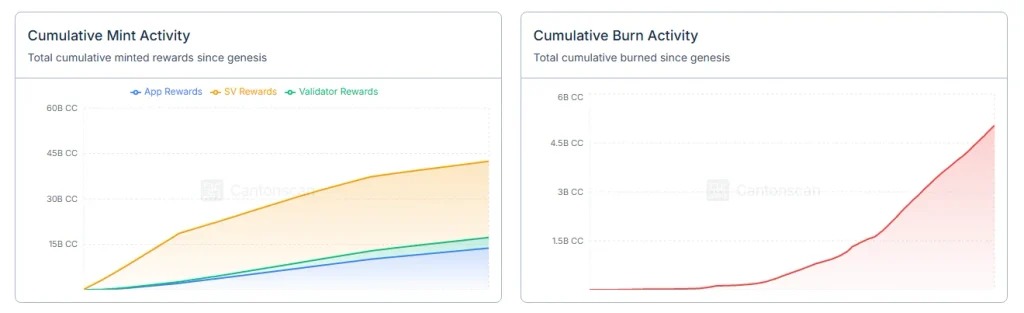

















The token supply structure of Canton Network has recently changed. According to data disclosed by the project, since its inception, CC has issued a total of 42.35 billion tokens and destroyed 5.01 billion tokens. What is of more concern is that the weekly issuance has significantly decreased in recent months, while the weekly destruction has continued to rise.
This means that CC has not yet entered a stage of net deflation, but the pressure brought about by new supply is beginning to diminish. For projects that rely on the activity of on-chain transactions to support their token models, such changes are usually more noteworthy than the total amount of tokens destroyed at a single point in time.
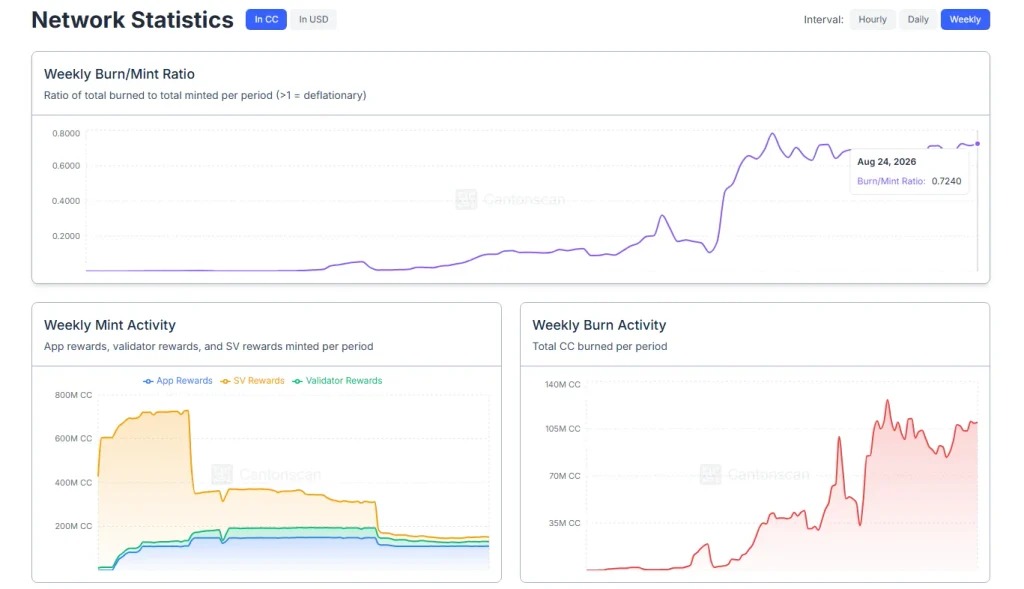
The weekly destruction to issuance ratio has risen to 0.72.
The data provided by the project shows that the weekly Burn / Mint Ratio has increased from 0.16 in January 2026 to 0.72. If this ratio exceeds 1, it means that the amount destroyed within the same period exceeds the amount newly issued; although we have not yet crossed this threshold, we are clearly approaching it.
Canton indicates that every transaction on the network will directly destroy CC, and there is no MEV that diverts value from transaction activities. With this design, if the usage on the chain continues to grow, the amount of destruction caused by transactions may exceed the amount of new issuance in the future.
However, the project also reminds that the total amount destroyed alone cannot explain network usage or changes in coin prices. The reason is that network traffic is first priced in US dollars and then converted into CC before destruction; therefore, the price of the tokens themselves will also affect the quantity destroyed per transaction.
Institutional settlement scenarios remain the core narrative.
Canton is advancing tokenization services related to DTCC, with the goal of enabling member banks, securities firms, and custodian institutions to transfer assets onto the blockchain for real-time settlement. The project indicates that there are currently about 100 trillion US dollars in liquid assets in the capital market that still operate under a fixed-time settlement system, which is also the key market they are targeting.
According to the roadmap for 2026 to 2028, Canton plans to use 5% of the total additional issuance volume of CC to support 28 technical priorities. By 2028, the project goals include Global Synchronizer having a processing capacity of over 2,500 transactions per second, more than 1,000 applications, and 10,000 verification nodes.
These targets still depend on the actual adoption situation. For CC, whether the institutional settlement narrative can be transformed into a sustained demand ultimately depends on whether there is a real increase in on-chain transactions, and not just on the roadmap itself.
Rewards distribution will be adjusted to refer to actual on-chain data.
The Canton proposed CIP-104 plan is to adjust the calculation method of application rewards. The new plan will no longer rely mainly on the self-reported activity markers in the Daml code of applications, but will instead be based on sequencer and mediator data, completing data integration, calculation, and additional issuance in five stages.
This means that the distribution of rewards will be more directly linked to verifiable network activities, reducing the impact of "claims by applications about what they have done" on the allocation results. Canton Foundation It is also stated that relevant proposal repositories, development fund proposals, running configurations, wallets, and accountability records, etc., are now available for viewing at GitHub.
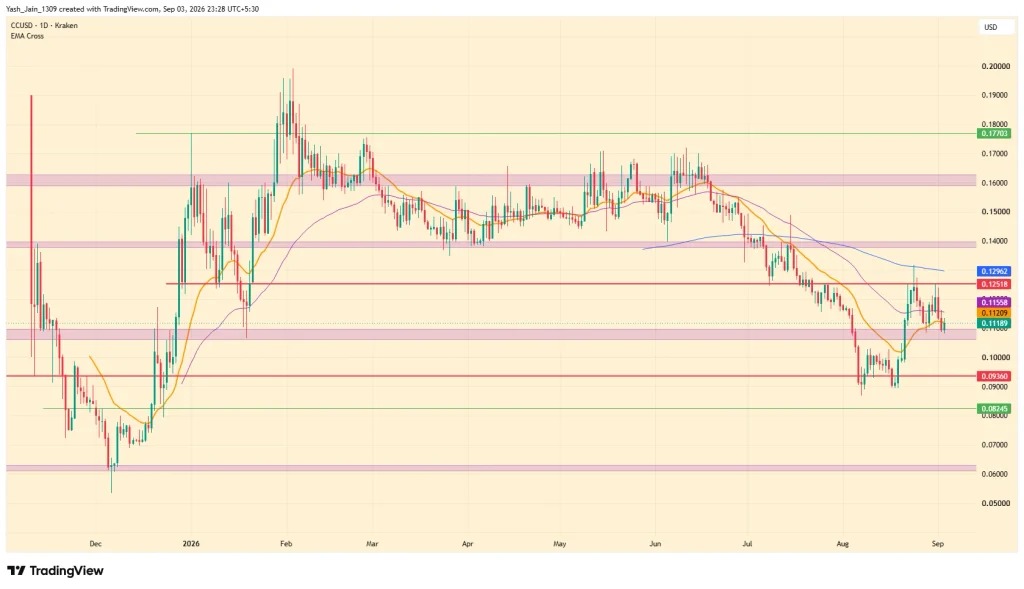
Overall, Canton is attempting to closely integrate token incentives, on-chain usage, and institutional settlement scenarios. In the short term, the supply pressure of CC has eased compared to the beginning of the year, but whether the demand for tokens can continue depends on whether the network can truly bring institutional business onto the blockchain.