


















What is CASHCAT coin? Why does it still lead on-chain despite a 26% weekly drop? According to CoinMeta market data, CASHCAT fell rapidly from a high of $0.316 on September 4 to $0.182 on September 8—a maximum weekly drop of about 26%. But according to Gate and Arkham data, its main liquidity pool is about $4.5 million, and the top 1,000 addresses hold about 89.1% of the supply, keeping it firmly in the on-chain leader position. Why does CASHCAT remain the leader after such a drop?
Table: CASHCAT Coin Latest Data Analysis
| Data Metric | Value |
|---|---|
| Latest Price | $0.1665 |
| Market Cap | $166.5M |
| 24h Trading Volume | $43.2M |
| Main Liquidity Pool Size | ~$4.5M |
| Peak Daily Trading Volume | $40M–$50M |
| Total Holding Addresses | Over 61,000 |
| Top 1,000 Addresses Holding Share | ~89.1% of supply |
| Total Supply / Circulating Supply | 1 billion tokens |
| Robinhood Chain TVL | $774M |
| All-Time High | $0.316 |
Note: The above content is compiled by CoinMeta from publicly available market information. If there are any discrepancies, please refer to the actual data.
What Is CASHCAT Coin?
CASHCAT is a Meme token deployed on Robinhood Chain. Its core narrative comes from a social media clue: Robinhood co-founder Vlad Tenev once publicly stated that the company's original naming plan was "Cash Cat." CASHCAT turns this brand anecdote into an on-chain cultural symbol. The project publicly labels itself "Zero utility"—deliberately abandoning a functional positioning and relying entirely on narrative and community consensus to drive value.
CASHCAT coin latest quote
According to the project's roadmap, CASHCAT has planned a four-phase development path, with a mid-term goal explicitly aimed at "driving Robinhood to complete the brand echo," extending this Meme narrative from the on-chain community to mainstream visibility.
In our view, CASHCAT's narrative is essentially the assetization of brand memory. In the Meme coin sector, having a real story that mainstream audiences can quickly understand constitutes its core difference from purely sentiment-driven speculative tokens.
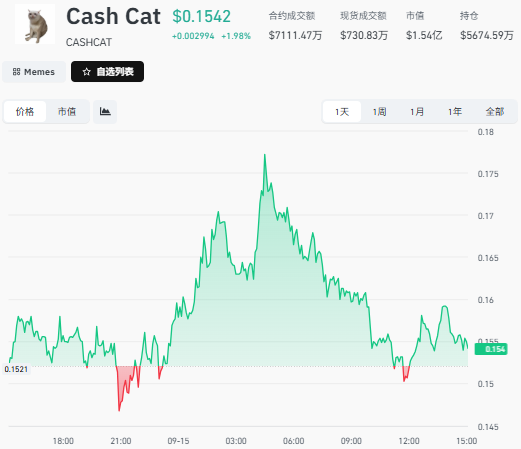
As of press time, CASHCAT's latest quote is $0.1542, with a market cap of $154 million.
Why Does It Still Lead On-Chain After a 26% Drop?
Why does CASHCAT still lead on-chain after a 26% weekly drop? In our view, this is related to CASHCAT's token distribution structure and ecosystem position.
The Nature of CASHCAT's Price Pullback
In our view, CASHCAT's 26% weekly drop was not panic selling, but deleveraging.
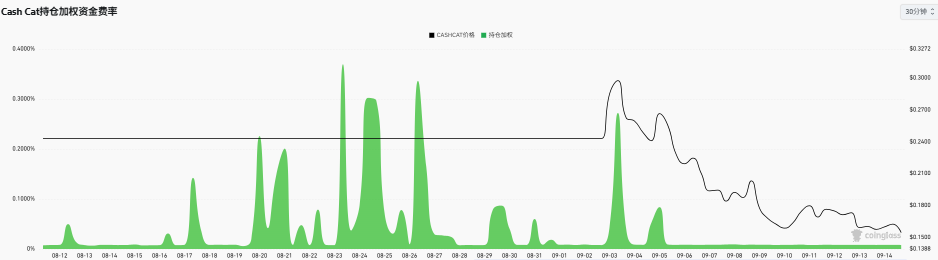
Data shows that open interest fell 3.32% to $62.67 million, and the OI-weighted funding rate dropped sharply from 0.33% during the rally to 0.0077%, indicating that leveraged longs are actively reducing positions. In addition, the Altcoin Season Index fell to 35, as market funds rotated from risk assets to Bitcoin, bringing systemic pressure on speculative assets. This was a healthy cooldown driven by profit-taking and macro rotation, not a deterioration in project fundamentals.
CASHCAT OI-weighted funding rate
CASHCAT Holding Concentration
According to Arkham on-chain data analysis, CASHCAT has over 61,000 holding addresses, but the top 1,000 addresses collectively hold about 89.1% of the supply, corresponding to a value of over $40 million. These top addresses are also holders of more than 12 tokens on Robinhood Chain, including PONS, TENDIES, and STONKBROKER.
Our analysis reveals a key fact:
CASHCAT's high concentration means top holders are deeply bound by shared interests with the entire Robinhood Chain ecosystem. They will not easily sell CASHCAT, because doing so would simultaneously impact their positions in other on-chain assets. In other words, the interests of large holders are deeply tied to ecosystem prosperity, creating a unique resilience where price drops but its status does not fall.
Liquidity Depth Is the Hard Support for CASHCAT's Leadership
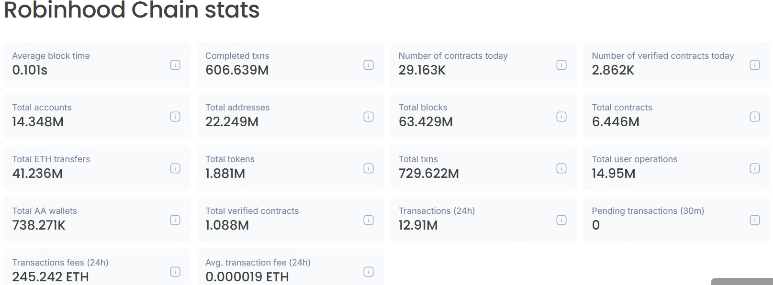
CASHCAT's main liquidity pool is about $4.5 million, one of the deepest pools on Robinhood Chain, with average daily trading volume reaching $40–50 million at peak times. Even in early September, when the overall market cooled, its 24-hour trading volume remained in the tens of millions of dollars.
Robinhood Chain trading data
We note from the Dune Analytics dashboard that among the top 25 Meme coins by market cap on Robinhood Chain, CASHCAT accounts for nearly 79% of total market cap and 74% of trading volume.
The second-largest token by size is only one-sixteenth of its scale. According to a CoinDesk Research report from September 2026, Robinhood Chain's TVL grew about 90% over the past 30 days to $757 million, with the latest daily DEX trading volume reaching $1.69 billion. Robinhood Chain's cumulative DEX trading volume has exceeded $47 billion, and CASHCAT has consistently been one of the core contributors to the chain's trading volume during this period.
In our view, this is precisely the underlying infrastructure that maintains market confidence in CASHCAT. When prices fall, deep liquidity pools attract bottom-fishing capital, forming a natural price buffer.
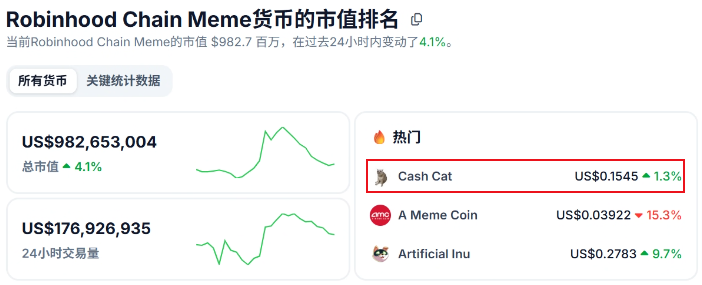
Robinhood Chain Meme coin ranking
FAQ
Q: What is CASHCAT coin?
A: It is a Meme token on Robinhood Chain. The narrative originates from Vlad Tenev saying the company's original naming plan was "Cash Cat." The project is labeled Zero utility and relies on community consensus. According to Gate market data, after a roughly 26% pullback in September 2026, it still firmly holds the on-chain leader position thanks to liquidity and token distribution structure.
Q: Has CASHCAT's leader position been shaken after the 26% weekly drop?
A: Not shaken. Although CASHCAT saw a maximum weekly drop of about 26%, according to Gate and Arkham data, its main liquidity pool is about $4.5 million, and the top 1,000 addresses hold about 89.1% of supply and cross-hold more than 12 Robinhood Chain tokens. With ecosystem interests deeply bound, this looks more like deleveraging than a collapse of its leader status.
Q: CASHCAT has no real utility—does that mean it has no investment value?
A: That cannot be simply concluded. Although CASHCAT is labeled Zero utility, its value comes from brand narrative, community consensus, and ecosystem position. Arkham data shows the top 1,000 addresses hold about 89.1% of supply and cross-hold more than 12 on-chain tokens, with a main liquidity pool of about $4.5 million. These constitute consensus and liquidity support.
Q: Can CASHCAT still remain the on-chain leader after the drop?
A: It may still remain. Its leader status is not determined by price alone, but depends more on token distribution structure, liquidity depth, and ecosystem binding. Data shows the main liquidity pool is about $4.5 million, and top addresses cross-hold more than 12 tokens including PONS and TENDIES. Selling would impact their own ecosystem positions, creating a self-locking effect.

Conclusion
What is CASHCAT coin? It turns Robinhood's "Cash Cat" brand story into an on-chain cultural asset. Why does it still lead on-chain after a 26% weekly drop? Because its leader status is supported jointly by token distribution structure, liquidity depth, and ecosystem binding—not by price alone. According to Arkham, the top 1,000 addresses hold about 89.1% of supply and cross-hold more than 12 tokens, with a main pool of about $4.5 million. The short-term drop looks more like deleveraging, while the long term still depends on narrative and ecosystem expansion.
Disclaimer: Readers are advised to strictly comply with the laws and regulations of their location. This content is based on publicly available market information and is for informational and educational purposes only. It does not constitute investment advice. For the latest updates, follow CoinMeta.