


















The United States has for the first time publicly confirmed the deployment of space weapons capable of performing defensive missions in orbit. Although the model and number of these systems have not been disclosed, this announcement has prompted the market to re-evaluate the potential long-term orders that the militarization of space may bring, as well as the additional demands on the military and aerospace supply chains.
A total of $3.2 billion for 20 agreements
The U.S. Air Force Secretary Troy Meink stated this week that the United States has deployed "on-orbit space control weapons" that can be used to protect U.S. forces from hostile actions. Officials did not specify the exact composition of these systems, nor did they disclose the actual scale of deployment.
In the eyes of the capital market, what is of greater concern is not the existing equipment itself, but rather the potential for subsequent procurement and construction. In April of this year, the U.S. Space Systems Command revealed that it had awarded 20 contracts to 12 companies, with a total potential value of 3.2 billion dollars, for the development of space-based interceptors as part of the Aegis Missile Defense Program.
Companies that have obtained the relevant agreements include Lockheed Martin, Northrop Grumman, Raytheon, and the Mission Systems Division of General Dynamics, with several private aerospace companies also participating.
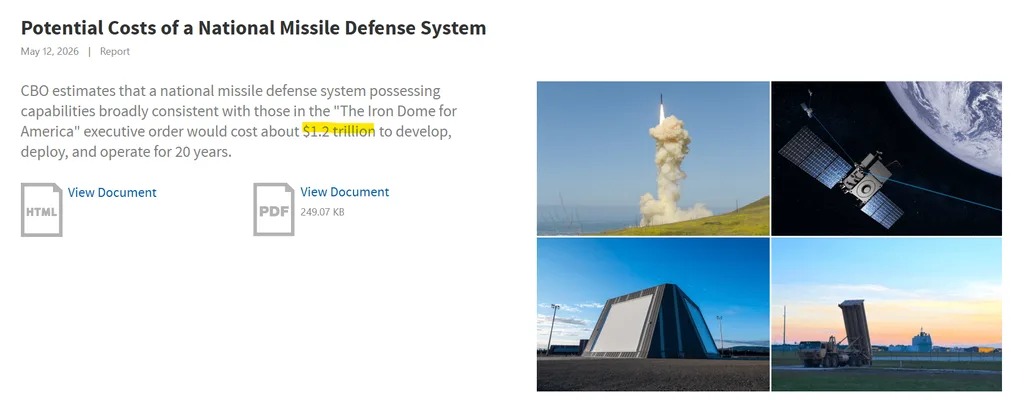
The Congressional Budget Office estimates it to be $1.2 trillion.
The US Congressional Budget Office previously estimated that if a missile defense system were to be built that largely meets the government's public objectives, the development, deployment, and operational costs over a 20-year period could amount to approximately $1.2 trillion. Of this, the cost of the space-based interception layer alone would be around $720 billion, accounting for about 60% of the total system cost.
The institution also emphasized that this figure is not an official budget forecast for the actual "Golden Dome" plan, as the final architecture has not yet been determined. However, this estimate still provides a reference for the market to observe potential expenditures.
From the perspective of the industrial chain, the beneficiaries may not be limited to traditional arms manufacturers. If large-scale deployment of orbital systems is required in the future, there could be additional demand for rocket launches, satellite components, sensors, communication equipment, semiconductors, propulsion systems, as well as ground infrastructure.
Replacement cycle or bring continuous orders
The Congressional Budget Office model also shows that the assumed lifespan of these satellites is only 5 years, which means that they will need to be continuously replaced even after the system is established. According to their model calculations, nearly 1,600 satellites may need to be added each year after deployment is completed.
This is particularly important for suppliers, as it means that the demand is not just for one-time construction, but may also lead to long-term maintenance and replacement in the market.
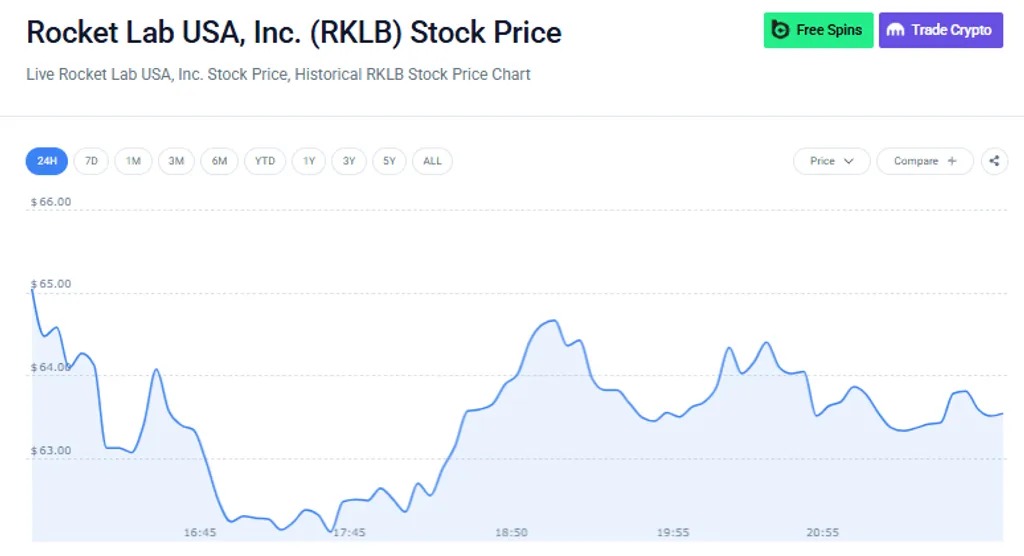
After the announcement of the news, some aerospace concept stocks saw increases. Redwire rose by about 2.5% on Tuesday, while Rocket Lab rose by about 2%. The gains for traditional defense stocks were relatively modest: Lockheed Martin rose by 0.77%, Northrop Grumman rose by 0.73%, and RTX rose by 0.08%. On the same day, the S&P 500 index fell by 0.45%.
Overall, the market's short-term reaction remains relatively restrained. However, if space is further designated as a long-term military deployment area, the commercial opportunities for related defense and aerospace industry chains could continue to expand.