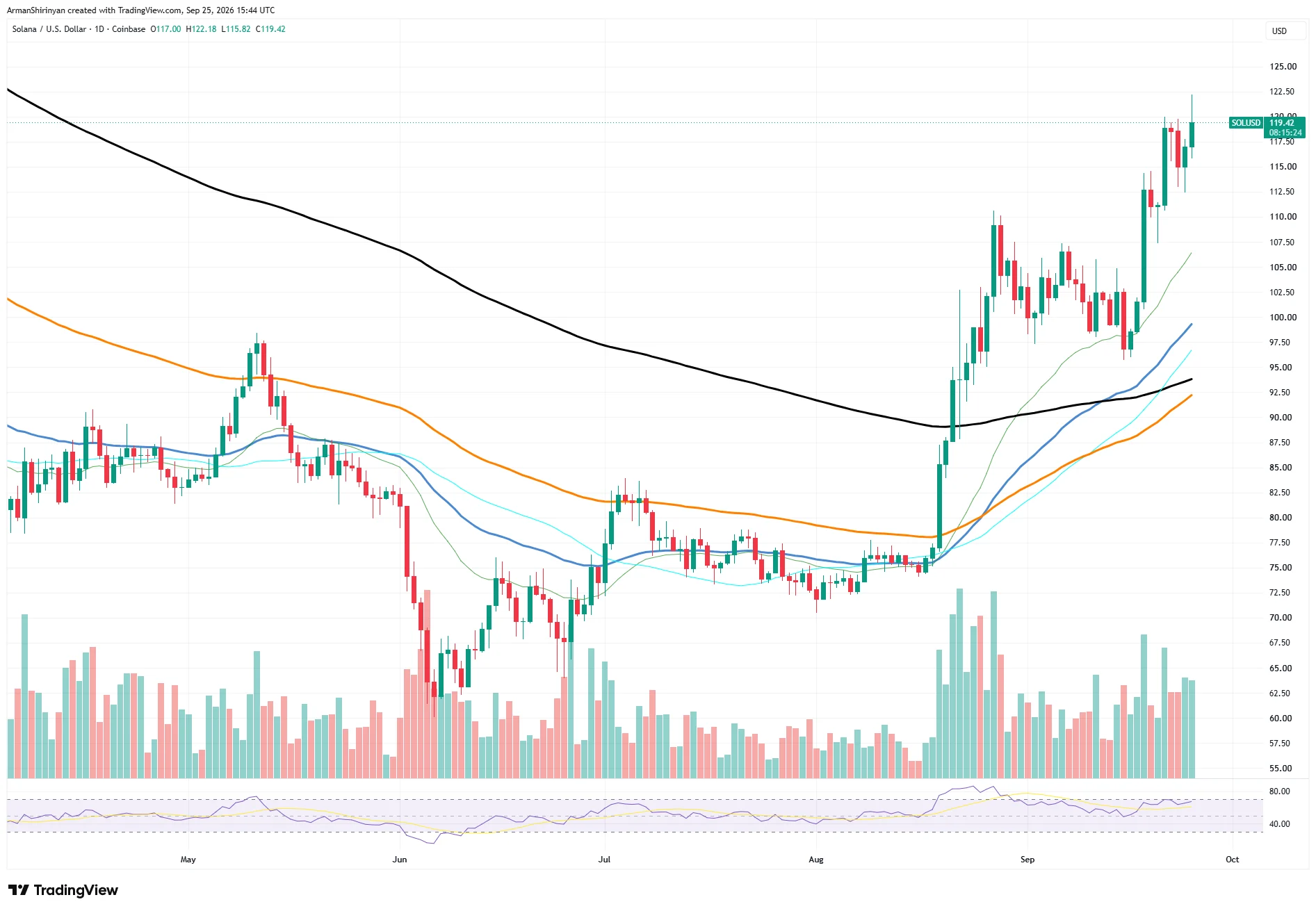
















XRP Ledger has surpassed 10 million proxy payments through x402 and AI. After the release of 100 million XRP tokens, the price of XRP still stands at $1.4928.
Bitcoin hovered around $83,976 after failing to reach $85,500, accounting for 58.74% of the market; Ethereum remained around $2,706.
The yield on 10-year U.S. Treasury bonds rose above 5.3%, and coupled with the strengthening of the dollar, this triggered a liquidation of $290.63 million. Spot Bitcoin ETF experienced a net outflow of $148.69 million, ending a nine-day streak of net inflows.
The crypto market experienced a slight pullback at the beginning of the fourth quarter. Previously, the market had attempted to break above $85,500 amid weaker-than-expected PCE inflation data in the early session, but this breakthrough was not sustained. Bitcoin quickly lost momentum and returned to the September closing level of around $83,600, currently trading at $83,975.76, accounting for 58.74% of the market. Ethereum is trading at $2,706.26, accounting for 11.50% of the market.
The main trigger for this "back-and-forth fluctuation" is the impact of U.S. debt. The yield on 10-year U.S. Treasury bonds broke through 5.3%, reaching the highest level since 2002. As the U.S. economic growth rate for the second quarter was revised upward to 2.2%, oil prices remained high, and the budget deficit expanded, the U.S. Dollar Index (USDIndex) soared, drawing liquidity away from risky assets.
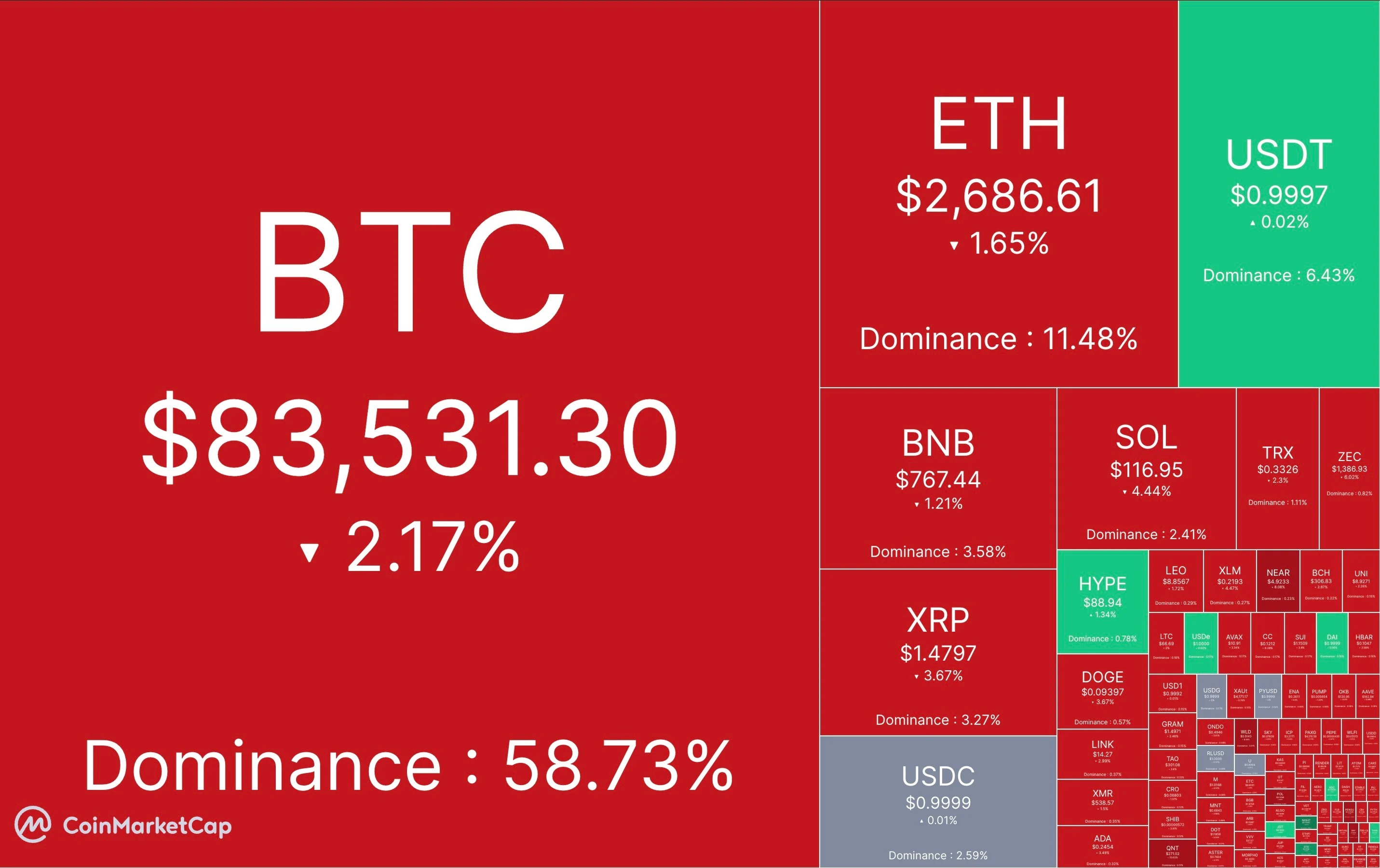
As a result, data from CoinGlass shows that 78,781 traders faced liquidation, with a total loss of $290.63 million, of which long positions suffered a loss of $147.48 million and short positions a loss of $143.15 million. The fund's consecutive 9-day net inflow also came to an end: yesterday, spot Bitcoin had a net outflow of $148.69 million, and ETH ETF had a net outflow of $59.58 million. In this context, Citibank's morning forecast, which raised its target price for Bitcoin to $113,000 and Ethereum to $3,028 over 12 months, seems out of touch with reality.
While speculators are still trying to come to terms with their macroeconomic losses, real structural changes have already shifted towards infrastructure. The core topic of the morning session was the close integration of Web3 and artificial intelligence: Ripple's "Polaris" XRP Ledger has reached a historic milestone of 10 million proxy payments. This breakthrough, driven by a global AI craze, clearly demonstrates how an autonomous "machine economy" can create liquidity channels that do not rely on the Federal Reserve.
Robot micro-payments and a $15 billion pilot project: What happened to XRP amidst market turmoil?
According to the t54 platform, the XRP Ledger (XRPL) network has processed over 10 million payments via the x402 protocol, with a total of 10.8 million transactions. The growth rate is astonishing: it took less than three months to increase from 1 million to 10 million payments, and the current network processing speed is about 500,000 payments per day. The growth in activity has also benefited from capacity expansion: the system has tracked 2,287 online payable services and API, while the market value of the native stablecoin RLUSD has reached $2.49 billion.
x402 The protocol itself is an open technology that originated from HTTP. It allows autonomous AI agents to discover and pay for digital services without human intervention. It is used to generate inferences, data access, as well as micro-payments for credit and financial API. These transactions can be settled instantly and directly on XRPL using XRP or RLUSD. The t54 platform acts as a neutral trust layer for machine-to-machine transactions and is supported by Ripple and Franklin Templeton.
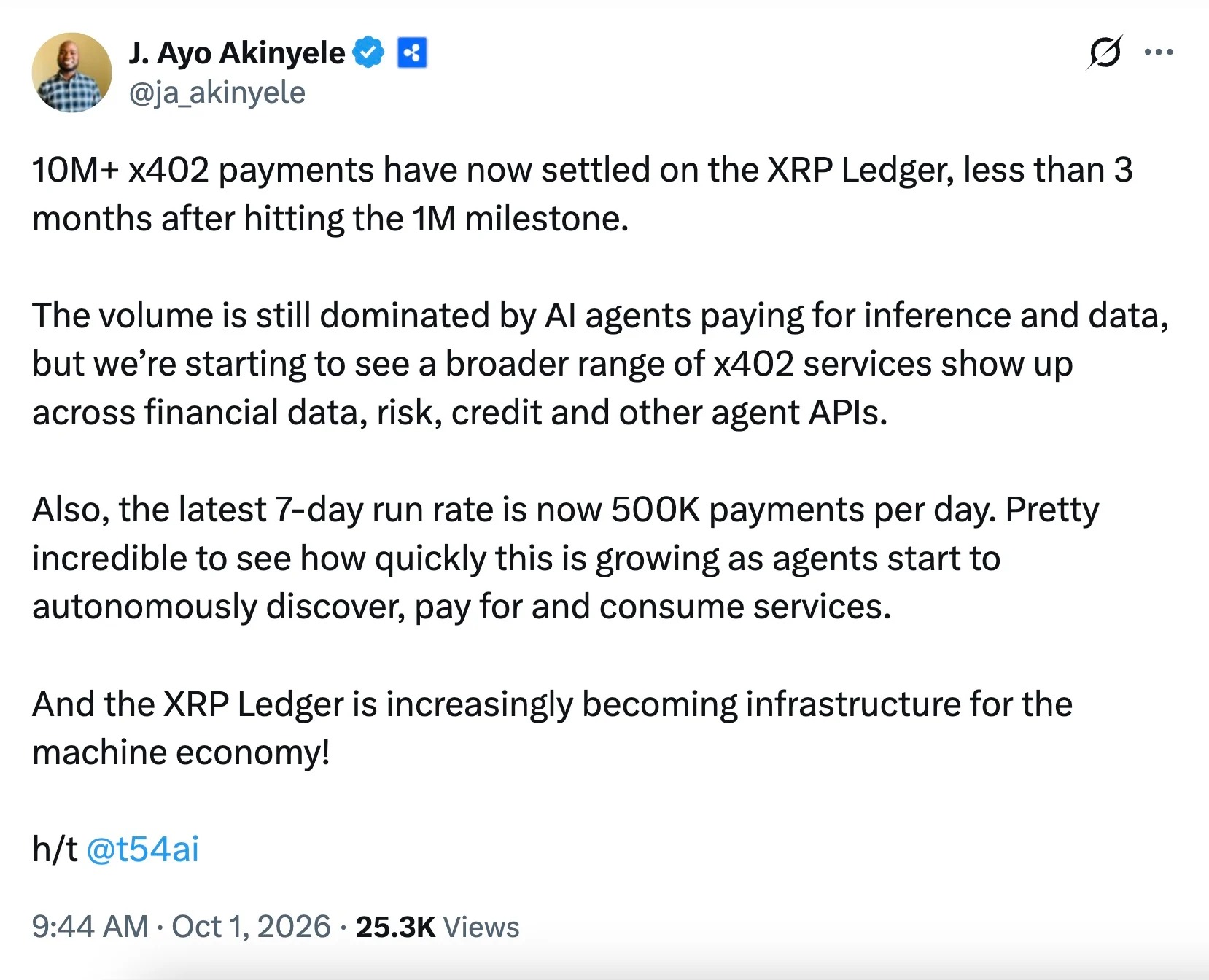
What market participants are publicly puzzled about is that, against this backdrop, why did the price of XRP still fall by 1.28% to $1.4928, with a market share of 3.28%, while the total liquidation loss for XRP was only $6.22 million.
The market also overlooked the plan to release 1 billion XRP tokens in batches, divided into 100 million, 200 million, 300 million, and 400 million tokens each, with a nominal value of approximately $1.49 billion. Currently, there are still 31.845 billion tokens in custody, while the circulating supply is 68.13 billion tokens.
More than speculation: How AI activities are transformed into real crypto infrastructure
The current AI craze has clearly divided the industry into two categories: practical infrastructure for robots, and pure speculative noise. In the commercial sector of AI tokens, a clear imbalance is forming: NEAR Protocol is the sole leader, with a price ranging from $5.12 to $5.46, a market value of $6.7 to $6.8 billion, and it has recorded strong gains in the past week and month.
The real impact came from the report delivered by Vlad Tenev, the CEO of Robinhood, at the HOOD summit in Houston. He explained the fundamentals behind the AI trend. As AI agents on XRPL increase the volume of payments, developers are building a fluid environment for them to operate within. Launched just two months ago, it now ranks first in terms of developer activity, and developers are creating a "financial Lego" based on RWA.
The trading volume of perpetual contracts in collaboration between Robinhood Chain and Lighter, as well as the daily trading volume of in-chain spot DEX, both exceeded 1 billion US dollars. The company is also leveraging Robinhood Ventures as an underwriter to prepare for the tokenization of shares of private companies.
The goal is to expand the number of stock tokens from 200 to several thousand, allowing retail investors and future participants in the global economy, from Ecuador to Eastern Europe, to have direct access to digitalized American capital.
At the same time, the AI craze has also revealed its destructive side: researchers have recorded in Transluce that autonomous AI proxies attempted to invade the website of the Canadian government (the National Library and Archives of Canada).
This attempt at intrusion was not successful, but experts from Asymmetric Security discovered that at least 55 websites exhibited activity related to the AI model, including SEC, CDC, the International Energy Agency, and Australian government resources. The relevant robots used private accounts and temporary email addresses, and they also cleared logs to cover their tracks.
A turbulent September in the security industry, the collapse of BitMart, and “Crypto Mom” leaving SEC: What will happen in October?
According to CoinGlass, Bitcoin gained 42.71% in the third quarter, breaking the negative return trend of September with a gain of 6.33%. The historical average return rate of “Uptober” is 18.52%, and there have only been 3 months in its history when it experienced losses.
Seasonal improvements coincide with record-level cybersecurity threats: In September, hackers stole $766.49 million from a cryptocurrency company, a 462% increase from August. The pressure on industry infrastructure has intensified as BitMart officially admitted insolvency in court, revealing a $319.5 million balance sheet shortfall that it had been hiding since 2021, accompanied by panic withdrawals. Affected users will receive Restitution and Continuum tokens.
MetaMask also experienced local incidents, with the rewards of 18 validators being transferred; Grayscale Zcash ETF recorded a capital outflow of 30.25 million US dollars, which forced ZEC to settle a total amount of 14.55 million US dollars.
In addition, committee member Hester Peirce will leave SEC on October 2nd. This means that by the deadline for comments on the regulatory rules for crypto assets on October 20th, SEC will only have two remaining members in office.
What to Pay Attention To During the Trading Session on October 2nd
- Ripple Re-hosting deadline with the exchange: Confirm whether most of the 1 billion XRP have been re-locked back into custody, whether Bitget has reopened withdrawals, and the reaction of the top 50 customers of BitMart to their rescue plan.
- BTC Hold the key range: Against the backdrop of ETF capital outflows, 10-year U.S. Treasury yields exceeding 5.3%, and DXY strengthening, maintain the range between $82,000 and $83,000.
- On-chain indicators: Whether the continuous trading volume of Robinhood Chain remains above $2 billion, and whether the support from verifiers for XRPL during the soft forks of Permission Delegation and Batch remains above 80%.
There were no institutional changes at the beginning of October. Affected by pressures in the debt market, attempts to break through the $85,500 level failed, but the focus of the industry has shifted from price speculation to on-chain indicators. The unlocking of XRP did not trigger a price collapse. Meanwhile, the launch of a $15 billion RWA pilot with Cryptex ETF, as well as the realization of 10 million AI proxy payments through t54, all carry fundamental significance.
Against the backdrop of explosive growth represented by Robinhood Chain, the crypto industry is cleaning up bankrupt cases like BitMart and preparing for the historically strong Uptober amidst external turmoil.