














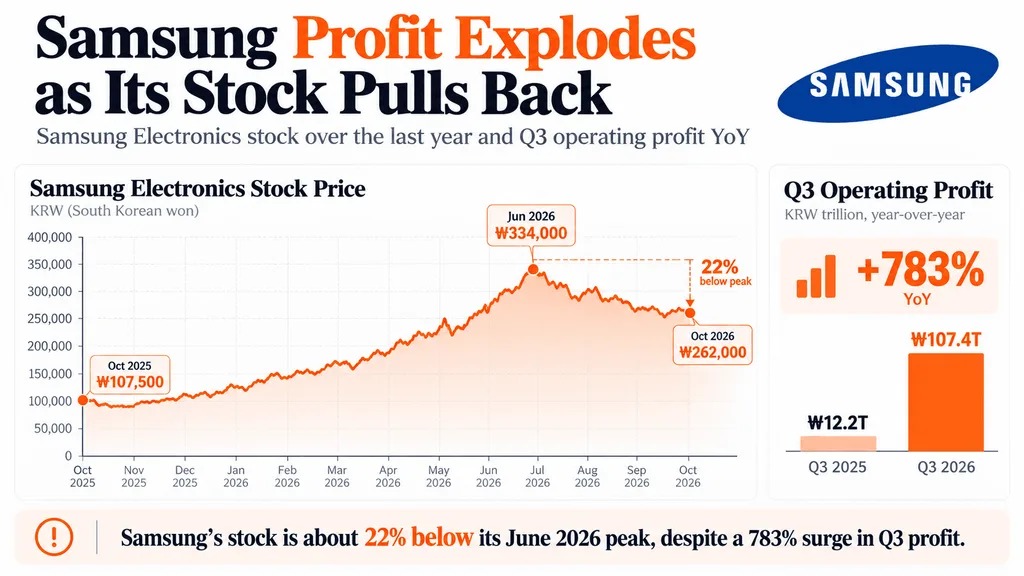
Based on preliminary performance, South Korean chip giant Samsung Electronics expects its operating profit for the third quarter to be 107.4 trillion Korean won (approximately $80.2 billion), a year-on-year increase of about 783%. Revenues are expected to be around 195 trillion Korean won.
This growth is mainly driven by the exceptionally strong demand for storage chips used in artificial intelligence infrastructure. Despite the strong data, Samsung's stock price still fell after the announcement, continuing its previous downward trend, and is now significantly below its June high.
AI storage shortage drives Samsung's profits to record levels
Artificial intelligence servers require a large amount of DRAM, as well as increasingly complex high-bandwidth memory ( HBM ).
Strong demand, coupled with tight supply, has driven a significant increase in the prices of storage chips, altering the profit structure of Samsung's semiconductor business. The company currently expects to record a fourth consecutive quarter of record profits, and its latest operating profit is also set to exceed 100 trillion Korean won for the first time.
This improvement also aligns with the broader recovery trend of memory chip stocks. Micron has similarly benefited significantly from the demand for storage driven by AI, while Samsung and SK Hynix have helped drive the Korean Composite Stock Index (KOSPI) to rebound significantly after the semiconductor sell-off in July.
Why has Samsung's stock price fallen?
The question is no longer whether Samsung has benefited from AI. Investors are questioning how much of this positive news has already been reflected in the stock price, and how long the current storage profit margin can continue.
Traditional DRAM prices are expected to rise by 10% to 15% month-on-month, which is significantly lower than the approximately 60% increase in the second quarter. As the Korean won strengthens and concerns about future chip pricing rise in the market, analysts have also lowered their forecasts for Samsung's profits.
Competition also brings another risk. Chinese storage chip manufacturers are expanding their production capacity, while Samsung continues to make substantial investments in HBM and advanced semiconductor manufacturing to maintain its competitiveness.
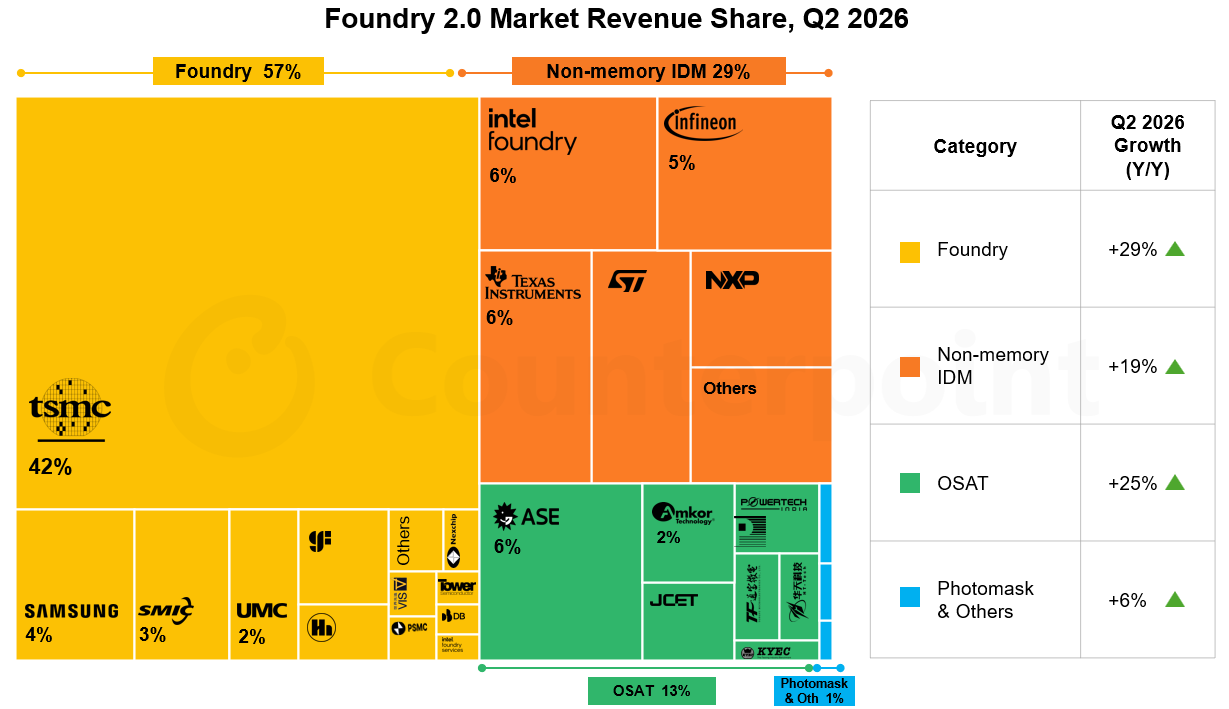
In addition, the company's performance in areas other than its storage business is weaker. Reuters reported that Samsung's mobile business division incurred losses of over $1 billion, and its wafer foundry business has yet to achieve profitability.
Author: Emir Abyazov
Coinpaper is the chief editor, responsible for driving data-driven editorial operations, content discovery oriented towards SEO, as well as narrative strategies that prioritize the audience in the fields of encryption, AI, and fintech.