Key Points
- Grayscale appoints Anchorage Digital as a new custodian, operating in parallel with the existing custodian Coinbase.
- GXRP Added XRP Physical Subscription and Redemption Capability
- The scale of XRP that has not yet disclosed its plan to be transferred to the custody of Anchorage under grayscale mode
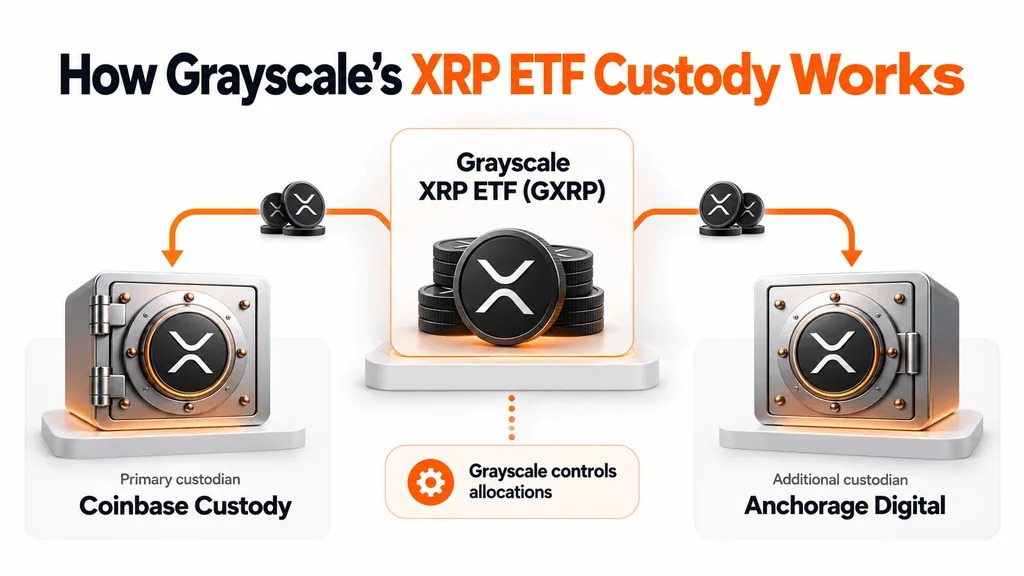
According to a document submitted to the U.S. Securities and Exchange Commission on October 5th ( SEC ), for the Grayscale XRP Trust ETF with the code GXRP, some of the XRP can now be entrusted to Anchorage Digital for custody. Coinbase Custody remains the main custodian of the fund.
The same document also reveals another operational change: GXRP is now capable of handling physical transactions, allowing authorized participants to directly exchange XRP for ETF shares, without relying solely on cash.
Gray-scale: XRP ETF Adding a second custodian
On September 29th, Grayscale signed a custody amendment agreement related to Anchorage Digital, making this federally licensed digital asset bank the new service provider responsible for safeguarding the underlying XRP of that fund.
Grayscale indicates that this move is part of its risk management approach during the growth of the trust scale. However, grayscale has not yet decided how many XRP will be transferred to Anchorage for custody, and this arrangement will not replace Coinbase.
According to the document, Anchorage is usually required to save the private key corresponding to XRP it manages in cold storage. For operational needs, such as settlement share subscriptions, redemptions, and fund fee payments, limited use of hot wallets is permitted.
The expansion arranged by the custodian coincides with a rise in interest from institutions in XRP ETF. According to previously reported holding data, as of September 29th, relevant funds in the United States held approximately 1.13 billion XRP coins, valued at 1.68 billion US dollars.
GXRP Introduces XRP Physical Subscription and Redemption
The second important change relates to the operating mechanism of ETF itself.
Under the cash subscription model, authorized participants provide funds, which are then used to purchase the underlying assets. In contrast, under the physical subscription model, authorized participants deliver qualified XRP in exchange for newly issued shares of ETF.
The importance of this distinction lies in the fact that direct asset transfer can reduce the need for funds to engage in additional market buying and selling during their daily operations.
Author Marcus Hale has long been reporting on topics related to Bitcoin, Ethereum, digital assets, regulation, ETF, and the adoption by institutions in the field of cryptography and financial markets. His reports focus on developments that may drive market changes, investor trends, as well as the broader forces that shape the crypto economy.