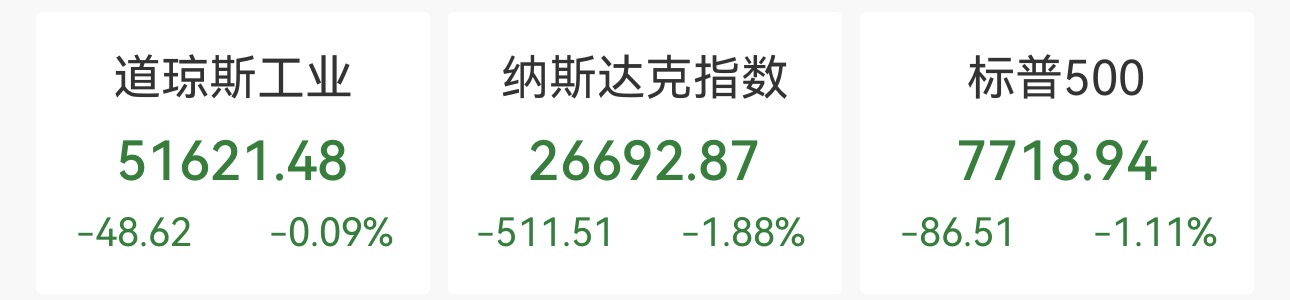
On Tuesday, chip stocks fell. Previously, a Chinese memory chip manufacturer stated that it had made significant progress in developing new, more efficient designs.
Yangtze Memory Technology Co., Ltd. ( ChangXin Memory Technologies, abbreviated as CXMT) announced over the weekend that it has made progress with its new architecture, which will enable it to store more data in a smaller space, thereby increasing storage density.
Spansion is one of the main competitors for China in the global storage chip manufacturing industry, alongside companies such as Micron Technology, SK Hynix, and Samsung Electronics. This news led to a decline in the stock prices of these competing companies.
On Tuesday, Micron fell by 3.62%; SK SK Hynix' shares listed in South Korea declined by 10%; Samsung Electronics fell by 7.4%. Other storage-related stocks, including Sandisk, Seagate, and Western Digital, also saw declines.
Before this summer's blockbuster initial public offering that shocked the market, ChangXin Memory was hardly known outside of its domestic market.
The market-shaking IPO
In July, ChangXin Memory came into the sight of global investors through its initial public offering (IPO).
On its first day of trading on the Shanghai Science and Technology Innovation Board, the company's stock price soared by nearly 466%, making it the company with the highest market value among Chinese listed companies at that time.
Thereafter, the stock price of ChangXin Storage fell by 4% from its initial price of 49 yuan per share on IPO, but the company's market value still reached 3.46 trillion yuan (520 billion US dollars), not far from the 3.87 trillion yuan of technology giant Tencent.
Yangtze Memory Technology Co., Ltd.'s headquarters is located in Hefei, and it has been about ten years since its establishment in 2016 until its listing.
One of the biggest challenges that ChangXin Memory IPO faces is whether it can narrow the performance gap with Micron, Samsung, and SK Hynix, especially in the area of high-bandwidth memory (HBM). HBM is a key component of AI chip systems.
Despite the strong domestic demand supporting ChangXin Memory, the company still faces challenges in obtaining chip manufacturing equipment. Affected by US export controls, equipment such as Extreme Ultraviolet (EUV) lithography machines from ASML (ASML) is no longer able to enter China, and these machines are essential for manufacturing the most advanced semiconductors.
It is reported that ChangXin Memory plans to launch a server memory product based on a new type of unit architecture by the end of 2026.
This new design is based on “4F square” technology, which enables higher storage density. SK Hynix is also advancing 4F square design and has announced a roadmap for developing this technology in 2025.
Analysts generally believe that ChangXin Memory lags behind its global competitors in terms of cutting-edge storage technology, and any news of breakthroughs by ChangXin could significantly affect investors' perceptions of the market advantages of its global rivals.
Market share growth
Despite facing challenges related to export controls, ChangXin Memory has still achieved significant growth in market share.
According to a report by HSBC last Thursday, ChangXin Memory's market share in the global dynamic random access memory ( DRAM ) market has risen to about 10%, up from around 4% a year ago.
In a report in August, Citibank analysts stated: "Although it is unlikely that the U.S. government will allow storage chips manufactured in China to be sold in the United States, products sold to data centers in other regions such as Europe may indirectly affect Micron."
In July, the British "Financial Times" reported, citing sources familiar with the matter, that Apple has begun testing DRAM chips produced by ChangXin Memory for devices intended for the Chinese market, and that Apple has lobbied the U.S. government to allow for a wider use of the company's products. Apple has been requested to comment on this.