Step Step 5 Preview Large model weights are now open, supporting up to 1 million token Context windows
The Block
53m ago
Ai Focus
Stepwise officially releases Step5Preview weights today, opening up the weights of BF16 and FP8 models, as well as a technical blog and supporting open-source development tools. According to the official statement, this model is designed for long-term Agent tasks, supports 1 million token context windows, natively supports text and visual input, and has already been launched on Hugging Face and ModelScope.
Helpful
No.Help

News from the IT community on October 15th: Step-by-Step officially releases the weights of Step5Preview today. This release includes the model weights of BF16 and FP8, as well as a technical blog and accompanying open-source development tools.

According to official introductions, Step and Preview are designed for long-term Agent tasks, adopting a sparse MoE architecture. The total number of parameters is 600B, with each token activation parameter being only 27B. It supports up to 1 million token context windows and natively supports both text and visual input. It performs exceptionally well in scenarios such as AI programming, software engineering, professional knowledge work, and finance. Recently, Step and Preview have ranked second globally in both the weekly and daily usage volume charts.

Currently, the model weights Hugging Face and ModelScope have been released, and support for adaptation to various chip platforms and inference frameworks is provided. Developers can deploy API services that are compatible with the OpenAI interface through vLLM or SGLang. They can also use Transformers for offline inference, integrating the model into their own data, tools, and systems to build agents, applications, workflows, and services.

IT Home has noticed that the officially synchronized and publicized technical blog introduced how Step and Preview can support longer and more complex Agent tasks through the collaborative optimization of architecture and training. Key designs include:

  • 92-layer narrow and deep architecture: Provides a deeper computational path for implicit multi-hop reasoning, while controlling the parameter scale and computational cost.
  • Sparse GQA: By merging block-level indexing with sparse computing, the computational overhead for processing millions of token is reduced. Among them, using 8 token block-level indexes can reduce the indexing and selection overhead to 1/8 of the original level.
  • More stable training: Maintaining the FP32 precision in key states and parameters, combined with fine-grained gradient clipping to mitigate abnormal activation growth and gradient spikes in deep networks.
  • Million-level verifiable environment: Covers software engineering, scientific reasoning, machine learning research and development, and professional knowledge work, while continuously calibrating the difficulty, diversity of tasks, and evaluating reliability.
  • Reinforcement Learning for Long-Term Tasks: Incorporating Context Compression into End-to-End Policy Training to Enable Agent to Learn to Organize Task States and Continue Execution; Combining with More Precise Reward Attribution to Improve the Learning Effect of Long Trajectories.
Tip
$0
Like
0
Save
0
Views 15
HKWDB reminds readers to view blockchain rationally, stay aware of risks, and beware of virtual token issuance and speculation. All content on this site represents market information or related viewpoints only and does not constitute any form of investment advice. If you find sensitive content, please click“Report”,and we will handle it promptly。
Submit
Comment 0
Hot
Latest
No comments yet. Be the first!
Related
South Korean stock market triggers suspension: KOSPI tumbles 8% due to chip stock selling and Fed concerns
South Korea's KOSPI index tumbled 8% on Thursday, triggering a circuit breaker and leading to a midday trading halt. Samsung Electronics and SK Hynix led the decline, with losses of 9% to 11%. Market commentators linked this sell-off to stronger-than-expected U.S. inflation data, expectations of tighter Federal Reserve policies, and concerns regarding AI spending, debts of service providers such as CoreWeave, and intensified competition from Chinese chips.
Coinpedia
·2026-10-15 13:24:32
6
Apple macOS 27.2 Beta Version Safari Adds Gesture-based Dragging of Tab Pages, Said to Be for Touchscreens MacBook Paving the Way
According to reports from IT, a source @itspdfu stated that Apple has incorporated several touch interaction designs into macOS 27.2, Beta 3, and Beta 4, including the ability to drag tabs with gestures and long-press to bring up a right-click menu. The report cites MacRumors and multiple other sources indicating that these adjustments to the code and interface animations are seen as Apple preparing software for its future high-end OLED touchscreen devices.
The Block
·2026-10-15 12:44:43
22
Figma Launches New Features, Defining How Agents Work on Its Platform
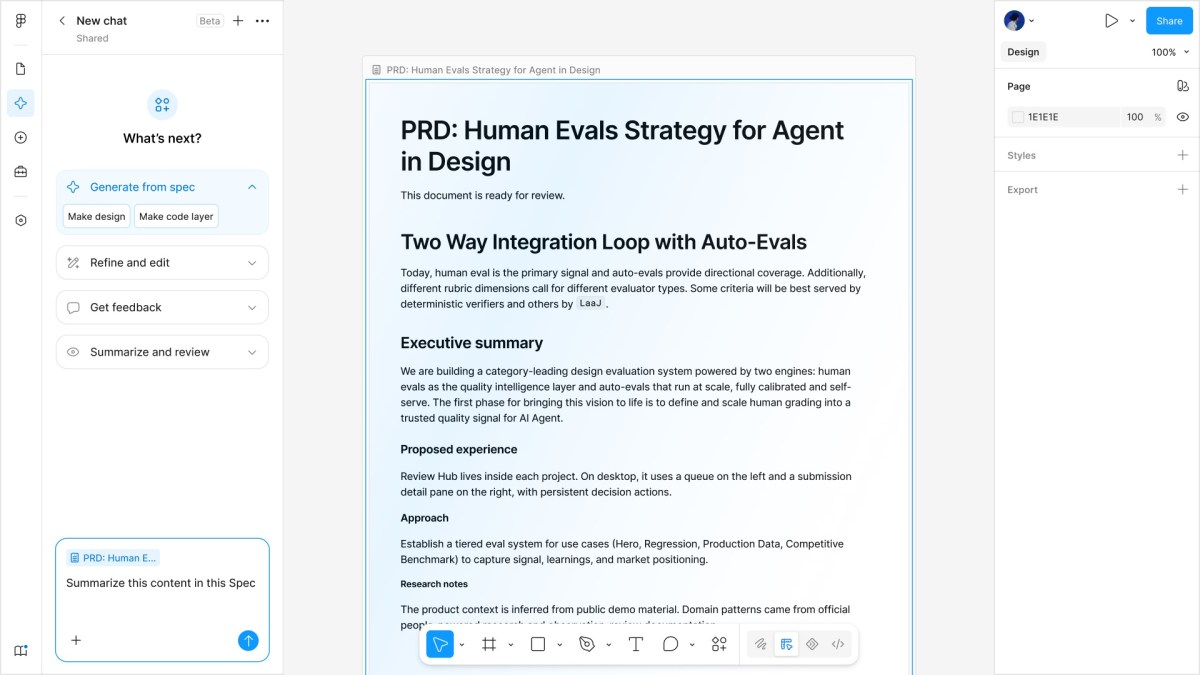
Figma launched a Figma Specs based on Markdown at the first Config event held in India, helping teams define a design language and enabling both its own and third-party agents to better adhere to brand design rules. The company has also turned the code layer functionality into a public beta test and integrated Payload with Figma Make for generating dynamic websites and direct content management.
TechCrunch
·2026-10-15 12:36:21
24
A-share AI infrastructure sectors such as optical modules and storage generally decline
During trading on October 15th, several stocks in the AI infrastructure sector of the A-share market weakened, with companies related to optical modules, storage, and AI chips generally experiencing declines. On the news front, inflation in the United States in September exceeded expectations, sparking concerns about the Federal Reserve's interest rate hikes and rising financing costs, which also led to selling pressure in overseas AI-related sectors.
The Block
·2026-10-15 12:36:12
17
View More