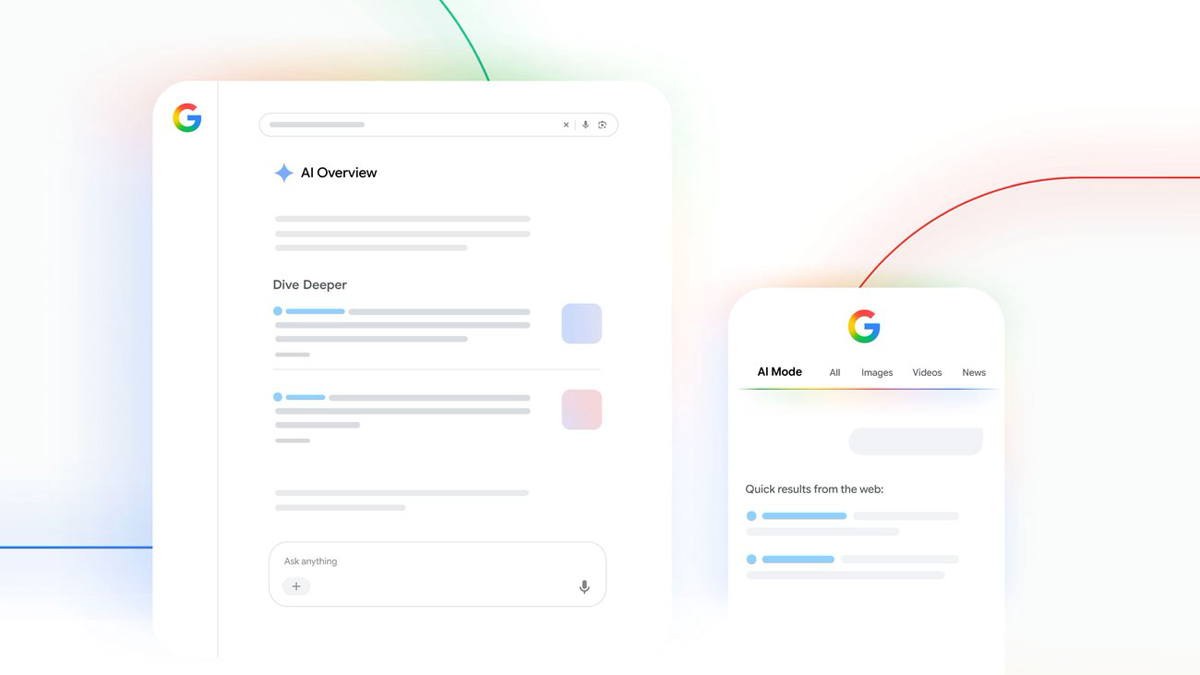


After asking a complex question in the search bar, AI may have already provided a decent answer. The problem is that when readers want to verify the original text, find the official source, or read reports from different media, they often have to search again. On October 15th, Google announced adjustments to AI Mode and AI Overviews. The core of these changes is not to replace the models with ones that write better, but to make the source links in the answers more visible: embedded links will be added to the main text, and the official web pages for certain questions may be placed in more prominent areas. The news carousel will also be expanded to cover more regions and languages. This is a product news about traffic entry points, rather than an announcement stating that “AI search has solved the issue of factual reliability.”
Google Product Vice President Hema Budaraju stated in an official statement that the company hopes to make it easier for users to continue exploring web pages from AI answers. Embedded links will appear within the sentences of the answers and will be placed more frequently at earlier positions. For ordinary users, this reduces the friction of reading a conclusion without being able to find its source; for websites and media, it at least leaves a clickable path to the original page being cited. However, "more prominent" does not mean that all cited websites will receive more clicks. Whether a webpage is selected, its ranking, and whether users are willing to leave the results page are still three different hurdles to overcome.
Putting the link at the front changes the reader's next step.
In the past, search result pages were naturally lists of links, while AI summaries compressed multiple pages of information into a single response. This compression improved the speed at which conclusions could be drawn, but it also made it less intuitive to determine "where to go next." Google Now, by embedding links within key phrases in the summaries, the connection between the answer and the web pages is no longer limited to the source list at the bottom of the page. When someone searches for information on a particular drug, historical event, or software bug, they can directly click on the relevant terms to access the original research, official documents, or the context of the reports, rather than relying solely on AI reprints.
The official also mentioned that for questions with clear task objectives, a dedicated area will be tested where one or two genuine and functional official websites will be placed above the answers, along with an explanation of why they are relevant. The verb used here is “test,” not indicating that the global search has already been uniformly rebranded. For visa applications, airline ticket changes, government forms, or after-sales support for certain products, readers need the correct entry points; being able to identify such pages from informational articles is more useful than writing an additional summary. At the same time, the cost of mistakenly placing counterfeit sites in prominent positions is also higher, and the recognition and correction of official entries still need to be tested through actual use.
Google said that the carousel of articles is starting to expand to more locations and languages, and this carousel will also highlight the Preferred Sources settings set by users. It was revealed that the number of users using this feature has increased by more than seven times since the beginning of the year, but no specific figures were provided in this announcement regarding how many clicks the new carousel has brought to the news website, which markets it has covered, or what net impact it has had on revenue. Readers should not directly equate the adoption rate of a product feature with the effectiveness of media operations. The clickable display of creator information also helps users identify "who is speaking," but it cannot replace the verification of the content itself.
Just because the media gets access doesn't mean they will regain all of their traffic.
The contradictions between platforms and content providers will not disappear automatically just because there are a few more links. AI has met some of the information needs, so users may see the source but there is no need to open the full text; however, for other tasks that require charts, interactions, and details from the original page, the location of the link can affect access. What really needs to be tracked is not the screenshots of individual cases, but rather the number of times websites are displayed, the click-through rate, the time readers spend on the pages, and the number of return visits under the same search query. Google did not announce a complete publisher distribution model or traffic guarantee mechanism in this announcement, nor did it promise a fixed entry point for each media outlet.
There is also a different timeliness issue with news and general knowledge pages. The first reports on emergencies are constantly updated, and if the AI summary uses an outdated version, even if the link points to a real media source, users may end up reading outdated information. Using a carousel to make the “latest articles” more prominent is a step towards improving the discovery path; however, whether the timestamp, quoted paragraphs, and subsequent revisions of the article are consistent is what determines whether readers can trust this link. Media outlets themselves also need to indicate the update time, original sources, and correction records on their pages; they cannot shift all responsibility to search platforms.
For those who create content, this change also serves as a practical reminder: writing just one conclusion that can be easily copied by models may not necessarily motivate readers to click through. Having original interviews, complete data, clear methods, and continuously updated pages provides a better reason to become the target for readers to “click in and take a look.” However, this does not mean that the media should cater to AI summaries and rewrite their articles; on the contrary, reports should retain the evidence, conditions, and controversies that are most likely to be lost during compression. Search platforms should open their doors wider, but there must also be content worth viewing behind them.
For search users, the most practical way to verify information is also quite simple: when encountering numbers, medical information, financial data, or time-sensitive conclusions, click on at least one of the original sources to check whether the publication date, scope of research, and context support a summary. The placement of links is more prominent, which can reduce the cost of verification, but it cannot make judgments on behalf of the users. If there are conflicts between different sources, the interface should clearly show these differences, rather than accepting a single, seemingly coherent answer as the final conclusion.
What can be confirmed at present is that Google has announced adjustments to the display of embedded links, official entry point testing, and an expansion of the news carousel; what cannot be confirmed is whether these changes have taken effect simultaneously in all regions, for all users, and for all types of queries. What is worth watching next is the scope of rollout in different markets, whether users will be able to successfully verify the sources, and whether publishers will see sustainable real traffic. Treating "clickability" as a starting point for improvement, rather than the end goal of fair distribution, is more in line with the significance of this update.