Fort Lauderdale, Florida, October 21st / PRNewswire / -- The creators of MagicBand and FastPass from Disney, as well as the creator of Princess Medallion under Carnival, have today launched Spaxial. This is a company funded by private capital that is pioneering "experiential AI" ( Experiential AI ) for the leisure tourism, entertainment, and sports industries. Application scenarios include cruise ships, destination casinos, theme parks, stadiums, and resorts. Experiential AI brings a new understanding of people to emerging physical AI fields, extending AI that can perceive and act on the physical world to the guests and employees within them.
The experiential AI platform of Spaxial provides large brand operators with the capabilities required for real-time context, precise recognition, and immediate inference at the edge, enabling the provision of highly personalized services on a large scale in high-density scenarios.
"The leisure tourism and entertainment industries are integrating AI into call centers and backends, which certainly helps to improve cost efficiency, but the real value of revenue is created by delivering better services to guests. This is precisely the focus of Spaxial," said Spaxial founder and CEO Padgett.
Spaxial has eliminated major obstacles that hindered the application of digital AI in the real-world environment. Almost all tourism, entertainment, and leisure lifestyle brands are using general AI products based on large language models ( LLM ) in their booking and reservation processes, as these functions are entirely built within the digital world. However, that's where it stops. Due to the lack of a real-time operational context and response delays, these general cloud-based LLM methods become ineffective outside of the booking process. By combining secure identity verification, precise location services, and hybrid edge AI models, Spaxial not only removes these obstacles but also provides operators that are not bound by traditional IT systems with proprietary experience orchestration capabilities.
"Experiential businesses that focus on brand differentiation and excellent service delivery understand that guest interactions must be completed within milliseconds, not seconds, let alone minutes. Looking back at the progress of the past twenty years, MagicBand has connected experiences, and Medallion has provided real-time information. Spaxial has added context and reasoning, making it actionable," said Padgett. "Until now, excellent service delivery relied entirely on exceptional individuals, as there was no technology that could instantly process real-time information and translate it into action. Now, all frontline team members can be empowered to provide highly personalized and needs-oriented service to every guest, at any time, in any space, and on any scale."
Physical space is “blind” in the digital realm.
The operator manages dozens of trading systems, yet not a single one is capable of answering the most fundamental question in the hospitality industry: Who is this person, and what does he need right now?
For the majority of the time during their visit, most guests remain anonymous. The property management system is aware of the rooms, the reservation system knows about the dining tables, the payment system handles transactions, the retail system manages SKU, and the CRM system keeps track of what has happened in the past. What the Spaxial understands is the “present,” and through the AI models deployed on the edge, it creates the “next step” by integrating the complete context of guests, teams, and operations.
A new category: Experiential AI
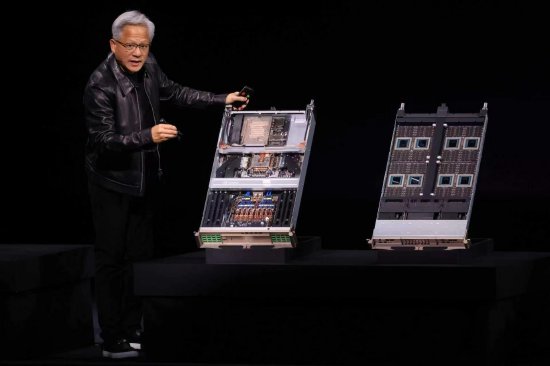
Experiential AI is built on two concepts that have already been recognized by the market. The first is physical AI, which refers to the edge technologies that are emerging behind robots, autonomous vehicles, and industrial automation. Jensen Huang, the CEO of NVIDIA, describes it as the next wave of AI. Companies such as Prometheus, Tesla, Waymo, and John Deere are advancing in this direction.
The second is the experience economy, which represents the evolutionary path from goods to services and then to experiences. This concept was first proposed by B. Joseph Pine II and James H Gilmore.
Numbers AI are used for information inference. Physical AI infers the behavior of objects in the physical world. The highest form of expression for physical AI is experiential AI; in this form, intelligence focuses on the physical context as well as people, relationships, and interactions.
Physical AI is now being applied in robotics and industrial automation. In environments geared towards guests, such as cruise ships, casinos, theme parks, stadiums, and resorts, the challenge is not just about machines performing tasks, but also about coordinating people, services, and operations to create a complete experience.
Experiential AI brings a human dimension into the evolution of physical AI, connecting perceptions of the physical environment with authorized identities, guest preferences, and real-time operational contexts. The Spaxial experiential AI platform not only establishes understanding but also transforms it into collaborative actions across employees, services, and existing business systems.
"The economic evolution from service to experience is essentially about creating greater value for customers," said Pine. "Today, a large amount of AI investment is focused on improving operational efficiency, while Spaxial is using AI to enhance the value of the experience itself. By bringing real-time context into every interaction with guests and providing employees with insights to participate in these interactions in a meaningful way, Spaxial has the potential to increase emotional engagement and create economic value for both guests and businesses."
One platform, one continuous cycle
In the hospitality industry, which has long relied on decentralized systems such as reservations, guest applications, team applications, customer data, and payment, the Spaxial experiential AI platform integrates guest identities and operations into a single platform, utilizing a series of transformative products. Importantly, the architecture of the Spaxial platform is superior to traditional technology stacks, eliminating the need for organizations' IT teams to undertake costly system replacements. This platform combines ultra-wideband and LiDAR technologies to achieve precise location awareness, along with blockchain-based digital identities, concealed wearable technologies, and artificial intelligence, forming a continuous cycle: identifying guests, understanding context, orchestrating responses across operations, delivering experiences, and learning from each interaction to improve the next time around.
Intelligent support for operations
The AI of Spaxial is aimed at providing continuous and immediate answers to the same question in each scenario: what should happen next, and what should not happen, under these circumstances, at this location, at this moment, with these guests? The AI platform offers an experiential approach, but it is up to people to make the decisions and take action. Sometimes the correct answer is to do nothing, because the best service is not to disturb the present moment.
Privacy built-in
Identity is authorized and owned by the guests. Once guests choose to join, they can be recognized and enjoy benefits such as more convenient access, personalized services, and the ability to find fellow members. Privacy is built into the product from the outset, rather than being added later for compliance purposes. Spaxial focuses on guest control and provides an instant-deletion “simple button.”
What do guests, employees, and operators each receive?
For guests, this platform is invisible, yet the experience is amplified: they are recognized upon arrival, and their entire visit is understood without the need to queue, use applications, or repeatedly explain themselves. Employees receive timely prompts to help them create more value, and they have more time for interpersonal interactions, as the design of Spaxial is aimed at empowering employees, not replacing them. For operators, Spaxial maximizes value. Personalizing each interaction increases its value, reducing friction leads to increased consumption, and stronger connections will keep guests returning to the brand.
Why now?
The combination of these three changes has made this possible. Advances in ultra-wideband technology have enabled precise location awareness to be deployed on a large scale at an affordable cost. AI Now, it is possible to make real-time inferences about the context of guests. Moreover, in the post-pandemic era, leisure, entertainment, and lifestyle brands must enhance the customer experience in order to maintain their aggressive pricing strategies.
Development and Demonstration
Spaxial is currently developing the Spaxial experiential AI platform at the Global Innovation and Development Center SpaxialWorks ™ in Florida. This center brings together technical teams from 12 countries and is equipped with an experience design studio, AI laboratories, equipment workshops, a software factory, and demonstration venues.
About Spaxial
Spaxial is an experiential AI company that helps enterprises in the leisure tourism, entertainment, and sports industries, including cruise ships, destination casinos, theme parks, stadiums, and resorts, to identify and respond to guests in real-time. Digital AI understands information, physical AI understands machines, and experiential AI understands people.
The Spaxial experiential AI platform is designed to operate on top of operators' existing systems, providing employees with the necessary context in front of guests. The company was founded in 2026 by John Padgett, who is also the creator of Disney's MagicBand and FastPass+, as well as Carnival's Princess Medallion. This private equity firm is headquartered in Fort Lauderdale, Florida.
For more information, please visit spaxial.com.