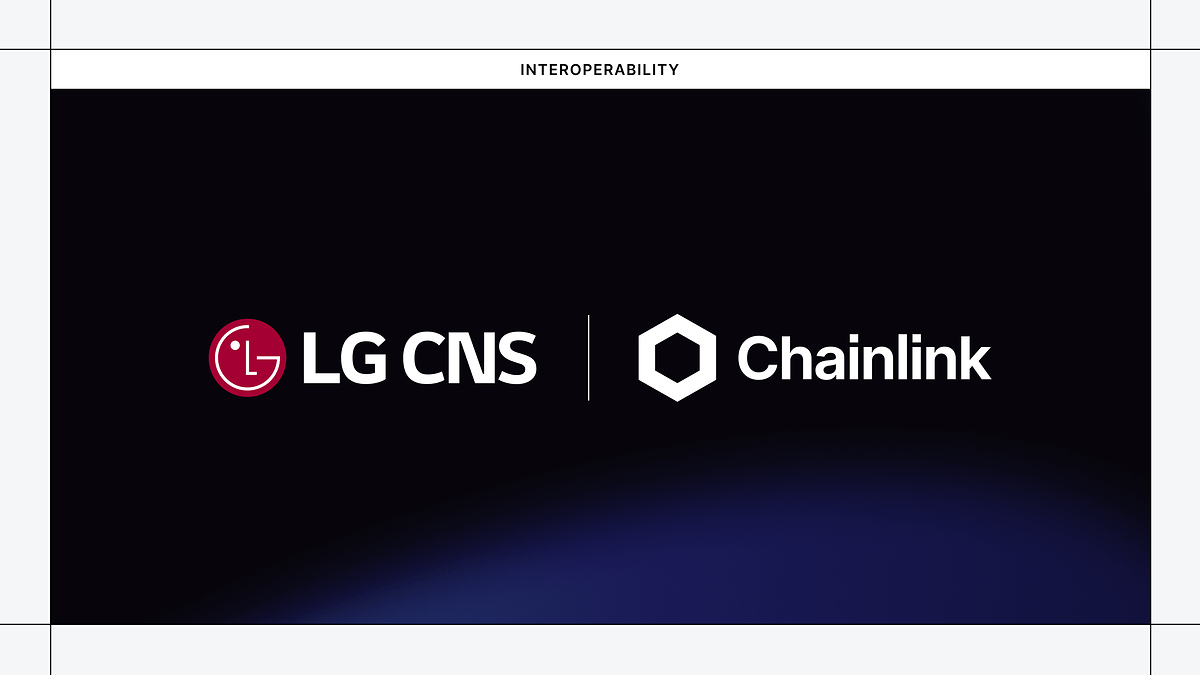


Another significant collaboration announcement has emerged in South Korea's digital asset market. On October 22nd, Chainlink and LG CNS announced the establishment of a strategic partnership, aiming to apply oracle, interoperability, and cross-chain technologies to digital asset infrastructure for Korean institutions. LG CNS is a major technology service provider that has been involved in the construction of platforms related to the South Korean central bank’s digital currency; Chainlink hopes to expand the application of its data and cross-chain standards. This news indicates that both parties have begun to work together on technical solutions, however, the announcement does not provide details such as the issuer of the stablecoin, partner banks, the launch date of on-chain products, or the scale of transactions that have already been completed. To claim that “the Korean won stablecoin is already fully operational” based on this collaboration would be to overinterpret the available evidence.
The cooperation aims at the connection layer, not to immediately create another type of cryptocurrency.
The materials published by Chainlink focus on two aspects of cooperation: participating in the development of digital asset technology standards in South Korea, and providing institutions with oracles, interoperability, and cross-chain foundational capabilities. Oracles are responsible for reliably bringing external data into on-chain applications, while cross-chain mechanisms aim to transfer information or asset states between different networks and traditional systems. These can become important components of tokenized securities, regulated payments, and institutional settlements, but this does not mean that any single asset has been approved for issuance, nor does it imply that banking business rules have been fully integrated.
The role of LG CNS brings more attention to this collaboration. It is not just a startup that focuses on concept demonstrations; rather, it is a technical service provider with extensive experience in building large-scale systems. Chainlink announced that LG CNS is participating in the Project Hangang digital currency platform of the South Korean central bank and hopes to integrate the Chainlink infrastructure into its own digital asset platform solution. It is still necessary to distinguish between "having participated in central bank projects" and "this new Chainlink collaboration already being adopted by central bank projects." The announcement did not provide evidence of the deployment of the latter, so the two should not be directly equated. If there is a real integration in the future, it should be based on the official progress of the project parties, the bank, or regulatory authorities.
The announcement also mentioned the market size and potential number of users in South Korea, but the market estimates in corporate press releases need to be viewed in terms of statistical criteria and should not be taken as the number of signed customers or transaction amounts for a new product. The number of digital asset holders, the number of trading accounts, the active users of stablecoins, and the actual settlement volumes of institutions are four different indicators. Even if there are many market participants, it does not mean that a particular oracle network will immediately generate income of the same scale. For investors and readers, more reliable indicators to track are whether specific applications, trading counterparts, contract addresses, cross-chain networks, and audit results are made public through cooperation.
For technology to enter the financial system, one must first answer the question: "Who is in charge?"
When institutions move funds or securities records onto the blockchain, it is necessary to determine who provides the off-chain facts, how incorrect data can be corrected, and who bears the risk in case of bridge failures. Oracles and cross-chain protocols can provide technical interfaces, but they cannot independently determine the legal attributes of assets, customer asset isolation, anti-money laundering processes, or dispute resolution. LG CNS If these capabilities are integrated into banking and institutional systems, it is still required to implement permissions, compliance, and operational responsibilities for each item individually. This is also the real threshold from cooperative memorandums and technical testing to large-scale production.
Stablecoins are particularly susceptible to being misled by sensational headlines. The announcement discusses the expansion of the utility and distribution of Korean stablecoins, but this does not mean that a Korean won stablecoin issued by a certain bank has already been officially announced or fully licensed, nor does it imply that the tokens from this collaboration are already available for public exchange. A thorough launch proof should at least include information on the issuing entity, reserve and redemption arrangements, the network in which it will operate, the issuance scale, and regulatory boundaries. In the absence of this information, reports should use qualifiers such as "planned," "cooperation advancement," or "intended integration," rather than treating the roadmap as the final goal.
From an industrial perspective, this announcement still holds practical significance. The collaboration between large IT contractors and on-chain infrastructure providers indicates that the traditional financial technology supply chain is attempting to incorporate verifiable data and cross-network connectivity capabilities. This could potentially enable institutions to reduce the need for duplicate interfaces when adopting on-chain technologies, but it may also present complexities due to legacy core systems, different network standards, and multi-party governance. The true success or failure does not lie in the group photo taken on the day of the announcement, but rather in whether auditable, roll-back capable business cases with clear responsibility boundaries can be demonstrated thereafter.
Therefore, the most prudent judgment on this matter is that Chainlink and LG CNS have announced a strategic partnership, with the goal of developing regulatory digital asset-related technical infrastructure in South Korea. The specific timing of product launches, who will issue or use these products, and which banks and networks they will be connected to are still to be officially disclosed. If there are any new announcements in the future, it is important to verify whether the progress has moved from "cooperation direction" to "test results," and then to "available in production environment." By clearly distinguishing these stages, we can both recognize the potential value of the collaboration and avoid writing premature celebratory articles about transactions that have not yet taken place.
Even if a pilot project is later launched as part of the collaboration, it is still necessary to continue to inquire about the nature of this pilot: is it merely a message demonstration in a closed environment, or do real institutions and real funds participate? The successful transmission of cross-chain information and the legal settlement of assets are not two simultaneous events. On-chain records can enhance technical traceability, but legal rights still depend on the issuance documents, custody arrangements, and relevant market rules. Truly convincing progress should include the disclosure of both the technical scope of operation and the scope of business responsibilities, rather than just a list of partners.
For readers, cooperation announcements should not be directly interpreted as the investment logic of a certain token. Whether the adoption of the Chainlink network will lead to sustained usage, fees, or other economic outcomes requires verifiable data in the future; participation in building the LG CNS system, on the other hand, depends on customer contracting, system deployment, and operational responsibilities. The current information only supports the judgment that "both parties will jointly advance the infrastructure." Once the product, network, and participants are clear, we can then discuss the scale and commercial value, and the evidence will be more solid.