

On October 27th, Google Cloud revealed that Google Public Sector is working with the NASA team to develop a robotic proof-of-concept system for future deep space missions. This is not a machine that has already been deployed on the moon or Mars, nor is it a “robotic doctor” capable of making independent medical decisions. The current demonstrations are early tests involving identifying and transporting medical kits in a laboratory setting. The goal is to provide future astronauts with an assistant that can perform physical actions in environments with communication delays and limited human resources. Google announced an initial success rate of 85%, which is valuable for research purposes, but there is still a significant gap between this figure and the reliability required for manned space missions.
A Google Cloud article points out that if future manned missions to Mars face communication delays of up to 44 minutes round-trip, ground experts will not be able to provide real-time guidance for each step, as they can with near-Earth orbit missions. Previously, Google's discussions with NASA focused mainly on clinical decision support using Crew Medical Officer Digital Assistant; this time, a new addition is an entity system capable of moving objects. Participants include the NASA human research program, the Johnson Space Center robotics team, Jet Propulsion Laboratory, and Google Public Sector. The tasks described by Google include organizing tools, managing logistics inside the cabin, and in certain situations, delivering ultrasonic equipment to the astronauts. It is still human medical personnel who actually analyze images and decide on treatment plans; robots are responsible for providing physical assistance, not medical responsibility.
From simulation exercises to operations inside a sealed chamber
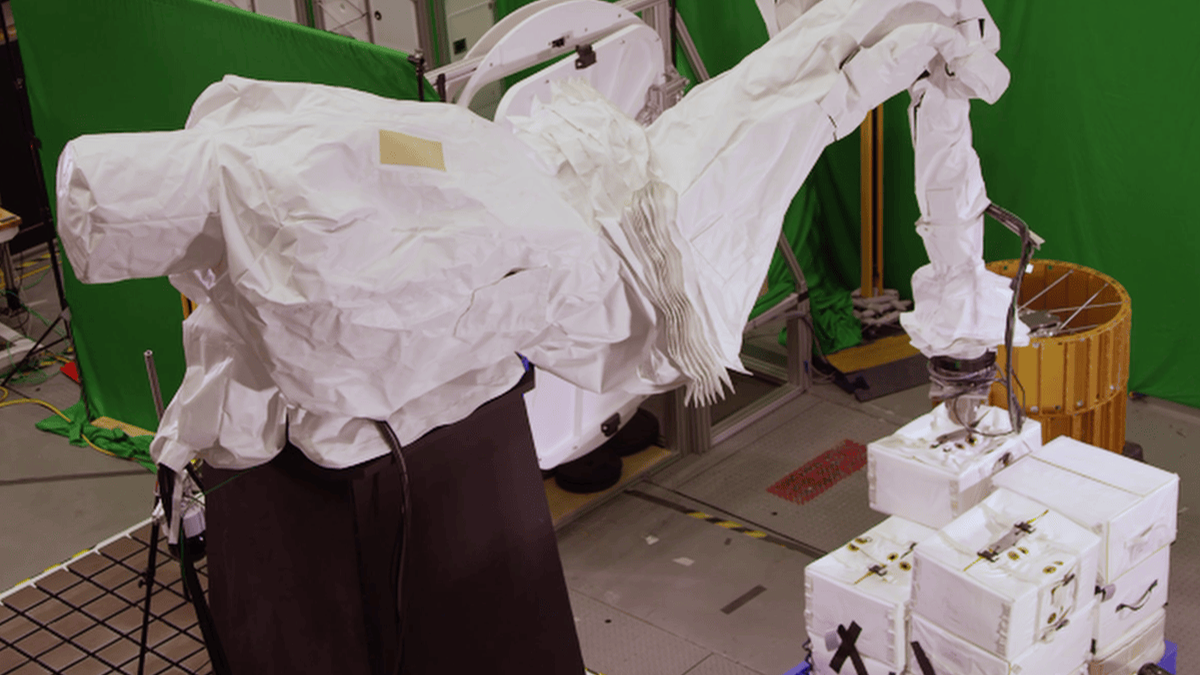
Deep space robots are different from ordinary warehouse automation. In warehouses, it is possible to designate areas for human-machine isolation, and the routes and shelves are relatively fixed; however, the internal space of spacecraft is compact, and the positions of items can change, so any collision could potentially affect equipment or personnel. Google has revealed that their team used the MuJoCo physics engine associated with Google DeepMind to train and test complex actions, and conducted proof-of-concept tests at the iMETRO facility at Johnson Space Center. The Jet Propulsion Laboratory has also applied its experience in situational awareness, originally used for tracking orbital targets, to the understanding of three-dimensional environments. This combination indicates that the challenges lie not only in language understanding but also in a continuous chain of processes involving sensing, positioning, grasping, obstacle avoidance, and confirmation of the results of the actions performed.
The specific task being tested was to locate and transport medical kits. Google claims that after adopting a "from eye to hand" camera configuration to enhance spatial perception, the Pi0 model, which is based on Physical Intelligence, achieved an initial success rate of 85% in early laboratory settings. This statement has at least three limitations: first, it refers to a specific task and does not represent any arbitrary instruction; second, it is in a laboratory environment, which does not account for microgravity, radiation, or long-duration flight; third, this is a baseline performance, and it still needs to be improved through training and safety measures. If the key operation is performed ten times in a row, with each attempt having an 85% success rate, even though they are independent of each other, the probability of all ten attempts being successful would be significantly lower than the single attempt success rate. Actual systems may also have related errors, so this simple calculation cannot be used as an engineering guarantee. However, it serves as a reminder not to equate a successful demonstration with task-level reliability.
Visual-language-action models connect text commands with physical actions, enabling astronauts to use everyday language to instruct robots in handling non-routine tasks. However, in high-risk environments, natural language can also be ambiguous. A command such as "bring over the device" requires further clarification regarding which device is meant, where it should be fetched from, whether it can be moved, whether it will pass through anyone's work area, and how to stop if the grasping attempt fails. Actual deployment must include clear human supervision, action restrictions, and error recovery mechanisms. Google's goal is also to have robots perform a variety of tasks under the direct command of astronauts. The company has not stated that its current systems have already obtained flight qualification, nor has it provided a timeline for obtaining safety certifications suitable for manned missions.
Computing power can be trained in the cloud, but executions must adapt to edge environments.
Deep space systems cannot rely continuously on Earth-based data centers. Google has disclosed the use of Google Cloud G4 instances to train base models, and fine-tuning a Pi0 model with 4 billion parameters to meet specific task requirements took about 2.5 hours; the fine-tuned model is then run on compact, low-power edge devices. Over the past two years, the team has tested around 15 different edge computing devices to find a balance between performance and energy consumption that suits future tasks. It is important to distinguish between cloud training and in-flight inference: the former can leverage large-scale infrastructure for model iteration, while the latter must execute stably under local conditions with limited power and the possibility of disconnection. Simply deploying the model on devices is just one milestone; durability, fault isolation, and verification processes represent another area of engineering challenge.
This project also reveals a practical path for the implementation of AI: start with clearly defined auxiliary tasks, and then gradually expand the set of tasks. Transporting medical kits is easier to define acceptance criteria for than autonomous diagnosis, but it still requires dealing with human-robot coexistence and task failures. In the field of commercial robots, the collaboration between Google and NASA provides a stringent example of how simulation, cloud training, and edge deployment can be combined; however, the special costs associated with aerospace scenarios mean that it is not possible to directly extrapolate these findings to the market scale of ordinary enterprises. For space exploration, the core issue is whether robots can reduce the time and risk for astronauts in logistics without introducing new uncontrollable failures. What is more worth paying attention to in the future is not the actions shown in the promotional videos, but rather public multi-task tests, verification in extreme environments, human takeover mechanisms, and whether NASA will advance this concept validation to actual flight trials.
There is another aspect of this test that is easily overlooked by the headlines: completing tasks in a ground laboratory does not mean that the robot already has the ability to work independently on the moon, Mars, or in deep space. Actual deployment will face challenges such as radiation, dust, power supply, maintenance, loss of communication, and task interruptions, each of which can affect the robot's performance in the experimental environment. The publicly available data currently presents results under specific tasks and test conditions, not a general success rate across different environments. To assess progress in the future, it will be important to see if the same tasks can be replicated under conditions closer to actual space environments, whether the need for human intervention decreases, and whether the robots can shut down safely in case of failure. Only by considering these issues alongside the achievements can we truly understand how far the technology still needs to go before it is ready for real-world applications.