

The cloud services of Alphabet, Amazon, and Microsoft are all experiencing accelerated growth, but what the market wants to see now is cash flow, not just growth.
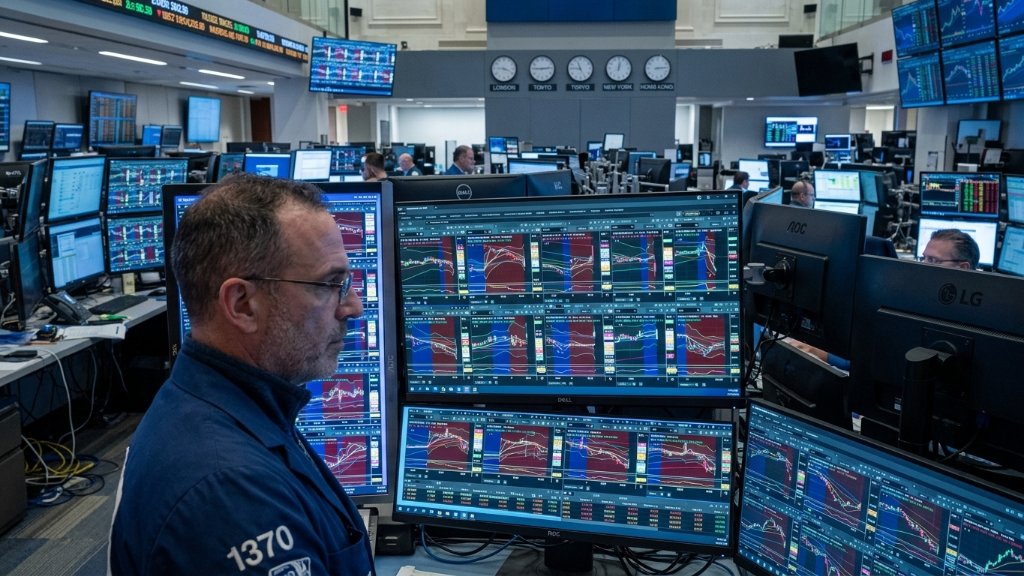
Last Friday, U.S. stocks fell, leading to a negative close for the week. The Dow Jones Industrial Average ( DJIA ) declined by 0.85%, the S&P 500 Index ( SPX ) fell by 0.57%, and the Nasdaq 100 Index ( NDX ) fell by 1.98%. These major tech stock benchmarks have entered their third technical pullback of the year.
The upcoming mid-term elections in the United States are adding significant volatility to an already tense market. The largest cryptocurrency theft case in history has also dampened risk appetite: The world's largest cryptocurrency exchange, Binance, reported that a hacker attack affected assets worth $6.3 billion. Centralized exchanges—which contradicts the decentralized concept that cryptocurrencies were originally designed around—have once again proven to be a weak link. Nevertheless, although the hacker attack on Binance was of considerable scale, it merely added fuel to the market storm that was already brewing. Most of the market's attention remains focused on the leading player, AI.
The downward trend in the latter half of the week seems to have become a pattern, and last week was no exception. On Monday, Anthropic submitted an application to IPO, revealing impressive revenue growth and other data, which reignited the market's optimism towards tech stocks. The large-scale AI financing plan by Meta ( META ) also attracted attention, but it did not dominate market trends. Investors were still processing the staggering figures from Anthropic's initial filing while awaiting a busy week of financial reports and the Federal Reserve's policy meetings.
In the coming days, tech stocks will continue to lead the gains. A large-scale infrastructure transaction by AI supported the AI transaction. Wall Street banks and Blackstone arranged $63 billion in financing to purchase customized AI accelerators and networking equipment provided by Broadcom for Anthropic; as a leader in the field of custom chips, Broadcom helped facilitate this financing by supporting the value of future leased equipment.
On Wednesday, Federal Reserve policymakers described the U.S. economy as “strong,” an upgrade from their previous description of it as having “stable” growth, and added that the job market remains robust. Since economic growth is considered sufficient to keep inflation at a high level, the Federal Reserve left interest rates unchanged, as expected by the market. Data released the following day also confirmed this strong economic performance: real GDP grew at an annual rate of 3.4% in the third quarter, significantly higher than expectations. The outperformance was mainly driven by strong consumer spending, especially corporate investment related to AI.
However, the market ignored this resilient growth driven by AI. As the stock prices of tech giants fell, triggering a demand for safety, risk appetite cooled rapidly, and yields on U.S. Treasury bonds declined. Alphabet ( GOOGL ) sparked this round of selling, with its stock price plummeting by more than 12% on Thursday, recording the worst single-day performance ever. This sharp decline wiped out about $500 billion in market value, making it the second-largest single-day market value erosion in history, only behind NVIDIA ( NVDA ) which saw a nearly $600 billion decline at the beginning of 2025.
Ironically, Alphabet has achieved results in almost every aspect, yet it has stumbled in its own core territory. Its cloud business has once again seen a significant acceleration in growth, making it the fastest-growing among ultra-large-scale cloud service providers. The company has regained its leading position at the forefront of the AI model, and there has also been substantial progress in the sales of custom chips. However, this search giant has stumbled in its search business. The revenue growth of its "cash cow" business has slowed down because the current monetization capability of AI Mode search is weak, yet it now dominates this area. More broadly speaking, most of the returns required to justify the cumulative investment of hundreds of billions of dollars are still yet to be realized; meanwhile, the capital expenditures needed to maintain and deepen its AI leadership continue to drag down its free cash flow.
Amazon ( AMZN ) further dampened market sentiment. The company disclosed that its e-commerce business recorded the slowest growth rate in three years, while expenditures on AI exceeded expectations. Amazon's cloud business performed strongly: the world's largest cloud service provider, AWS, saw accelerated growth for the sixth consecutive quarter driven by demand in AI. The CEO, Andy Jassy, expects the cloud business to reach a scale of one trillion dollars in the next 5 to 10 years. However, capital expenditures of $77 billion in the third quarter alone, along with annual expenditures expected to reach $220 billion, led to a significant outflow of free cash flow. This situation in Google and Amazon has raised concerns in the market: these traditionally profitable businesses with ample cash flows are being eroded by the company's AI bets.
As tech giants rush to the forefront of the AI competition with substantial investments, many of these companies are transforming from "cash flow machines" into heavy borrowers, which has also exacerbated the vulnerability of AI transactions in recent months. Investors' patience is waning. Even Microsoft ( MSFT ), whose Azure cloud business continues to grow rapidly while keeping expenses under control and maintaining a positive cash flow, has not been able to escape this round of impact.
The market has long since surpassed the stage where soaring demand alone could sustain investors' optimism. It seems that this quarter, the market has also moved beyond the phase where revenue growth alone was sufficient to maintain its narrative. The three leading AI cloud providers are all accelerating their growth, yet capacity constraints are hindering them from achieving even greater increases. Everyone understands that capacity requires capital expenditure, but investors are beginning to question whether continued rapid growth is worth sacrificing current return on investment. Indeed, AI represents a profound technological revolution and a once-in-a-century financial opportunity. But for how much longer can the market tolerate such AI infrastructure construction, which constantly consumes free cash flow and relies on large-scale borrowing?