













NVIDIA's board of directors does not intend to reinstate Jensen Huang from his position
On November 17th local time, NVIDIA released its financial report for the third quarter of fiscal year 2027. In that quarter, NVIDIA's revenue amounted to 115.8 billion US dollars, a year-on-year increase of 103%, and its net profit was 65.3 billion US dollars, also a year-on-year increase of 105%. Both revenue and net profit exceeded market expectations. Although Jensen Huang expressed his willingness to return to his position on the same day, Harvey C. Jones, the chairman of NVIDIA's board of directors, stated during the financial report conference call that the board does not intend to reinstate him in his position.
[Commentary] Amidst external calls for Jensen Huang's return, NVIDIA's board statement has reduced the likelihood of his reinstatement. This earnings release comes at a sensitive time; the outside world wants to know not only about the past quarter's performance but also about NVIDIA's future direction. Some related questions may remain unanswered in the short term.
NVIDIA temporarily CEO calls on employees to “look forward”
There are reports that at NVIDIA's all-staff meeting on November 18th, although the atmosphere in the venue was filled with employees' hopes for Jensen Huang's return, the interim CEO Colette Kress called for "looking forward" (as mentioned by let). Colette Kress stated that the company's top priority is to take good care of each employee and ensure they are satisfied with the company, without having to worry about salary issues. She announced that the annual evaluation process, which usually takes place in March of the following year, would be brought forward to December of this year, which is typically the time when employees receive salary increases.
After the board of directors revealed its intention not to reinstate Jensen Huang CEO in his position, the signs that NVIDIA is entering a "post-Jensen Huang era" are becoming increasingly clear. NVIDIA is making efforts to reassure its employees and send the signal that operations will continue as usual. In terms of the supply chain, NVIDIA recently published a blog post announcing an expansion of its cooperation with suppliers such as Powerchip Technology and Samsung Electro-Mechanics, with some of these collaborations extending into 2028 or 2029.
Anthropic had a “high opening and low closing” on its first day of trading
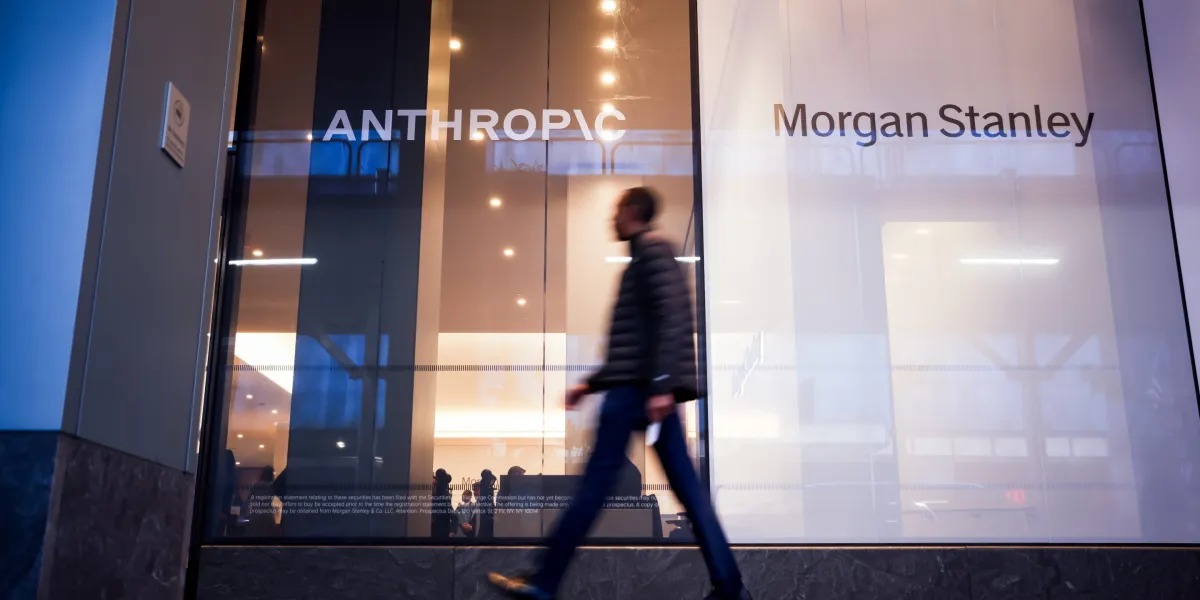
On November 19th, Anthropic made its debut on NASDAQ with an issue price of $83. The opening price was $111.50, representing a 34% increase from the issue price, and the stock reached a high of $115.10 during trading, which corresponded to a fully diluted market value that briefly exceeded $2 trillion. However, the stock price subsequently continued to decline, closing at $97.17, representing a 17.1% increase from the issue price but a decrease of about 13% from the initial trading price. Based on the issue price, Anthropic had a strong first-day performance. Nevertheless, looking at the secondary market trading, the rapid decline after opening, along with retail investors' net purchases being significantly lower than expected, indicates that the market's willingness to support the stock at higher valuations did not increase accordingly.
Comment: A securities analyst who follows the AI large model industry told Yicai News that although the stock price closed higher on the first day of trading for Anthropic, the actual trend did not meet expectations. Institutions believe that investors are questioning whether the enthusiasm for AI will ultimately generate sufficient returns to justify the large-scale borrowing and capital expenditures in the industry. The listing of Anthropic coincides with a troubling period for the industry, which means that even this historic moment has not changed the re-evaluation of the AI valuation system by investors.
DeepSeek Billion-dollar financing completed
On November 19th, according to Qichacha App, Hangzhou Deep Exploration of Artificial Intelligence Basic Technology Research Co., Ltd., the business entity of DeepSeek, recently completed changes to its registered capital and investors. The registered capital increased from approximately 16.45 million yuan to 19.9187 million yuan, a growth of about 21.1%. A new shareholder, Hangzhou Chengyan Enterprise Management Consulting Partnership (Limited Partnership) (hereinafter referred to as "Hangzhou Chengyan"), was added. Further analysis of the equity structure reveals that Hangzhou Chengyan added 31 new partners during this period, with their registered contribution amount increasing from 0.6 million yuan to approximately 3.439 billion yuan. Internet industry capitals such as Tencent, CATL, China Mobile, China Telecom, and REDnote, as well as investment institutions like Lisi, Boyu, IDG, Gaorong, and Legend Capital, are all listed among the contributors to this platform.
【Comment】According to media reports, in mid-July, DeepSeek launched its second round of financing. The initial target was 50 billion yuan, but due to overwhelming interest from subscribers, the amount was raised twice to approximately 100 billion yuan, and ultimately, about 105.5 billion yuan was raised. The post-investment valuation reached around 615.5 billion yuan, making this the largest venture capital investment in China for the company AI to date. If we consider the first round of financing, which was reported to be around 51 billion yuan, then the total amount raised from both rounds of financing for DeepSeek amounts to about 156.5 billion yuan.
Lenovo's largest business is about to change
On November 19th, Lenovo Group (00992.HK) announced its financial results for the second quarter of the 2026/27 fiscal year, with revenue exceeding 200 billion RMB for the first time, representing a year-on-year increase of 48%. Among them, the Infrastructure Solutions Business Group (ISG) and the Solutions Services Business Group (SSG), two non-PC businesses, contributed a total of 61% to the operating profit of the three main business groups, which is an increase of 28 percentage points compared to the same period last year. Yang Yuanqing, the chairman of Lenovo Group, expects it to be highly likely that the revenue of ISG will exceed that of the Smart Devices Business Group (IDG).
[Commentary] For a long time, the PC business has been Lenovo's most distinctive label. However, with the explosive growth of AI infrastructure, Lenovo Group's revenue and profit structure has undergone significant changes. This is mainly due to the surge in demand AI. Lenovo's AI server order backlog increased further from approximately RMB 360 billion in the previous fiscal quarter to approximately RMB 530 billion, a nearly 50% increase quarter-on-quarter; AI server revenue increased by more than 300% year-on-year.
DeepSeek starts imposing limits on free users
On November 16th, many users reported on social media that DeepSeek had recently adjusted the usage quotas for App and its web version, including restrictions on long conversations, daily usage quotas, and the length of individual text inputs, citing "insufficient computing power" as the reason. Some users received notifications that their quotas had been exhausted within just two hours of use.
As of press time, the official DeepSeek has not yet released unified quota rules or related explanations, nor has it disclosed when the restrictions will be lifted. These changes have a limited impact on light users, but for those who need to use AI continuously for extended periods, the experience will be significantly affected.
【Comment】This change may also be related to DeepSeek's consistent strategic approach. Compared to most large model manufacturers that actively compete for users and subscription revenue, DeepSeek has been more restrained in its commercialization efforts on the consumer side (C-end). DeepSeek's goal is AGI (general artificial intelligence); the company is not short of users, but it is clearly in great need of computing power.
Mathematicians used Claude to prove the Riemann Hypothesis, and Tao Zhe-Xuan responded
On November 20th, mathematician Levent Alp ö ge published a statement on their personal website, claiming that they and Claude have found a proof for the Riemann Hypothesis, and indicated that the same method can also be extended to the Generalized Riemann Hypothesis. At present, this result has not yet been independently verified.
Riemann's Conjecture is one of the famous "Millennium Seven Problems" in the field of mathematics, proposed by the German mathematician Riemann in 1859, and it deals with the distribution patterns of prime numbers. As Alp ö ge explains, the approach proposed by Claude became key to advancing the proof, and Claude has surpassed the speed of his own progress in the later stages of research.
Comment: Fields Medalist Terence Tao mentioned this in his personal blog on November 20th. He pointed out that Alp ö ge used AI to generate a massive proof of the Generalized Riemann Hypothesis, which is presented solely in Lean code. Understanding and digesting this achievement still requires time, but at least it allows for communication with human authors to assist in completing this process. Currently, the mathematical community still needs to confirm whether these Lean files can pass verification independently, as well as whether the formalized theorems accurately correspond to the Riemann Hypothesis.
Tencent Issues a Statement: We Have Reached a Critical Moment of Survival or Extinction
On November 16th, Tencent Culture's official WeChat account published a note recording the content of an internal meeting from last week. "If we do not embrace the intelligent revolution that is underway now, we will be overthrown. This is a matter of life and death." According to the note, Tencent's leadership stated that in the face of this technology, it is their duty to take the lead, and all businesses must re-start their efforts in the era of AI. The note also mentioned that, to some extent, Tencent's existence over the past 28 years has been in preparation for today, so that it could invest in such a world-changing technological trend. It was also noted that organizational changes need to be accelerated.
【Comment】From this note, it seems that Tencent's headquarters is mainly discussing how to seize opportunities and carry out organizational changes during the AI era. The language used includes expressions such as "life and death at stake" and "the waves are already coming," highlighting the urgency of the situation. The release of this note indicates that Tencent is about to begin adjusting its internal organization, exploring AI native applications through flatter teams, and may also reorganize its core businesses.
Tencent Re-invests in AI; Capital Expenditure to Remain at Its Peak in 2027
On November 18, Tencent Holdings announced its financial results for the third quarter of 2026. In that quarter, Tencent's revenue amounted to 207.336 billion yuan, a year-on-year increase of 8%; Non-IFRS operating profit was 68.073 billion yuan, a year-on-year decrease of 6%. Excluding the impact of AI products, Non-IFRS operating profit increased by 8% to 83.3 billion yuan year-on-year. Capital expenditure for that quarter reached 81.433 billion yuan, a year-on-year increase of 527%, with 65.1 billion yuan being paid out for capital expenditures. The company's management stated that cash capital expenditure has reached a peak level, and it is expected that cash capital expenditure for the remainder of this year and in the quarters of 2027 will fluctuate around this peak level before beginning to decline.
【Comment】Investments in AI have affected several of Tencent's financial indicators, such as resulting in a negative free cash flow for that quarter. However, Tencent has made progress in AI; over ten million WorkBuddy users consume more than 100 trillion Hy4 per day, and Hy4 has also reached the level of China's top large models. In order to seize the opportunities presented by AI, Tencent will continue to reinvest in AI in the coming period.
AMD Targeted by Institutional Short Selling
On November 19th in the US stock market, AI chip company AMD fell by 7.72%. On the news front, short-selling institutions Hunterbrook Capital established short positions in AMD. Hunterbrook Capital's subsidiary Hunterbrook Media released a report questioning the risks that AMD's arbitrage trading and financing guarantees pose to the company. It stated that although AMD appears financially stable on the surface, since AMD's customers who help with financing are supporting the company's performance growth, if these customers cut back on their spending, AMD could face a situation where chip sales weaken and it has to bear financial responsibilities amounting to tens of billions of dollars.
【Comment】AMD previously issued warrants to customers. Hunterbrook Media states that AMD committed to granting 320 million shares to OpenAI and Meta at an exercise price of $0.01 per share, which refers to part of the cooperation agreements reached with OpenAI and Meta in October last year and February this year, respectively. Each of these two companies is allowed to subscribe for up to 160 million shares of AMD common stock. In addition, AMD provides guarantees for the leases of its partners and purchases cloud capacity that they are unable to sell, which has also drawn criticism from short-selling institutions.
Google-affiliated companies secure the largest single-round financing in AI pharmaceuticals
On November 17th local time, Google-affiliated AI pharmaceutical company Isomorphic Labs announced the completion of a $5 billion (approximately 35.5 billion RMB) Series C financing round. The round was led jointly by Greenoaks and Sequoia Capital, with new investors such as a16z also participating. Google's parent company, Alphabet, continued to make significant investments. Existing investors including Temasek, Thrive Capital, and MGX also participated in this round. This financing round set a new record for the largest single-round financing in the global AI pharmaceutical industry, and it was only half a year since the company's last round of financing in Isomorphic Labs. In May of this year, the company had just received a $2.1 billion Series B financing, and with the initial external financing of $600 million completed in March 2025, the total amount of financing disclosed publicly by this company, which was established just five years ago, has reached $7.7 billion.
【Comment】Isomorphic Labs was founded in the UK by Demis Hassabis (Demis Hassabis), a Nobel Prize in Chemistry laureate and former co-founder of Google DeepMind. The company was spun off from Google DeepMind in 2021, with Hassabis serving as the CEO. In August of this year, after Hassabis stepped down from his role at Google DeepMind CEO, he focused on the long-term strategy of AGI, its social impact, and this pharmaceutical company AI Isomorphic Labs.