




















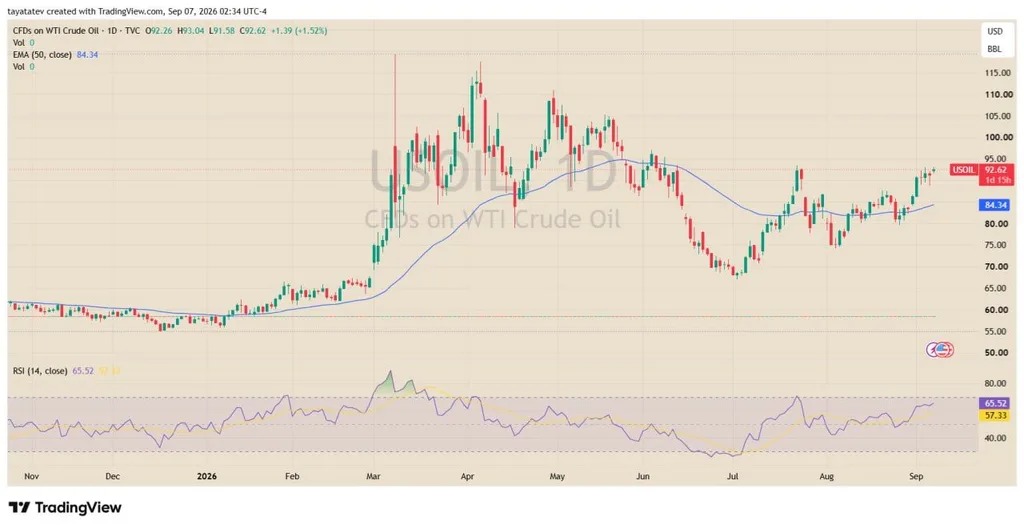
The Middle East situation has once again pushed up international oil prices. As conflicts between the United States and Iran in the vicinity of the Strait of Hormuz escalated, concerns about crude oil transportation and regional supply rapidly increased. Brent crude oil briefly approached $98 per barrel, while WTI reached $92.
Disruptions in shipping drive up oil prices
The Strait of Hormuz is a crucial global energy transportation route. Reports indicate that the flow of oil tankers through this strait has recently dropped to its lowest level since May, suggesting that the conflict has begun to affect commercial shipping.
Against this backdrop, Brent crude oil rose to around $97.5 on Monday, with a intraday high of nearly $97.93. Last week, Brent crude saw a cumulative increase of 7.6%, and WTI saw an increase of nearly 10%, indicating that geopolitical risk premiums are quickly being reflected in oil prices.
A focus in the market currently is on the $100 per barrel level for Brent crude oil. If this level is maintained, oil prices could continue to rise; however, if the situation eases, some of the previous gains might also be reversed.
Declining inventories in the United States support the market.
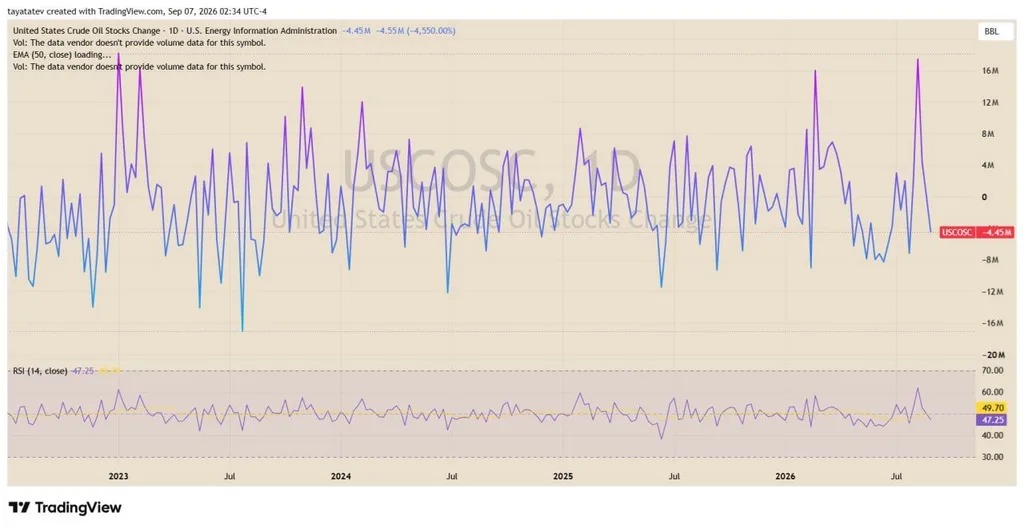
In addition to geopolitical factors, U.S. inventory data is also supporting oil prices. Data from the U.S. Energy Information Administration shows that as of the week ending August 28, U.S. commercial crude oil inventories decreased by 4.5 million barrels to 424.5 million barrels.
A decline in inventory means that refineries are continuing to consume crude oil stocks at a higher operating rate, which adds further support to the already tight supply outlook. The next weekly inventory report will be released on September 10th, one day later than usual.
The refined oil market is also relatively strong. Heating oil futures rose to around $4.61 per gallon on Monday, and retail diesel prices in the United States also reached record highs last week. The strength in diesel and transportation fuels reflects not only the increase in crude oil prices but also indicates that the supply pressures on refineries and logistics continue.
OPEC + Maintain the same production volume in October
On the side of oil-producing countries, OPEC and other nations did not signal any additional production increases over the weekend. Saudi Arabia, Russia, Iraq, Kuwait, Kazakhstan, Algeria, and Oman agreed to extend their production targets for September into October, with the next meeting scheduled for October 4th.
This means that at a time of geopolitical tensions, the market cannot see any immediate supply buffers from major oil-producing countries for the time being. The lack of significant relaxation on the supply side also makes oil prices more sensitive to changes in the Middle East situation.
Goldman Sachs, on the other hand, has provided a broader range of price forecasts. The firm believes that if disruptions to Middle Eastern shipping further intensify, oil prices could rise to $120 per barrel; however, if regional exports return to normal, prices might fall back to around $80 per barrel. The current direction of the oil market still mainly depends on whether the situation around the Strait of Hormuz continues to deteriorate.