AI Rebuilt the source code of Modern Warfare 2 from 2009 in 3 months, using over 500 billion yuan, with 83% matching the original version byte for byte
The Block
1h ago
Ai Focus
Developer Morris Haiman stated that the team spent 3 months and over 500 billion yuan to decompile and reconstruct the 2009 game "Call of Duty: Modern Warfare 2" into C++ source code with the help of the AI intelligent entity; ultimately, 99% of the game's functions were incorporated into the reconstructed source code, with 83% of them achieving a byte-for-byte match.
Helpful
No.Help

News from the IT community on October 13th: Developer Morris Hoffman ( Maurice Heumann ) released a project report on October 9th, stating that the team spent 3 months and over 500 billion yuan ( Tokens ) to decompile the AI agent for the 2009 game "Call of Duty: Modern Warfare 2" and rebuild it into C++ source code.

In terms of team members, this project was led by Hoffman and received assistance from RektInator, Future, st0rm, and other community members.

In terms of calling AI, the team initially used both Claude Max (20x) and Codex Pro for subscription, while running the AI agents in Claude Code CLI and Codex CLI. The models covered Sonnet 5, Opus 5.5, Luna, Sol, and Terra. The agents tracked tasks through GitHub Issues and exchanged information via Discord.
In the first month of the project, 4 agents were deployed. Three of them were responsible for decompiling and submitting code, while one was in charge of reviewing it. During this phase, approximately 80% of the functions were completed, allowing the game to start, display the main menu, and load maps. However, the team discovered that although the code was readable, there were semantic errors at the levels of function signatures, types, structural layout, and logic.

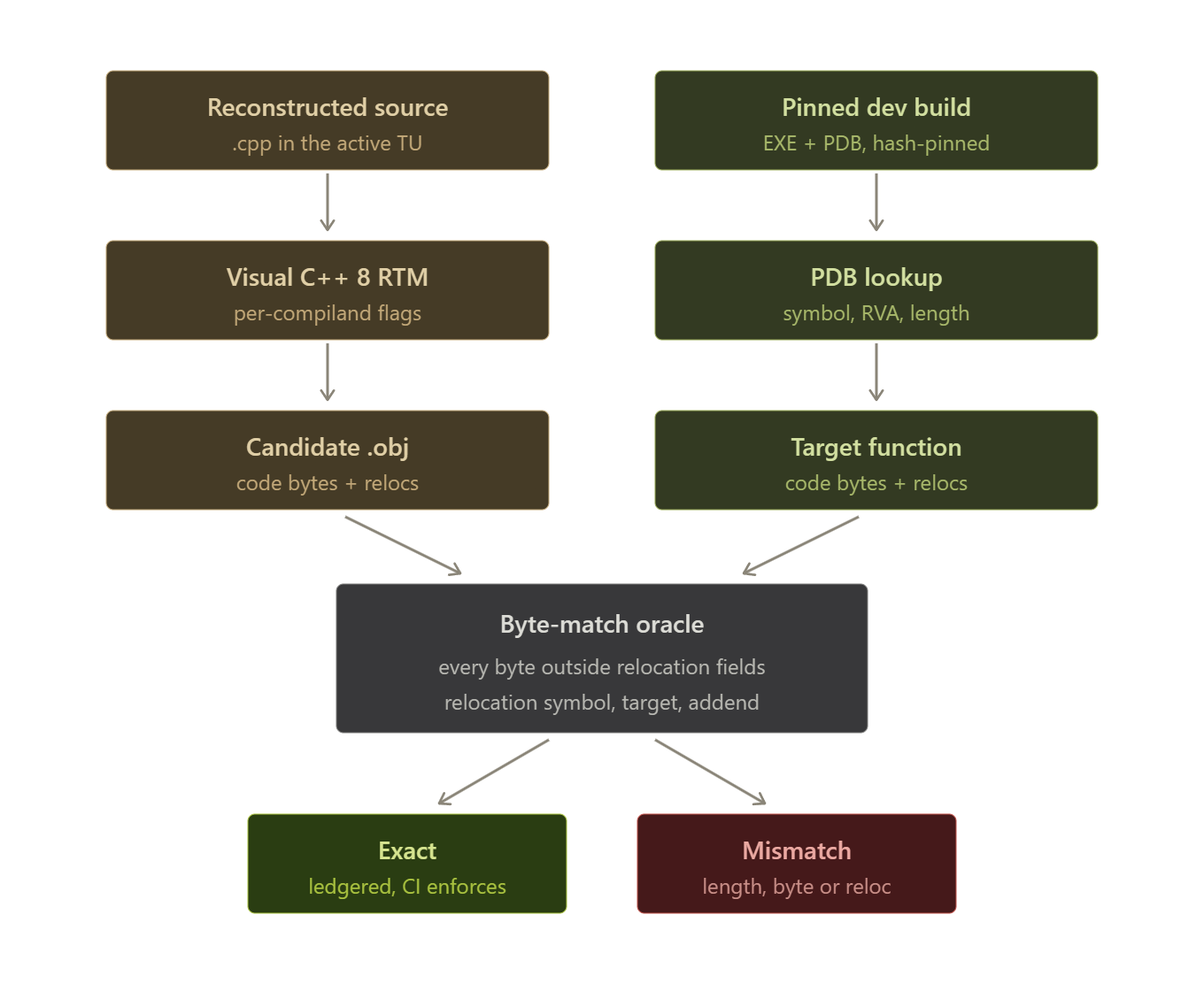
Subsequently, the team introduced a "byte-by-byte matching decompilation" verification mechanism. This mechanism rebuilds the target files using the original game compiler and compares the rebuilt functions byte by byte with those in the original EXE / PDB. Those that pass the comparison are marked as PASS, while those that do not are modified again by the agent.

To prevent agents from bypassing verification, the team prohibits inline assembly, naked functions, object patches, and the embedding of bytes in code. Instead, they use CI to compare the hash values of verification scripts with GitHub Actions and secret. This mechanism enables low-cost models to complete high-precision tasks under strict feedback, thereby replacing manual or agent review processes.
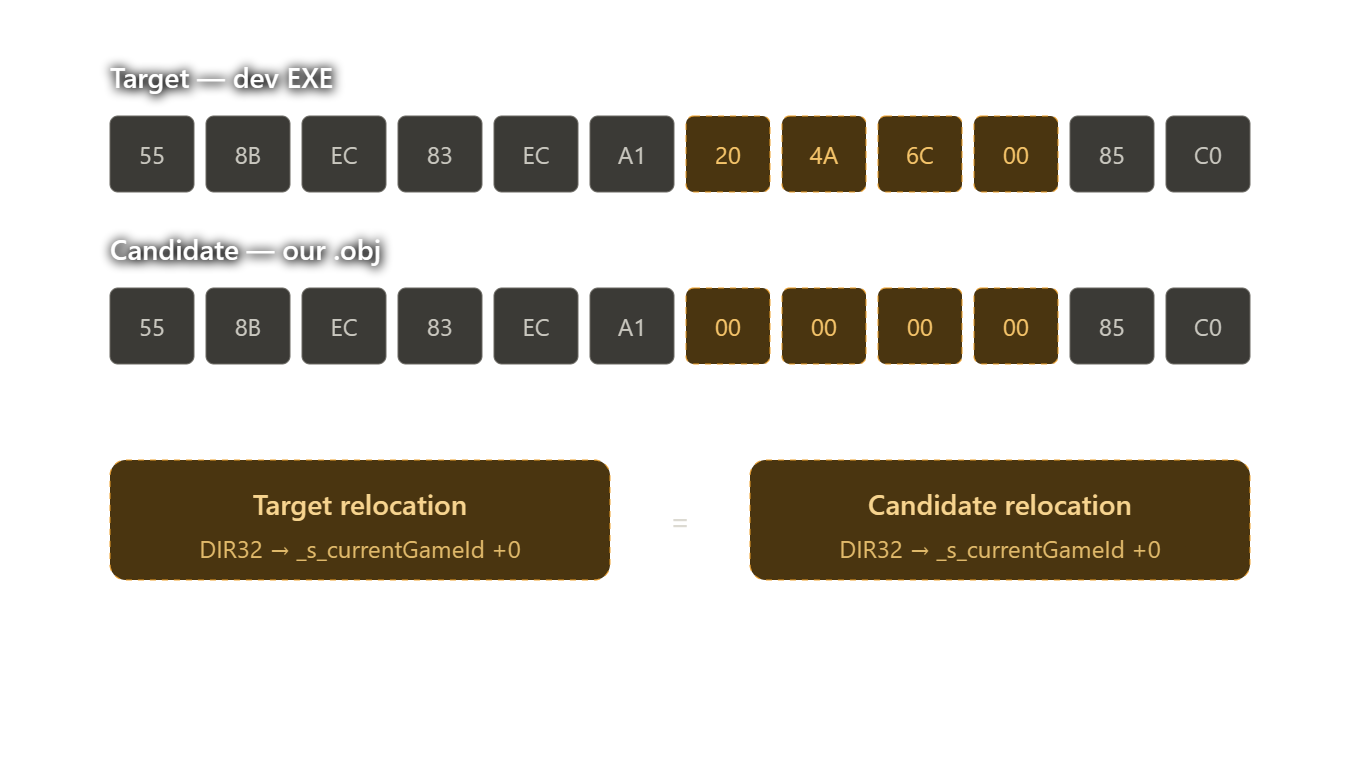
In the later stages of the project, 14 Luna agents and 2 Opus 5.5 agents were primarily in use. These agents submitted code through independent branches and Pull Request. Ultimately, 99% of the game functions were incorporated into the reconstructed source code, with 83% of the functions achieving byte-for-byte matching; however, the remaining functions could not be fully matched due to non-deterministic characteristics or linker behavior.

Byte-by-byte matching ( Byte-for-byte Matching ) refers to comparing the binary data of the reconstructed function after compilation with the corresponding function in the original program byte by byte. If the data is consistent, it usually indicates that the function retains the same semantics and behavior as in the original version in the target compilation environment.

Hoyman stated that the relevant code will not be made public, and the results of the reconstruction will only be retained for private use.

IT's home comes with reference links: 500+ Billion Tokens Later : Letting AI Agents Decompile A First - Person Shooter.

Tip
$0
Like
0
Save
0
Views 23
HKWDB reminds readers to view blockchain rationally, stay aware of risks, and beware of virtual token issuance and speculation. All content on this site represents market information or related viewpoints only and does not constitute any form of investment advice. If you find sensitive content, please click“Report”,and we will handle it promptly。
Submit
Comment 0
Hot
Latest
No comments yet. Be the first!
Related
Intel's SGX era enters countdown, Diamond Rapids becomes the last generation of Xeon processors supported
According to reports from Tom's Hardware, Intel's Xeon Diamond Rapids will be the last generation of Xeon processors to support SGX; thereafter, the focus of confidential computing will shift to TDX. Intel stated that the existing SGX platform will continue to receive security updates and support until the early 2030s, and they also plan to expand the capabilities of TDX and promote its use in cloud and enterprise environments.
The Block
·2026-10-13 10:21:25
5
Kaixia launches DLC and CM9 enterprise-level solid-state drives supporting cold plate liquid cooling
KaiXia announced yesterday local time in the United States the launch of the CM9-DLC solid-state drive. This enterprise-level SSD adopts the EDSFF E3.S form factor and adds support for direct liquid cooling, namely cold plate liquid cooling, on top of the regular CM9 version, targeting data center deployments that can use liquid cooling on a single server rack.
The Block
·2026-10-13 10:21:24
5
Asian tech stocks fell following the sell-off of US chip stocks, with SK Hynix and SoftBank leading the decline
Asian tech stocks fell on Tuesday as the selling sentiment in U.S. semiconductor stocks spread to regional markets, with concerns over intensifying financing and competition in artificial intelligence. SK Hynix, Samsung Electronics, and SoftBank Group all saw significant declines, and Japanese tech stocks such as Advantest also weakened.
CNBC
·2026-10-13 10:21:23
5
Affected by the sharp decline in U.S. stock markets, South Korean stocks tumbled more than 5% for the second consecutive day; SK Hynix fell nearly 8%
Asian and Pacific stock markets tumbled significantly on Tuesday, with the decline in trading enthusiasm for AI and the added pressure of competition in memory chips hitting South Korean and Japanese tech stocks particularly hard. The South Korean Composite Index fell by 5.1%, triggering the Sidecar mechanism, and both Samsung Electronics and SK Hynix suffered double-digit losses; Japan's SoftBank Group, Tokyo Electron, and Advantest also saw significant declines.
Wallstreetcn
·2026-10-13 10:12:31
11
"Boredom is not a bad thing": Southeast Asia's largest bank CEO positions Singapore as a safe haven in times of global turmoil
DBS Group's CEO Chen Shushan stated in Singapore that, against the backdrop of trade wars, geopolitical conflicts, and fragmented supply chains, Singapore has become a safe haven thanks to its stable political environment and AAA rated debt; she also mentioned that DBS has the capability to help clients quickly switch between different markets.
CNBC
·2026-10-13 10:03:18
11
View More