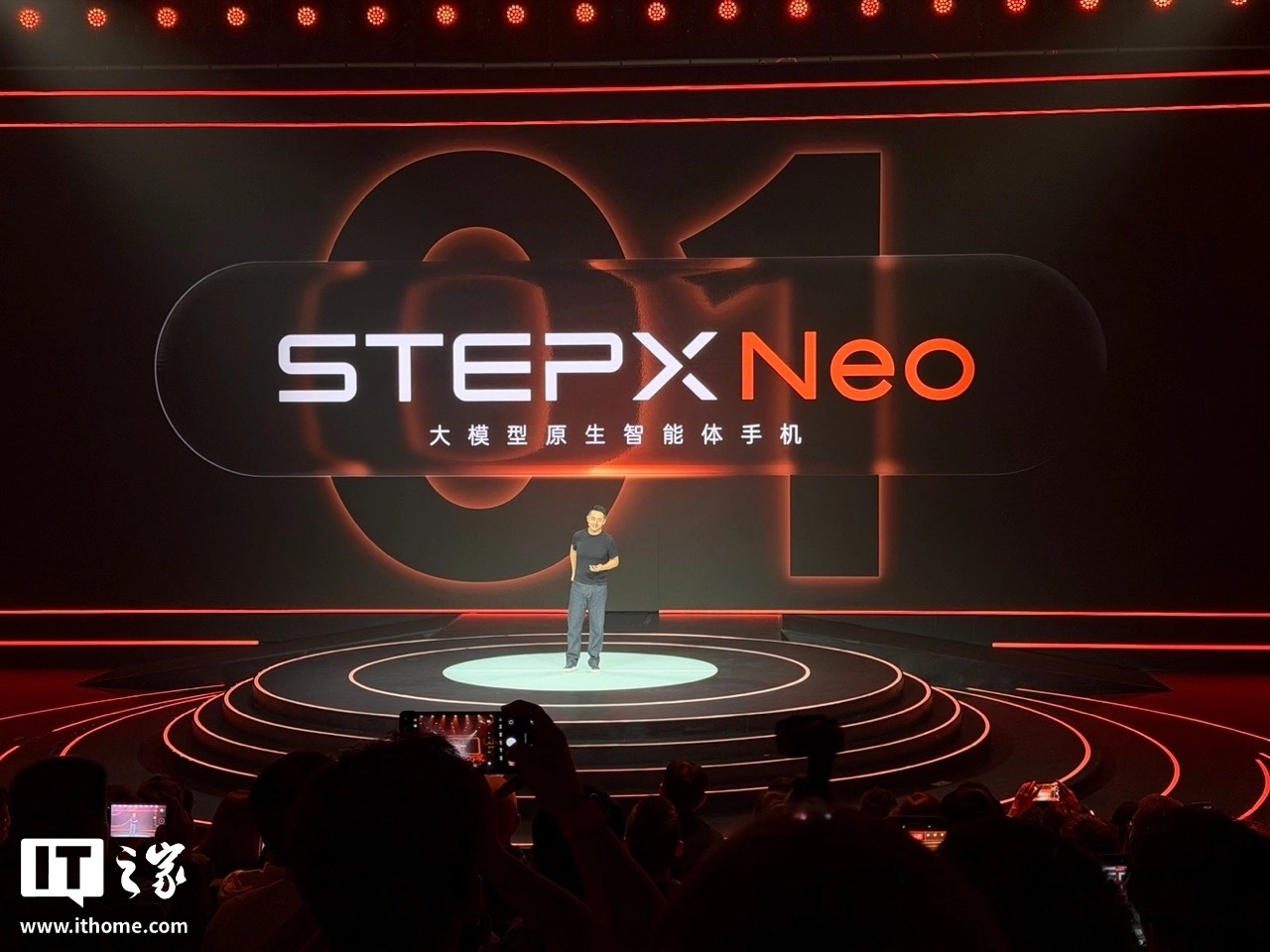
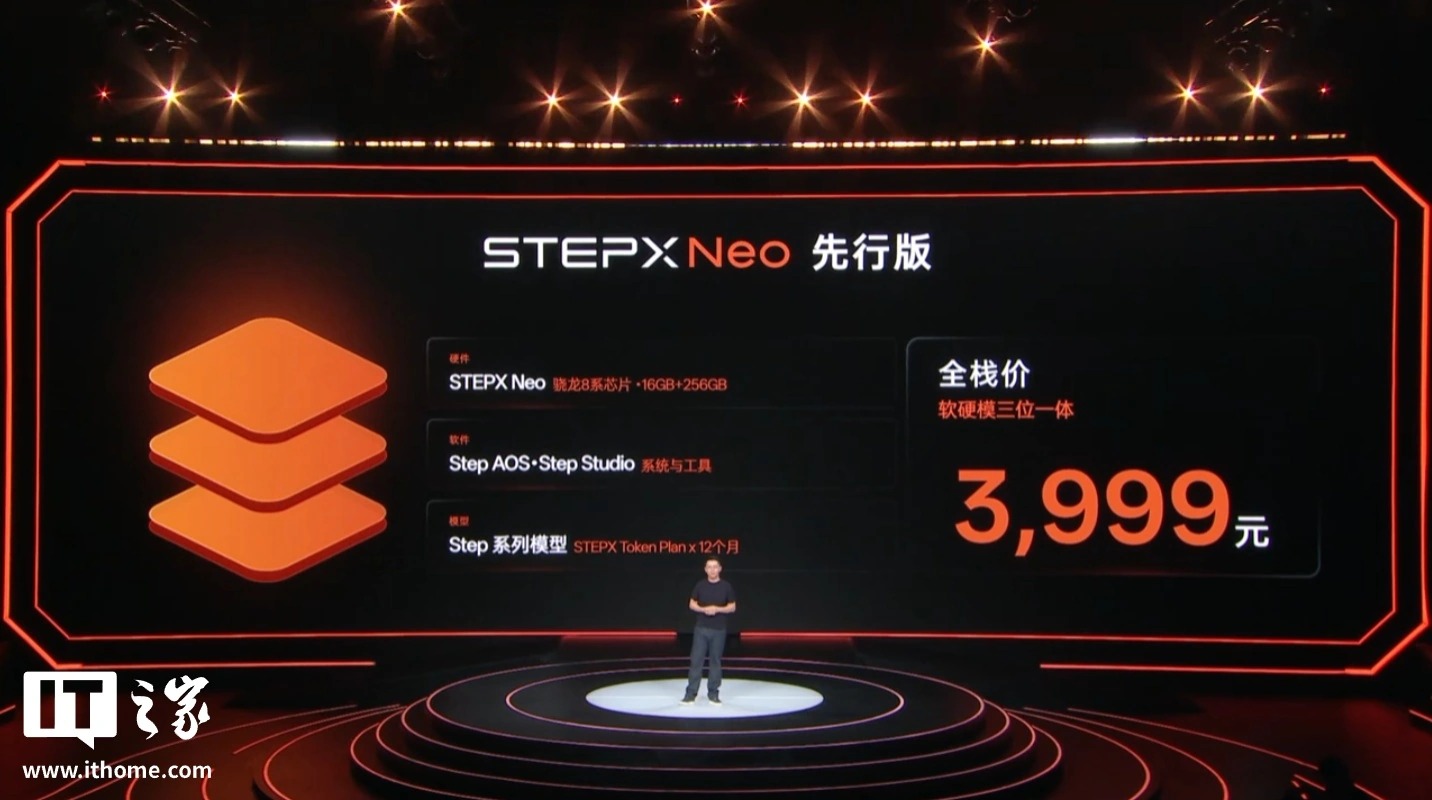
The first large-model native intelligent agent phone from Step Terminal, STEPX Neo Preview Edition, is officially released tonight. It is equipped with a Snapdragon 8 series chip and comes in two color options: Carbon Black and Silvery Silicon. The all-in-one price for the hardware, software, and services (including the STEPX Neo phone body, StepAOS + Step Studio, and Step series models) is 3999 yuan.
Pre-orders for the new device are now open, with the official launch scheduled for October 16th at 10:13 AM. Users who purchase the STEPX Neo preview version will enjoy a monthly usage quota of tens of billions of Token for a period of 12 consecutive months, supporting AI creators in exploring native intelligent agent applications.
In addition, STEPX has launched a "Step by Step Amoo Growth Plan." The first 10,000 users who meet the task requirements will receive a "Stellar Ticket," which allows them to exchange for any new STEPX terminal at zero cost within the next five years using STEPX Neo.
According to the introduction, the STEPX Neo step terminal mobile phone features a "retro-futuristic aesthetics" design. The back panel combines a transparent mechanical feel with the visual temperament of an intelligent organism. Through five easter eggs: the numbers "42", the code "user_potential", the binary code from the Turing Test, deep blue checkerboard patterns, and the Transformer architecture, it aims to weave together the AI exploration history that spans from science fiction imagination, breakthroughs in machine intelligence to the development of large models.
The intelligent agent's auditory enhancement system of STEPX Neo consists of a six-microphone array, a low-power audio perception chip, and the Whisper 1.0 pickup algorithm, which enables it to accurately recognize the user's voice even in complex sound environments; at the same time, the low-power chip operates independently, consuming only 1.2% of power in 24 hours.
The new device features a dual-screen linkage system that actively supports human-computer interaction and sharing, with the back screen dedicated to intelligent expressions.
STEPX Neo is equipped with the Agent Native Operating System Step AOS 1.0, which claims to be built from scratch for agents, integrating long-term memory, task scheduling, and security mechanisms into the underlying system. The dual-entry interface design allows users to find the agent at any time, and also enables the agent to respond to user needs promptly. A large number of underlying system capabilities can also be directly called by Amoo, which can remember users and complete tasks for them as well.
Step Step 5 Preview has officially integrated with Tencent WorkBuddy, bringing more powerful reasoning and Agent capabilities into real office scenarios, enabling autonomous completion of in-depth research, data analysis, PPT generation, and multi-step complex tasks. As of October 25th, users can experience this feature for free for a limited time within the full-scenario AI office workbench WorkBuddy. Natural language commands can be used to achieve everything from requirement understanding to result delivery.
IT Home has noticed that in its efforts to support ecological partners, Amoo has collaborated with nearly a hundred companies and products including Alipay, Tencent, Ctrip, Didi, Jianying, Gaode, Meituan, and others, achieving integration in areas such as local life, travel, office efficiency improvement, and content creation.
Targeting makers, STEPX has launched its first native development tool for AI terminals ( IDE ) – Step Studio. Makers can use natural language to generate AI App, games, intelligent agents, and Skill.
Based on this development environment, STEPX Neo can fully open up its models, systems, hardware, and ecosystem capabilities to makers. At the system level, a rich set of underlying atomic capabilities are made available; sensors, cameras, Mini LED dot matrix backscreens, etc., can all be used in creations, and it also supports connecting to external services and professional intelligent agents through protocols such as MCP and A2A.