Brief
U.S. spot Bitcoin ETF recorded a capital inflow of $526.7 million on October 19, which is the largest single-day inflow since September 22. The previous larger single-day inflow was $714.7 million, meaning that this performance represents the best day for these funds in nearly a month.
BlackRock’s IBIT attracted $665.2 million in funds, while Fidelity’s FBTC saw outflows of $83.6 million, and Grayscale’s GBTC had outflows of $54.9 million, narrowing the net outflow for October from approximately $615 million to about $88 million.
On the same day, Ethereum ETF saw a net outflow of $103 million, while Solana ETF had a net outflow of $6.7 million. According to data from SoSoValue, even as the yield on 10-year U.S. Treasury bonds remained above 5%, the capital flows of these funds continued to be under pressure.
According to the ETF tracker of Decrypt, US spot Bitcoin ETF attracted a total of $526.7 million in funds this week, which is the largest single-day inflow since September 22. The last larger trading day saw an inflow of $714.7 million, making this also the best performing day for these funds in nearly a month.
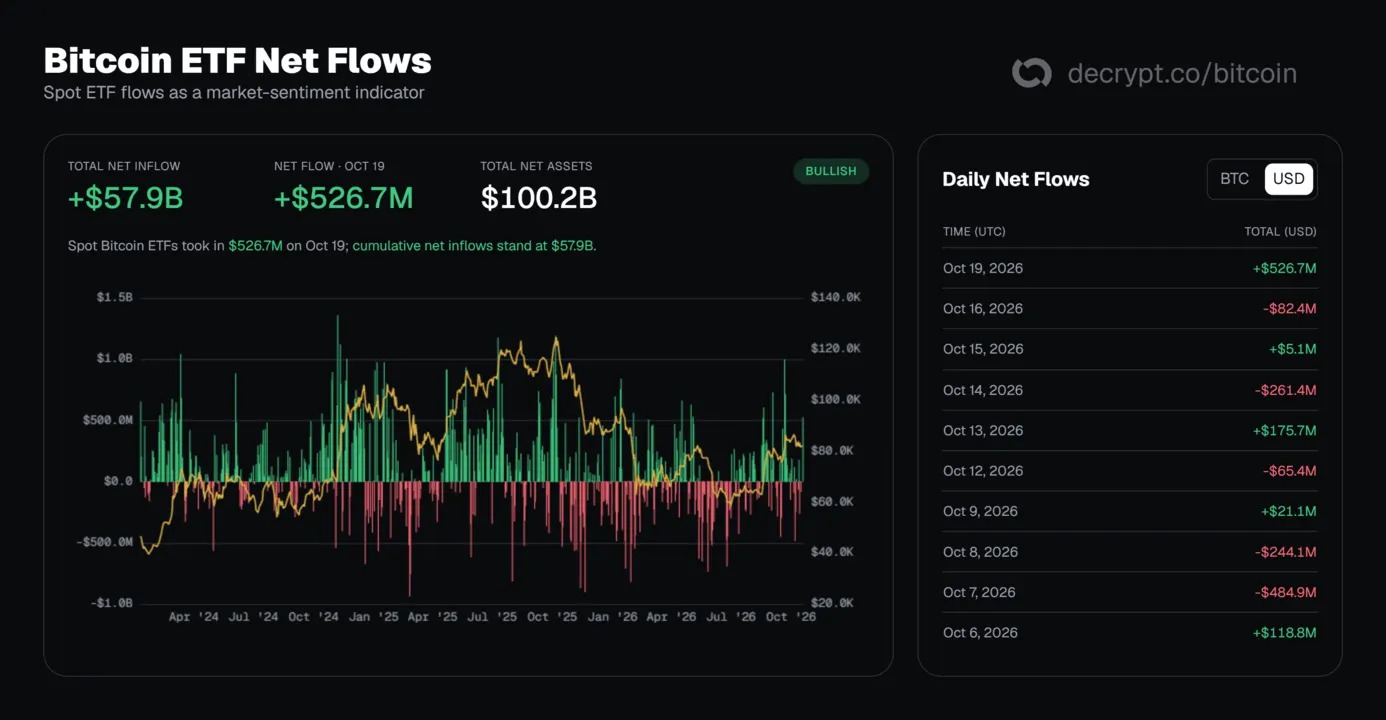
This influx of funds interrupted a two-week period of selling. During that time, a total of approximately $910 million was withdrawn from these funds, with $484.9 million being withdrawn on October 7th, which represented the worst single-day performance since June. Last Friday, there was another net outflow of $82.4 million, making the reversal on Monday particularly noticeable.
Other crypto funds showed the opposite trend. According to the SOL ETF tracker of Decrypt, spot Ethereum ETF saw outflows of $103 million on Monday, marking the fourth consecutive trading day of capital exodus; Solana ETF experienced outflows of $6.7 million. If these losses are combined with those of Bitcoin, Ethereum, and Solana funds, the three types of funds still had a total net inflow of approximately $417 million on that day.
BlackRock topped both lists: its Ethereum fund ETHA accounted for the majority of the $95.4 million outflow from Ethereum ETF on that day, while on the same day, IBIT recorded a net inflow of $665.2 million.
On Monday, Bitcoin hovered around $82,000, approaching the average cost benchmark of $82,300 for holders estimated last week by analyst Iliya Kalchev. The cost benchmark refers to the average price at which investors bought the tokens, so when the price approaches this level, it usually indicates that holders are roughly at break-even.
After the attack on an oil tanker in the Persian Gulf over the weekend, global crude oil benchmark Brent traded between $108 and $110 per barrel on Monday. High oil prices will increase the costs of fuel and freight, which will be passed on to the prices consumers pay. Since almost all goods need to be transported to reach consumers, the market tends to pay close attention to oil prices and respond accordingly.
This factor is now reflected in the consumer price index. In September, CPI rose by 3.7% year-on-year, with the energy index increasing by 20.4%. Persistent inflation has led the Federal Reserve to be inclined to raise interest rates again after raising the target interest rate range by a quarter of a percentage point in September.
The market expects that interest rate hikes will push up the yield on government bonds, which is the return that investors receive for lending money to the U.S. government. According to data from the U.S. Treasury Department, the yield on 10-year bonds was still above 5% on Monday; while the yield on 30-year bonds reached around 5.7% on October 7th, which was also the day when $484.9 million in funds flowed out.
Bitcoin does not pay dividends, so government bonds that offer a return of over 5% with lower price risk compete for the same funds. On October 14th, $261.4 million was withdrawn from these funds, and on the same day, the CPI report for September was also released.
As of October, despite there being 9 trading days remaining, there was still a net outflow of approximately 88 million US dollars from spot Bitcoin ETF in the United States. The Federal Reserve will hold a meeting on October 27th and 28th.