10-year U.S. Treasury yield falls below 5%, hitting a low of the past month
CNBC
53m ago
Ai Focus
On Thursday, U.S. Treasury yields tumbled significantly as investors turned to safe-haven assets amid a sell-off in the stock market triggered by artificial intelligence trading and surging oil prices. The yield on 10-year Treasuries fell to 4.972%, below 5% for the first time since September 23; yields on 2-year and 30-year Treasuries also declined markedly. Concerns about large-scale bond issuance by AI-related companies, geopolitical risks, and rising energy prices drove demand for bonds as a safe-haven asset.
Helpful
No.Help

On Thursday, U.S. Treasury yields tumbled significantly as investors turned to safe-haven assets amid a sharp sell-off in the stock market due to concerns related to artificial intelligence trading and soaring oil prices.

The yield on 10-year U.S. Treasury bonds, which serves as a benchmark for pricing mortgage, auto loan, and credit card debts, fell by more than 17 basis points to 4.972%, breaking below 5% for the first time since September 23. This represents the largest single-day decline for this yield since March 10, 2023.

The yield on 2-year U.S. Treasury bonds, which is closely related to the Federal Reserve's short-term interest rate policy, fell by more than 16 basis points to 4.659%. The yield on 30-year U.S. Treasury bonds, which are most sensitive to geopolitical developments, fell by more than 14 basis points to 5.296%.

1 basis point is equal to 0.01%, which is one percent of 1%; the yield rate moves in the opposite direction to the price trend.

President Mitch Goldberg stated: "This is a hedging move. People suddenly panicked at the sight of AI-related companies issuing large amounts of bonds. They saw interest rates rising, and they wanted to hold onto something they believed would still be in existence by the time of maturity."

Other people on Wall Street also tried to explain this reversal in bond prices.

Catalyst Funds, the senior fixed-income investment portfolio manager, stated: "For the first time in a considerable period of time, U.S. Treasuries have once again regained their status as a safe-haven asset. Tech stocks have weakened, risks in the Middle East have escalated, and oil prices have risen; relatively speaking, U.S. Treasuries once again appear to be a safer refuge in the short term."

This week's rebound in the bond market comes amidst ongoing doubts about the billions of dollars invested in building artificial intelligence networks.

Nvidia CEO Jensen Huang stated on Thursday that despite the "absurdly high" demand for neoclouds, capital is in short supply. Neoclouds is a professional cloud computing provider focused on high-performance technical infrastructure, designed specifically for artificial intelligence.

This week, U.S. Treasury bond prices rebounded, reversing the trend seen earlier this month. At that time, due to investors' concerns about inflation and high energy prices, the yields on 10-year and 30-year bonds rose to their highest levels in over two decades.

However, once the yield rate rose above 5%, the market attitude began to change, and suddenly, a yield rate of over 5% seemed like an attractive entry point, even though it meant bearing the risk of inflation exceeding 3%.

Tensions in the Middle East also intensified the risk-aversion sentiment on Thursday. Oil prices soared, with WTI crude oil futures closing up 2.39% at $99.47 per barrel. Global benchmark Brent crude oil futures rose 4% to $113.17 per barrel.

The rise in oil prices was previously influenced by a report in The New York Times. The report cited unnamed U.S. officials as saying that the United States and Israel are considering taking "a brief but intense" action to resume strikes against Iran after the mid-term elections on November 3rd.

South Street Securities, the head of US macro strategy, said: "You're always looking for a risk point, but there's not just one at the moment, which makes the situation more challenging. However, if we have to pick one and say what's most important right now, it would definitely be the geopolitical situation."

He said, "American consumers are clearly feeling the pressure, so this becomes a tricky situation for central bank officials who will be formulating monetary policy in the future." If energy prices "remain high, it may force the Federal Reserve to take more action, which is certainly not good for the bond market."

— CNBC's Michelle Fox has also contributed to the reporting of this article.

Tip
$0
Like
0
Save
0
Views 23
HKWDB reminds readers to view blockchain rationally, stay aware of risks, and beware of virtual token issuance and speculation. All content on this site represents market information or related viewpoints only and does not constitute any form of investment advice. If you find sensitive content, please click“Report”,and we will handle it promptly。
Submit
Comment 0
Hot
Latest
No comments yet. Be the first!
Related
Energy prices drive up inflation, and the Federal Reserve faces policy pressure
Bill Ackman, CEO of Pantheon Square Capital, stated that the Russia-Ukraine conflict, the Iran war, as well as high inflation and interest rates have suppressed the market. However, if geopolitical risks ease and energy prices decline, market prospects will significantly improve. He also discussed the investment value of Netflix, Meta, as well as Fannie Mae and Freddie Mac.
金十数据
·2026-10-23 10:25:17
9
Underdog Adds Stablecoin Recharge Function, Predicting Continuous Growth in Market Business
Predictive market operators Underdog and zerohash have collaborated to plan to launch cryptocurrency and stablecoin top-up features later this year. Eligible users will be able to directly use supported digital assets for deposits through the Underdog application, and this service supports nearly instant transfers around the clock. The company has not specified which specific cryptocurrencies will be supported.
Cointelegraph
·2026-10-23 10:15:13
15
Japan's core CPI rose 2.1% year-on-year in September: Prices back above 2%, we can't just look at one "core" figure
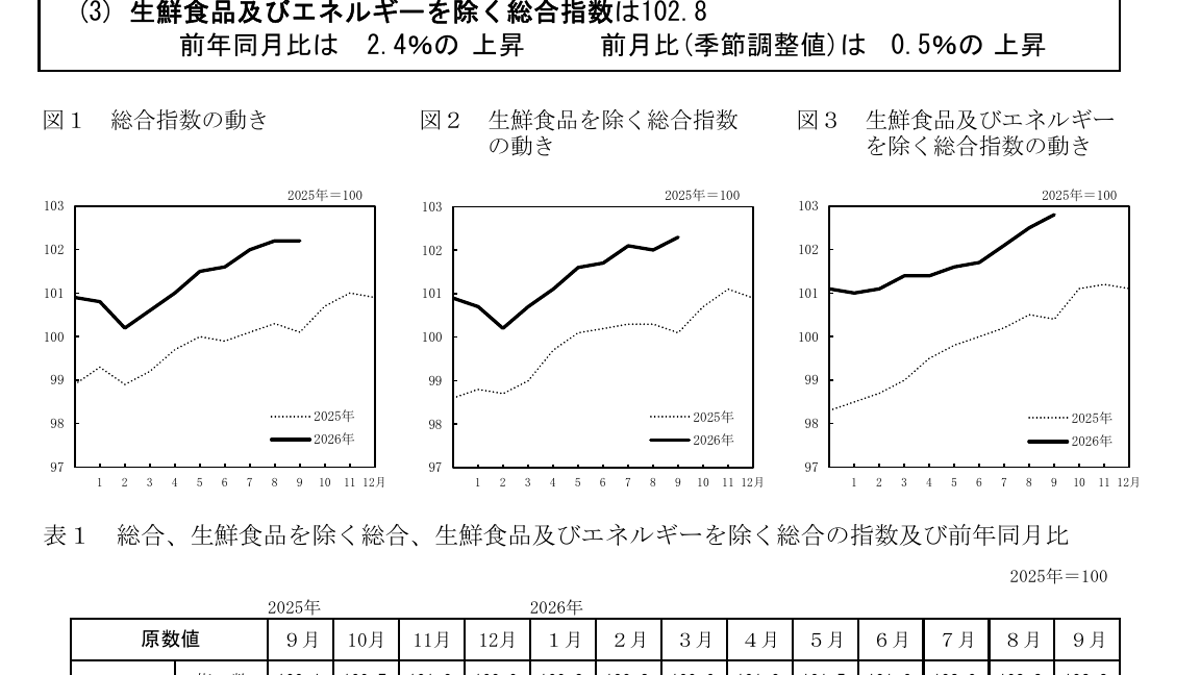
On October 23, the Statistics Bureau of Japan's Ministry of Internal Affairs and Communications released the national consumer price index for September 2026. Using 2025 as the base year of 100, the composite index was 102.2, showing a year-on-year increase of 2.1%; the composite index excluding fresh food was 102.3, also with a year-on-year increase of 2.1%; and the index excluding both fresh food and energy was 102.8, with a year-on-year increase of 2.4%. Although these three figures appear similar, they answer different questions: the first figure considers all prices included in the basket, the second reduces fluctuations in fresh food prices, and the third further eliminates the impact of energy costs. If one single figure is chosen to describe inflation in Japan, it is easy to overlook these structural differences.
币百科
·2026-10-23 09:49:00
22
The median weekly salary for full-time employees in the United States is $1,232: a nominal increase, but it does not necessarily indicate an improvement in purchasing power.
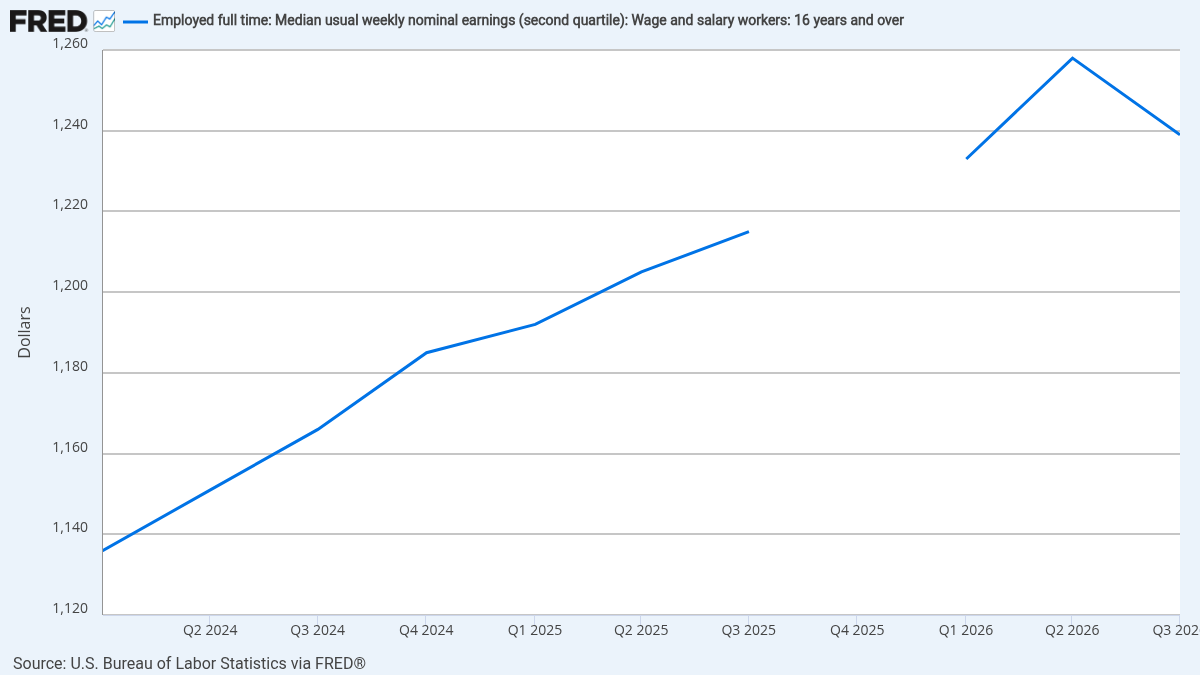
The U.S. Bureau of Labor Statistics released data on "usual weekly earnings" for the third quarter of 2026 on October 21st, which showed that the median weekly wage for full-time employees with wages and salaries was $1,232, representing a nominal year-over-year increase of 1.5%. During the same period, the Consumer Price Index rose by 3.5% year-over-year. By comparing these two increases, one can see an obvious pressure: while the wage figures for typical full-time employees have increased, the rate of increase has not kept up with overall prices. This comparison cannot be interpreted as a decrease in everyone's actual income, nor can it be equated with the disposable income of all residents; it describes the relationship between the median income of the surveyed population and the changes in overall prices.
币百科
·2026-10-23 09:48:57
21
Datang Computer releases a 4-port fanless mini-host NXALN51, equipped with Intel N100 / N150
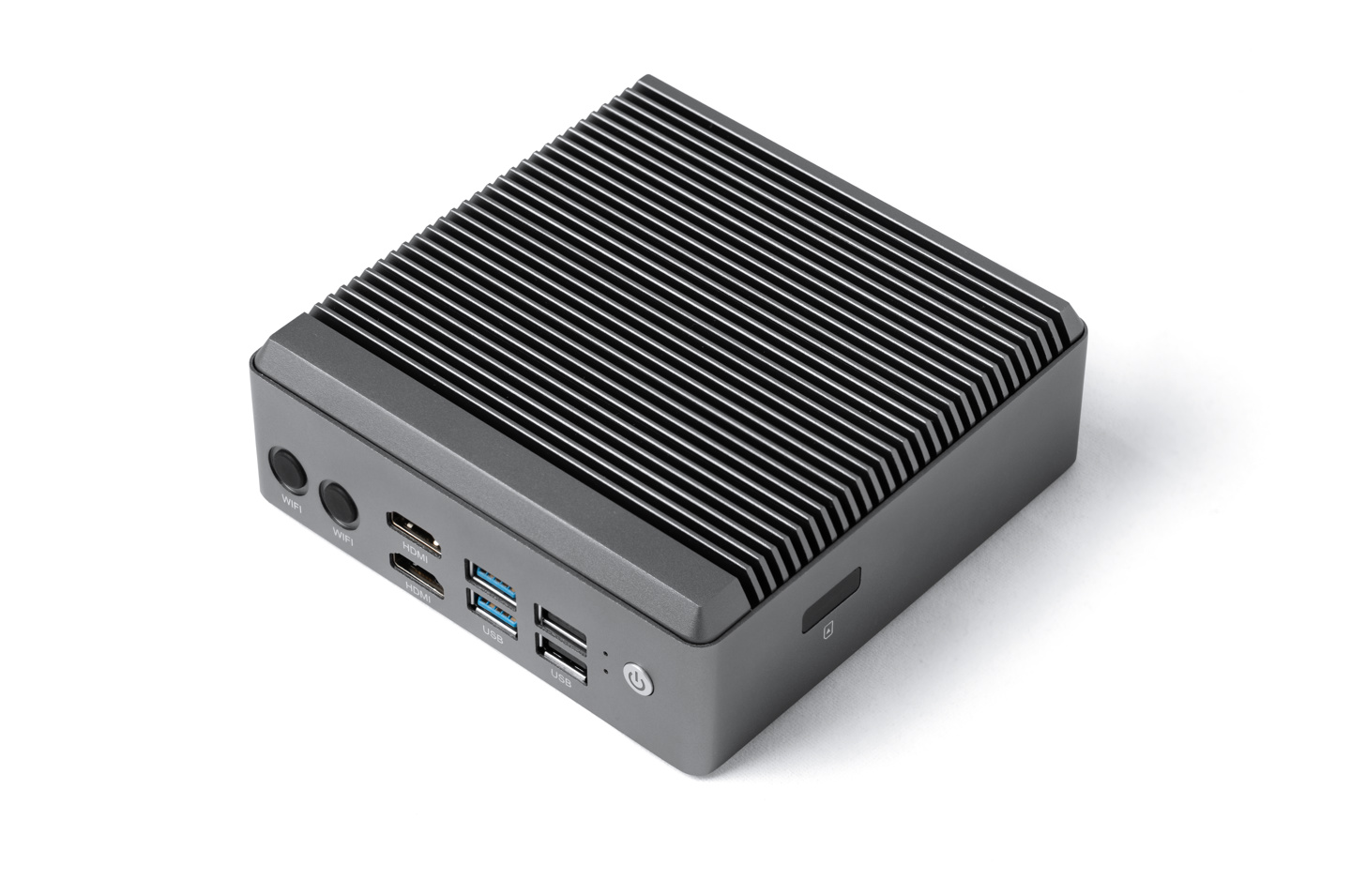
Datang Computer releases the NXALN51 mini-host, featuring an aluminum alloy passive cooling chassis, equipped with 4 2.5GbE network ports, and supporting Intel N100 / N150 processors, aimed at industrial and networking applications.
The Block
·2026-10-23 09:45:46
17
View More