Switzerland Approves First Spot Bitcoin Product for Retail Investors ETF
Cointelegraph
1h ago
Ai Focus
BIT Asset Management indicates that its Bitcoin fund, ETF, is expected to begin trading on the Swiss stock exchange, SIX Swiss Exchange, in November. This marks the first time that the Swiss Financial Market Supervisory Authority, FINMA, has approved a product that is established in accordance with Swiss law and allows retail investors to directly obtain exposure to Bitcoin, ETF. However, this product is only permitted to be publicly sold in Switzerland.
Helpful
No.Help

Switzerland Approves First Spot Bitcoin Product for Retail Investors ETF

The Bitcoin fund ETF under BIT Asset Management is expected to start trading in SIX Swiss Exchange in November, but its public offering will be limited to Switzerland only.

The Swiss Financial Market Supervisory Authority FINMA has approved the first exchange-traded fund (ETF) established in accordance with Swiss law (ETF), allowing retail investors to directly obtain exposure to Bitcoin.

BIT Asset Management stated on Thursday that its Bitcoin fund ETF ( BBIT ) is expected to start trading in SIX Swiss Exchange in November. This fund directly holds Bitcoin and is only permitted to be publicly offered in Switzerland.

BIT Asset Management indicates that "most Bitcoin products listed in Europe at present are exchange-traded products (ETP), and such products are considered debt instruments, carrying issuer risk."

The company stated that the Bitcoin fund ETF is part of a Swiss collective investment scheme, where the fund assets are held separately from those of the fund management company, ensuring 'risk isolation' for investors.

The fund is classified as part of the “other alternative investment funds” category in Switzerland and carries specific risks. FINMA indicates that other fund providers have also submitted applications for Bitcoin ETF.

FINMA indicates that since 2021, Switzerland has allowed funds that primarily invest in a basket of cryptocurrencies. However, this is the first time that FINMA has approved a fund that invests solely in Bitcoin, on the grounds that Bitcoin has a longer trading history and higher trading volume compared to other cryptocurrencies.

However, FINMA emphasizes that even with investments made through the approved ETF, Bitcoin still remains highly volatile.

Tip
$0
Like
0
Save
0
Views 34
HKWDB reminds readers to view blockchain rationally, stay aware of risks, and beware of virtual token issuance and speculation. All content on this site represents market information or related viewpoints only and does not constitute any form of investment advice. If you find sensitive content, please click“Report”,and we will handle it promptly。
Submit
Comment 0
Hot
Latest
No comments yet. Be the first!
Related
What Will Chips Look Like in 2045? Intel's Wafer Factory Revealed: Every New Structure Takes a Decade to Develop
After visiting Intel's wafer factory and research laboratories, discussions were held with several technical leaders on topics such as ring gates, backside power supply, CFET, interconnect materials, and advanced packaging. Intel believes that chips will continue to move towards three-dimensional stacking in the future, but each new structure goes through a long period of refinement from verification to mass production. The more pressing constraint at present is the supply of equipment.
Wallstreetcn
·2026-10-23 10:55:31
25
Energy prices drive up inflation, and the Federal Reserve faces policy pressure
Bill Ackman, CEO of Pantheon Square Capital, stated that the Russia-Ukraine conflict, the Iran war, as well as high inflation and interest rates have suppressed the market. However, if geopolitical risks ease and energy prices decline, market prospects will significantly improve. He also discussed the investment value of Netflix, Meta, as well as Fannie Mae and Freddie Mac.
金十数据
·2026-10-23 10:25:17
36
Tether Investing in Bolivia: USDT to Move from Cross-Border Prepaid Services to Restaurants, Cash Registers, and Local Banks
On October 21st, Tether announced that it would lead the seed round of financing for Bolivian fintech company Peso, with the goal of expanding USDT payment infrastructure in Latin America. The focus of the news is not on the amount of financing—no specific figure was provided in the official announcement—but rather on the various daily payment links that Peso aims to connect: users hold and transfer USDT within applications, merchants receive payments through digital services or cash registers, and funds then flow through the local banking system. Truly connecting these links is much more complex than simply adding a new token to a wallet.
币界网
·2026-10-23 09:49:06
62
Circle requires that USDC铸造 and redemption orders be matched first: Match Auctions change the fees, not the price of stablecoins
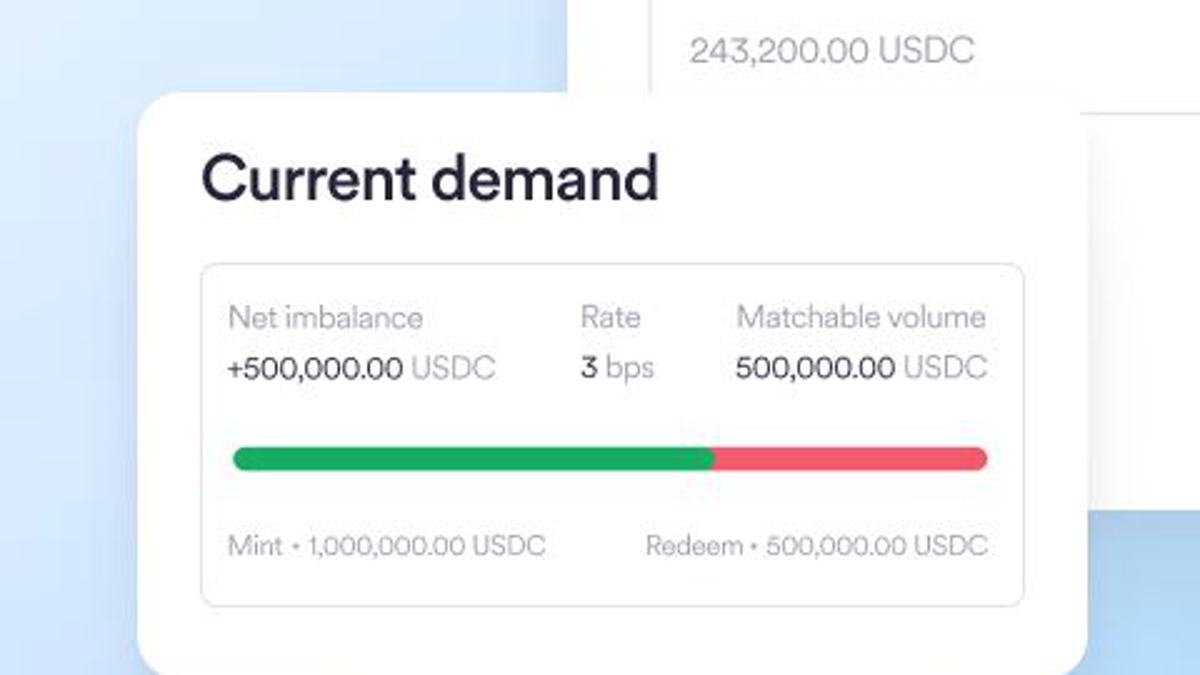
On October 22, Circle introduced Circle Match: Eligible Circle Mint customers can match minting and redemption requests for USDC in hourly auctions. The matching orders on the minting side receive rebates, while the redemption side pays settlement fees within the specified rules. At first glance, it seems like a new stablecoin trading market, but the legal terms of Circle draw clear boundaries: Match determine the fees and rebates for matching orders, but do not set the price of USDC, nor do they alter the holders' right to exchange one USDC for one dollar after deducting the corresponding fees according to the applicable terms. What it attempts to optimize is the flow of funds in and out of the issuance system.
币界网
·2026-10-23 09:49:03
62
Japan's core CPI rose 2.1% year-on-year in September: Prices back above 2%, we can't just look at one "core" figure
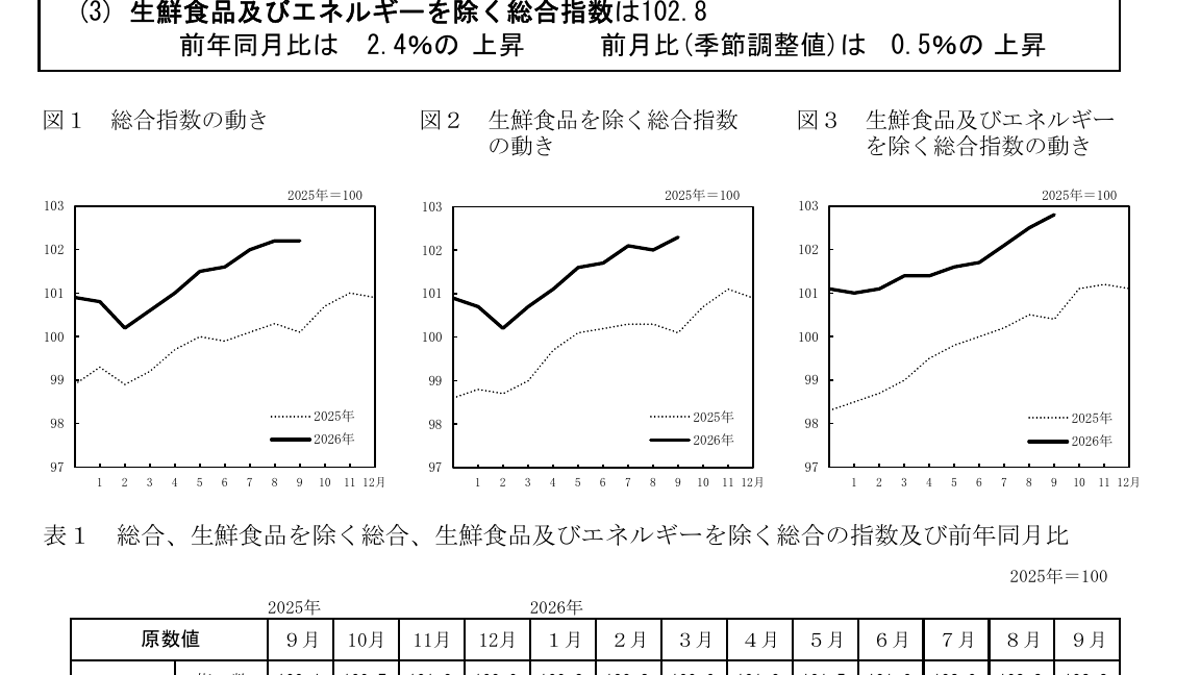
On October 23, the Statistics Bureau of Japan's Ministry of Internal Affairs and Communications released the national consumer price index for September 2026. Using 2025 as the base year of 100, the composite index was 102.2, showing a year-on-year increase of 2.1%; the composite index excluding fresh food was 102.3, also with a year-on-year increase of 2.1%; and the index excluding both fresh food and energy was 102.8, with a year-on-year increase of 2.4%. Although these three figures appear similar, they answer different questions: the first figure considers all prices included in the basket, the second reduces fluctuations in fresh food prices, and the third further eliminates the impact of energy costs. If one single figure is chosen to describe inflation in Japan, it is easy to overlook these structural differences.
币百科
·2026-10-23 09:49:00
36
View More